
Utah Insurance Brokers: What to Look For in a Local Pro
Picking the right Utah insurance broker can save you thousands of dollars and hours of frustration. The difference between a mediocre broker and an exceptional one often comes down to local knowledge, carrier relationships, and genuine responsiveness to your needs.
At Archibald Insurance Agency, we’ve seen firsthand how the right broker transforms a customer’s insurance experience. This guide walks you through exactly what to look for when evaluating Utah insurance brokers in your area.
What a Top Utah Broker Actually Brings to the Table
Understanding Local Risk and Coverage Needs
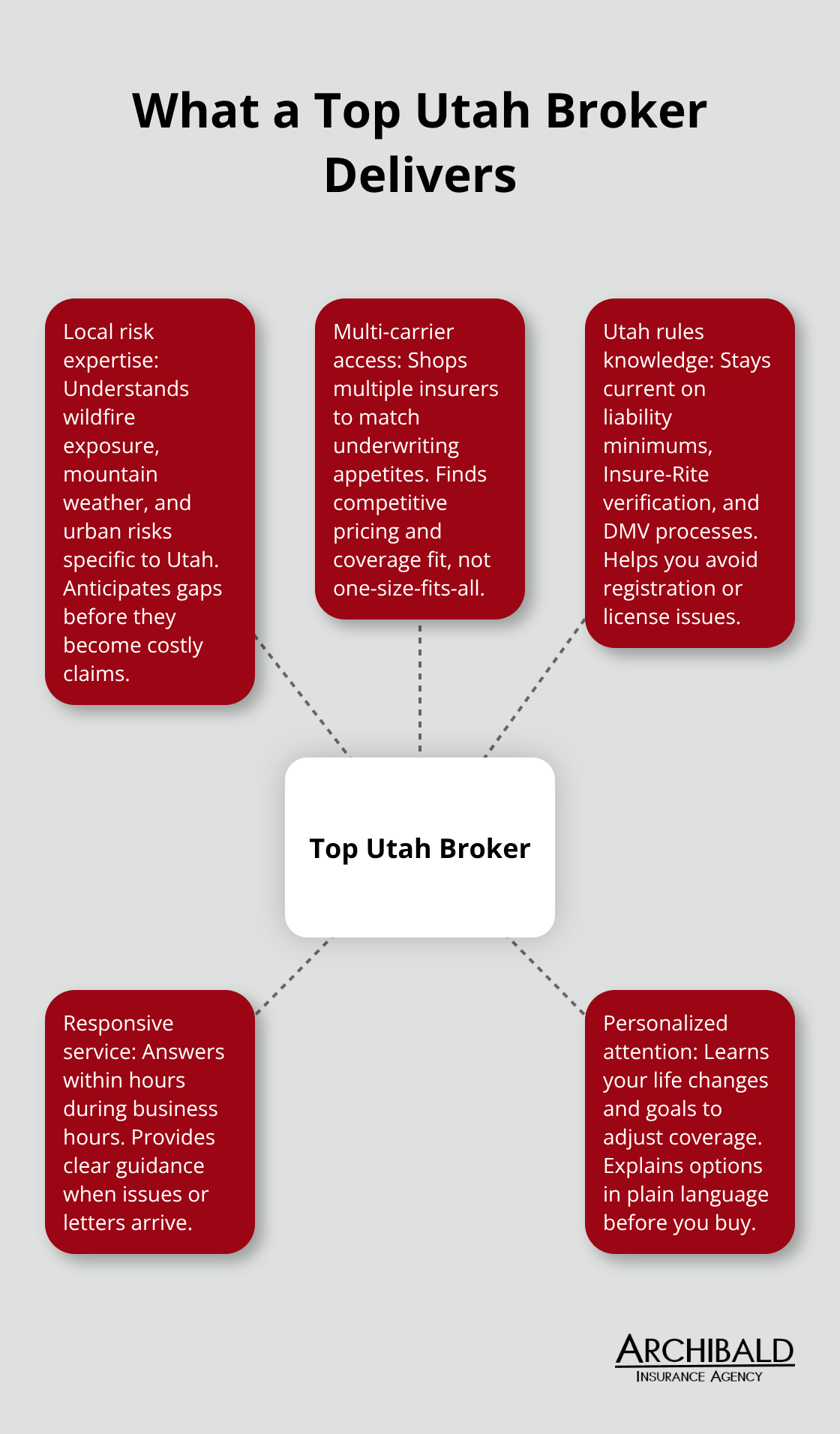
A standout Utah insurance broker understands the specific risks that matter in this state rather than treating all clients the same. Utah’s climate-from mountain winters to desert heat-creates distinct coverage challenges that a broker familiar with local conditions will identify immediately. Homeowners in areas prone to wildfire risk need different coverage considerations than those in urban Salt Lake City, and a broker who knows the difference protects you accordingly. This local expertise prevents costly gaps in your protection.
Access to Multiple Carriers Makes the Difference
When a broker works with only one or two insurers, you’re locked into limited options regardless of your actual needs. A broker representing five or ten carriers can shop your auto insurance across different underwriting appetites. The Utah Association of Independent Agents represents brokers who actively work with multiple carriers, and this flexibility matters enormously when you need specific coverage or competitive pricing. Limited carrier relationships signal that the broker prioritizes the insurer’s interests over yours.
Knowledge of Utah’s Specific Requirements
The best brokers maintain current knowledge of Utah’s specific requirements-like Utah’s mandatory liability coverage minimums, the Insure-Rite verification system that flags uninsured vehicles, and how the DMV handles registration reinstatement after lapsed coverage. This expertise protects you from registration revocation and license suspension. A broker who stays current on these rules helps you navigate Utah’s insurance verification process without costly mistakes.
Responsiveness and Personalized Attention
Responsiveness separates exceptional brokers from mediocre ones. When you call with a question about your homeowners policy or need to file a claim, the answer should come within hours, not days. A broker who understands your situation and remembers your coverage details without making you repeat everything demonstrates real commitment. Personalized service means the broker takes time to understand your actual circumstances-not just your current coverage, but your life changes, new risks, and financial goals. If you’re buying a rental property, the broker should proactively explain why standard homeowners policies won’t work and what landlord coverage actually protects. This level of attention requires a broker who limits their client base to maintain quality relationships rather than chasing unlimited volume.
These qualities form the foundation of what separates a truly exceptional broker from one who simply processes paperwork. But knowing what to look for isn’t enough-you also need to recognize the warning signs that indicate a broker may not have your best interests in mind.
Warning Signs That a Broker Isn’t Serving Your Interests
Carrier Relationships Reveal True Priorities
A broker who represents only one or two insurance carriers operates under a fundamental conflict of interest. Captive agents work exclusively for a single insurer, and that company sets their sales quotas and compensation structure, creating pressure to sell specific policies rather than what actually fits your situation. Independent agents with access to multiple carriers face no such constraint.
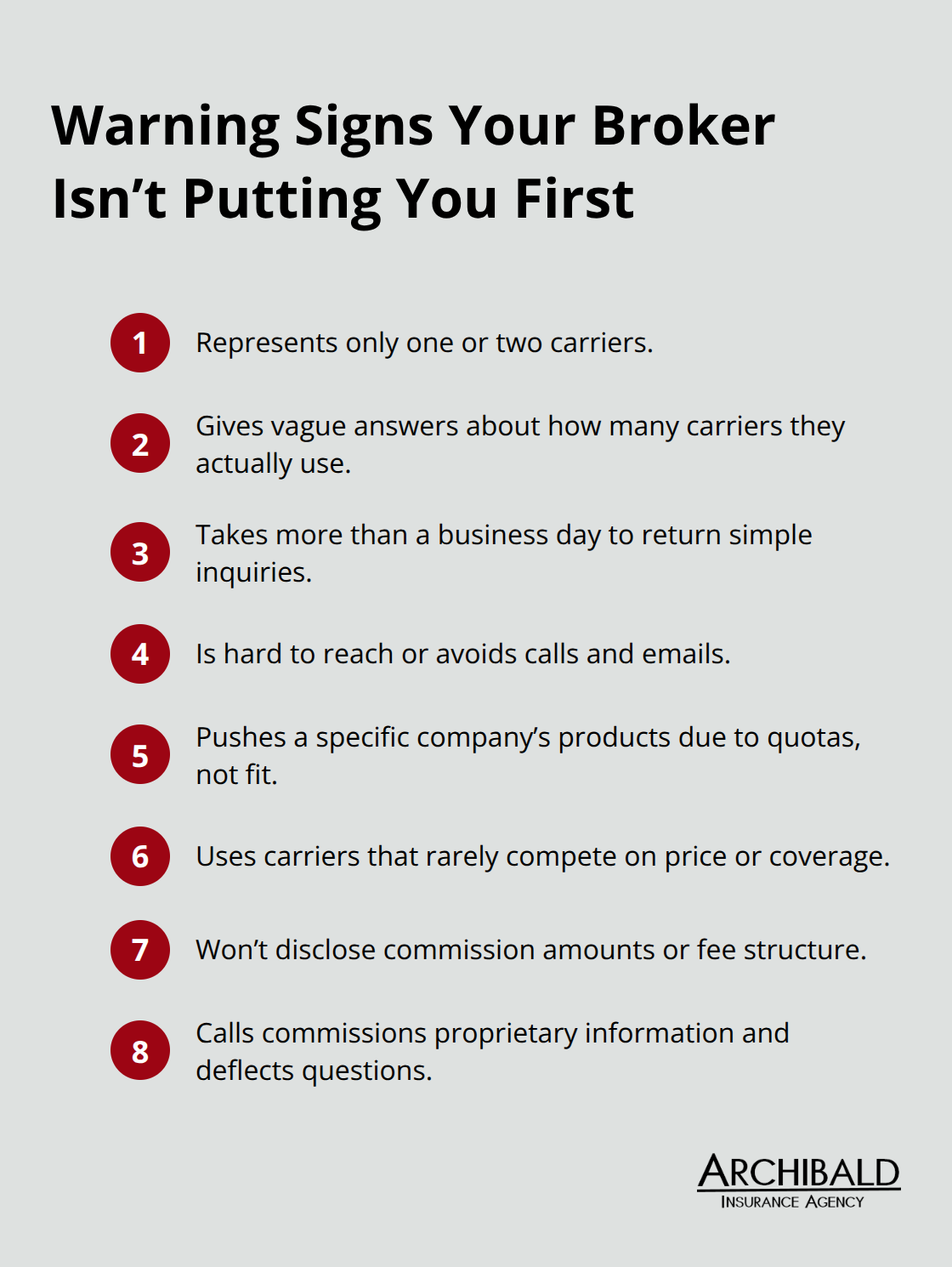
If a broker claims to work with five carriers but you notice those carriers rarely compete on price or coverage options, that broker has negotiated favorable commission splits rather than favorable terms for you. Ask directly: How many carriers do you actively place business with, and which ones do you use most frequently? A broker who hesitates or provides vague answers protects their commission structure, not your wallet.
Communication Speed Exposes Workload Problems
Communication delays reveal a broker’s true priorities. If you email a question about your homeowners deductible and wait three business days for a response, that broker manages more clients than they can reasonably serve. Real responsiveness means a callback or email within hours during business hours. Utah’s Insure-Rite verification system sends registration revocation notices without warning, and you need a broker who answers immediately when those letters arrive. Some brokers intentionally make themselves hard to reach to discourage claims questions or coverage modifications that might reduce their commissions. Test this before committing: Call with a specific question and track how long the response takes. A broker who takes two days to answer a simple question will take two weeks when you actually need help after an accident.
Fee Transparency Separates Trustworthy Brokers
Fee transparency separates trustworthy brokers from those hiding their economics. Ask your broker directly: What commission do you earn on my auto policy, and what percentage of that comes from the insurance company versus from me? Many brokers bundle their commission into the premium without disclosing the actual amount, making it impossible for you to evaluate whether you’re paying fairly. Brokers earn primarily through commissions and fees based on the policies they secure for clients. The best brokers disclose their compensation model upfront and explain how they’re incentivized. If a broker deflects these questions or claims commissions are proprietary information, they operate in the shadows. Transparency around fees isn’t optional-it’s the foundation of trust.
These warning signs help you identify brokers who prioritize their own interests over yours. The next step involves actively evaluating and comparing brokers who pass these initial tests, so you can confidently select a partner who truly advocates for your coverage needs.
Verify Credentials and Test Responsiveness
Confirm Active Licensure Through Official Channels
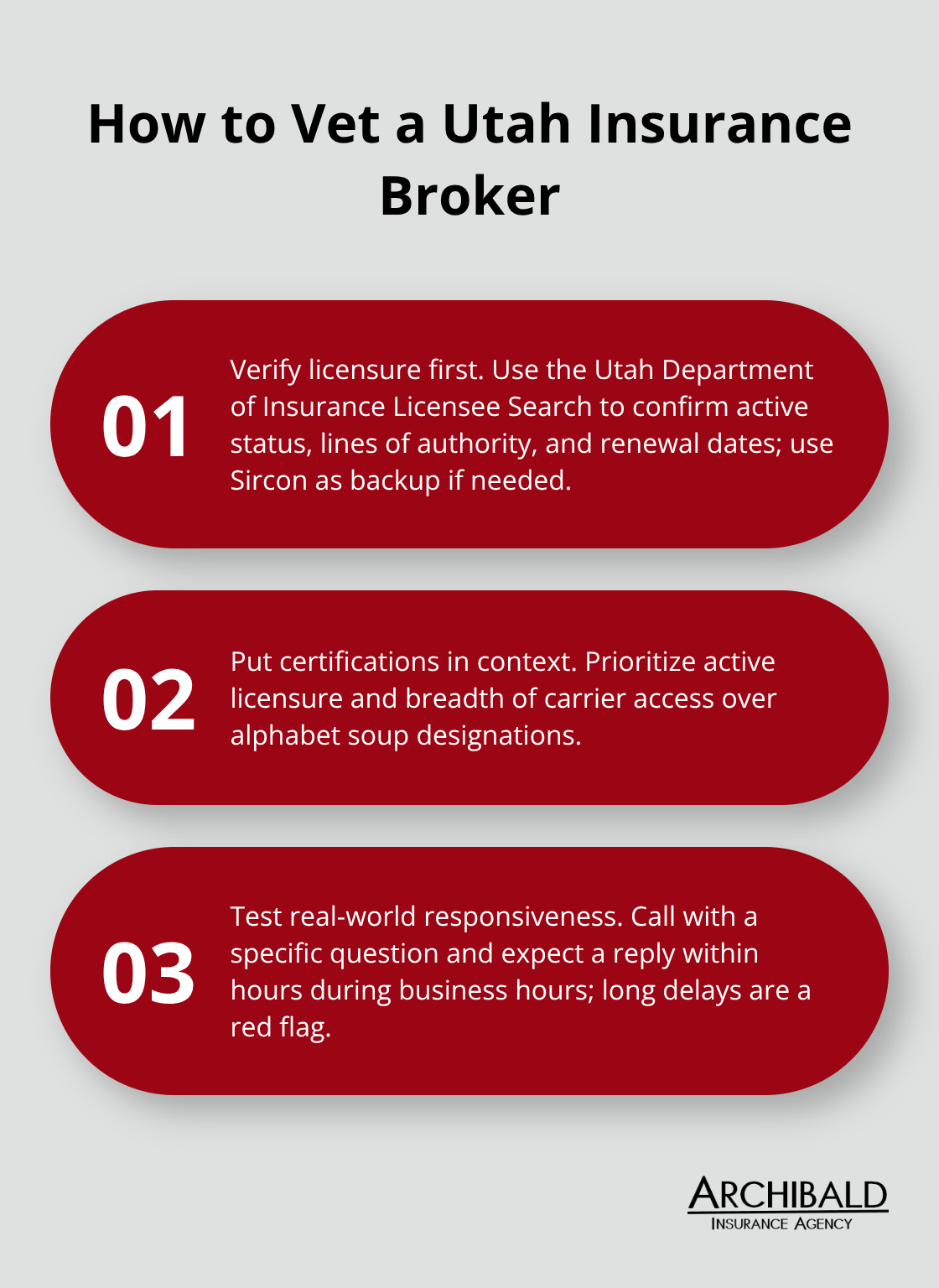
Start by confirming your broker holds an active Utah insurance license. The Utah Department of Insurance Licensee Search verifies current licensure across the specific lines you need-auto, home, life, or business. This search confirms the broker passed the required Prometric exam, completed fingerprinting, and maintains good standing. Check the license renewal date to ensure the broker stays current on continuing education requirements. Many brokers display outdated licenses or fail to renew promptly, and the Licensee Search catches these problems immediately. Sircon serves as an official backup if the Department’s search is temporarily unavailable.
Evaluate Professional Certifications Appropriately
Ask whether the broker holds professional certifications like the Certified Insurance Counselor (CIC) or Chartered Special Risk (CSR) designation. These certifications require ongoing education and demonstrate commitment to professional standards. However, certifications matter far less than active licensure and carrier relationships. A broker with a current license and access to ten carriers outperforms one with three certifications and relationships with only two insurers.
Test Responsiveness Before Making Any Commitment
Call the broker’s main line with a specific question about homeowners coverage or auto liability requirements and note exactly how long the response takes. A broker who provides a callback within four hours during business hours manages a reasonable client load. Responses that take a full business day or longer signal either poor organization or deliberate delays on non-urgent contact. This responsiveness matters most when Insure-Rite verification letters arrive-you need a broker who answers immediately.
Request and Contact Real Client References
Request references from existing clients and actually call them. Ask specifically about claim handling speed, whether the broker reviews coverage annually, and whether they respond quickly to questions. Ask references whether the broker has caught a coverage gap they would have missed or negotiated a better rate by shopping their policy. Real references reveal whether a broker genuinely advocates for clients or simply processes paperwork.
Interview Multiple Brokers With Identical Questions
Interview at least two brokers side-by-side using identical questions: How many carriers do you actively work with? How do you approach annual policy reviews? What’s your communication response time? Can you explain the difference between actual cash value and replacement cost coverage? A broker who answers with specifics and asks clarifying questions about your situation demonstrates genuine expertise. One who provides generic responses or rushes through your questions prioritizes volume over quality.
Final Thoughts
A trustworthy Utah insurance broker combines three essential qualities: deep knowledge of local market conditions, access to multiple insurance carriers, and genuine responsiveness to your needs. These brokers understand Utah’s specific risks, from wildfire exposure in certain areas to the state’s mandatory liability requirements and the Insure-Rite verification system that flags uninsured vehicles. They maintain relationships with multiple carriers rather than pushing you toward one company’s products, and they answer your questions within hours, not days.
Local expertise matters enormously for Utah residents because insurance needs vary dramatically across the state. A broker familiar with Salt Lake City’s urban environment handles coverage differently than one serving rural communities or mountain properties. Utah insurance brokers who stay current on state-specific requirements protect you from costly registration revocation and license suspension, and they catch coverage gaps you wouldn’t notice until after a loss occurs.
Contact at least two independent brokers, ask them identical questions about carrier relationships and response times, and request references from existing clients. Call those references and ask whether the broker has saved them money or caught a coverage gap. We at Archibald Insurance Agency represent numerous insurance carriers and specialize in providing personalized solutions for auto, home, business, and life insurance across Utah, and our team answers client questions within hours because your protection matters more than our workload.
Disclaimer: The information provided in this blog is for general informational purposes only and does not constitute legal, financial, or insurance advice. Coverage options, terms, and availability may vary. Please consult with a licensed professional for advice specific to your situation


