

Small Business CGL Costs Utah: Budgeting Your Coverage
Small business owners in Utah face real pressure when it comes to commercial general liability insurance. The costs vary dramatically based on your industry, business size, and risk profile-and most owners have no idea what they should actually budget.
We at Archibald Insurance Agency help Utah small businesses understand their CGL coverage options and find premiums that fit their bottom line. This guide breaks down what affects small business CGL costs in Utah and shows you how to build a realistic insurance budget.
What Commercial General Liability Actually Covers
The Foundation of CGL Protection
Commercial general liability insurance protects your Utah small business from lawsuits and medical bills when someone gets hurt on your property or due to your operations. The coverage pays for bodily injury, property damage, and personal injury claims up to your policy limits. Most policies include legal defense costs. If a customer slips in your store, a client’s equipment gets damaged during your service, or someone claims your advertising harmed their reputation, CGL steps in to cover the costs. This protection stands between your business and catastrophic financial loss.
Why Utah Small Businesses Face Real Exposure
Utah small businesses operate in a competitive market where one accident can derail years of growth. Construction companies face exposure when equipment damages a neighboring property. Restaurants and retail shops deal with slip-and-fall claims regularly. Service providers like plumbers and electricians risk damaging client property during jobs. Manufacturing operations face product liability if something they produce causes injury.
The National Safety Council reports that slip-and-fall accidents cost American businesses billions annually in medical expenses and lost productivity. Without CGL coverage, you remain personally liable for these costs. Creditors can pursue your personal assets, your business bank account, and future earnings to satisfy judgments.
Identifying Your Industry’s Specific Risks
Different industries attract different liability exposures. A contractor’s risk profile looks nothing like a consultant’s risk profile. A restaurant manager faces slip-and-fall exposure that a software developer never encounters. Your industry type directly shapes what coverage limits you actually need and what your premiums will cost. Understanding your specific exposure areas matters far more than accepting whatever minimum coverage your landlord or clients demand.
This is where the real work of budgeting begins-matching your coverage limits to your actual risk level rather than guessing at numbers.
What Drives Your Utah CGL Premium
Industry Type Sets Your Premium Foundation
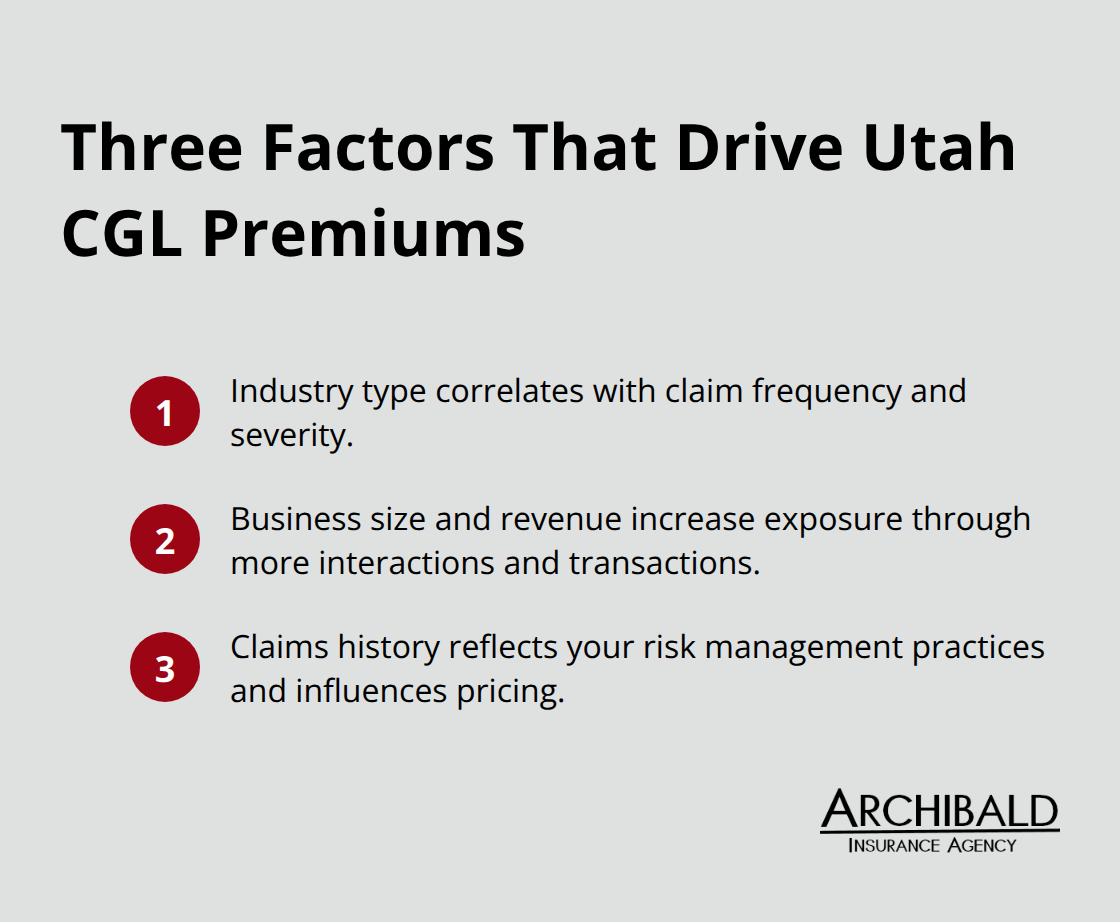
Your CGL premium hinges on three measurable factors that insurers analyze before quoting you a price. Industry type matters most because it directly correlates with claim frequency and severity. A roofing contractor pays substantially more than a management consultant because roofers file claims at higher rates and those claims cost more to defend and settle. According to the National Association of Insurance Commissioners, construction and trades typically see CGL premiums three to five times higher than professional services.
Your specific industry classification code becomes the primary lever that insurers pull when calculating your quote.
Business Size and Revenue Shape Your Exposure
Your business size and annual revenue also shape your quote because larger operations generate more customer interactions and higher exposure. A contractor with five employees and 500K in revenue faces different risk than one with 50 employees and 5M in revenue. Insurance carriers calculate your premium partly on payroll and revenue because these metrics predict exposure volume. The more transactions you complete and the more people your team interacts with, the higher your potential liability exposure becomes.
Claims History Reveals Your Risk Management Approach
Your claims history becomes the third major factor, and this one you actually control. A business with zero claims over five years pays dramatically less than one with two or three claims in the same period. Businesses with documented loss control measures, like safety training programs and incident reporting systems, see premium reductions through improved safety culture and fewer claims. If you’ve invested in employee safety training, documented your procedures, and maintained a clean claims record, your insurer recognizes this and prices accordingly.
How Risk Management Directly Impacts Your Costs
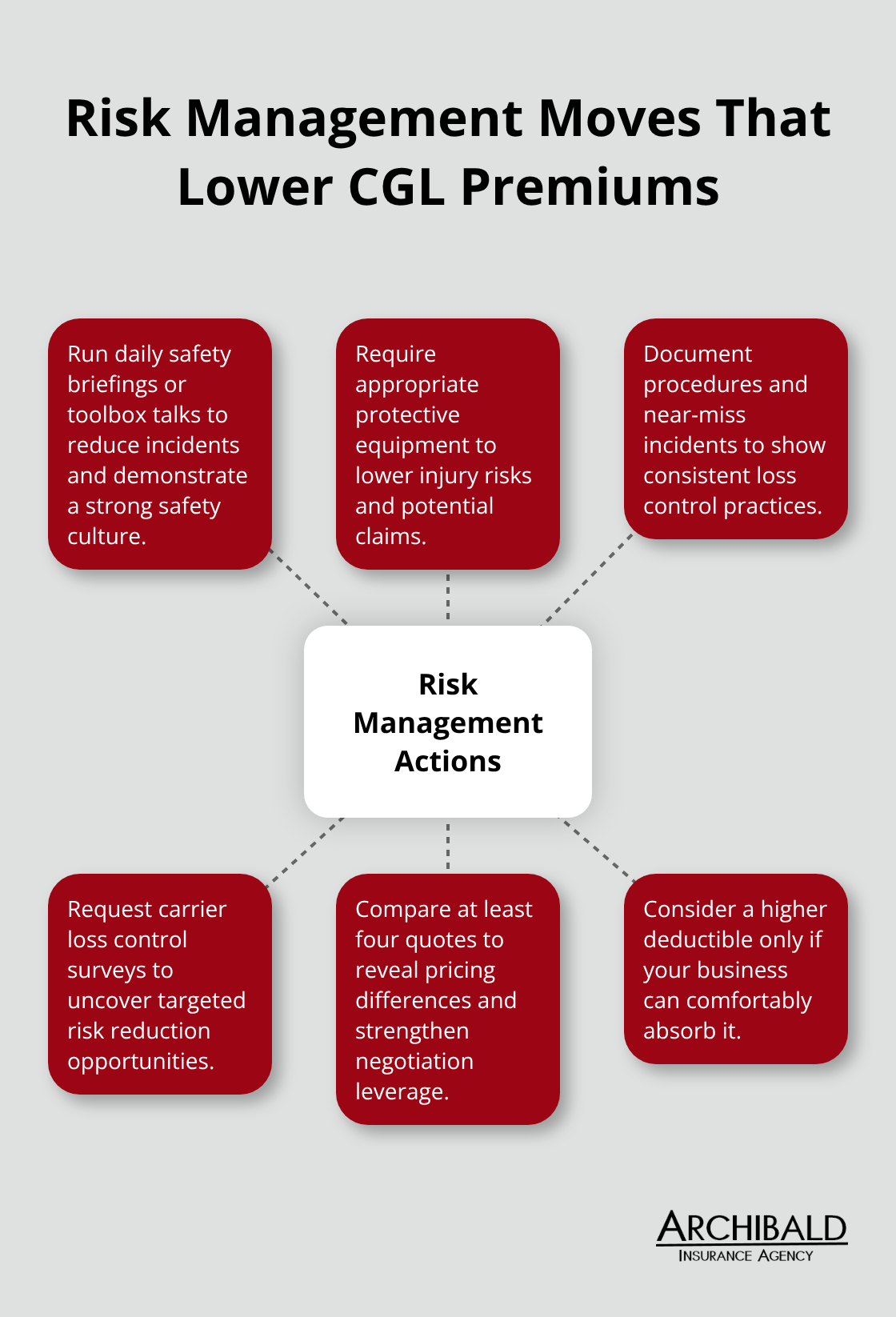
The gap between what you pay and what your competitor pays often comes down to how seriously you’ve approached risk management. A contractor who implements daily safety briefings, requires protective equipment, and documents near-miss incidents builds a stronger risk profile than one who ignores these details. Utah’s workers compensation environment also influences your CGL costs because states with higher injury rates typically see higher general liability premiums across all industries. This means your specific location within Utah, your industry classification code, and your documented safety practices combine to create your actual premium.
Why Quote Comparisons Reveal Real Differences
When you obtain quotes from multiple carriers, the differences you see reflect how each insurer weighs these three factors. One carrier might emphasize your claims history while another focuses more heavily on your industry classification. This variation is exactly why comparing quotes matters more than accepting the first number you hear. Understanding what moves your premium up or down positions you to make smarter decisions about coverage limits and deductibles in the next phase of your budgeting process.
What You Should Actually Budget for CGL Coverage
Understanding Real Cost Ranges for Utah Businesses
Most Utah small business owners start their CGL budget by guessing. They call one insurer, hear a number, and assume that’s what they should pay. This approach leaves thousands of dollars on the table. The actual cost range for Utah small business CGL varies wildly depending on your industry. Commercial General Liability insurance cost ranges for small businesses typically fall between $265 and $3,030 annually, though your specific rate depends on industry classification, business size, and claims history.
Restaurants typically fall between $1,500 and $3,000 yearly, and plumbing or electrical contractors range from $1,800 to $3,500. These numbers aren’t random-they reflect real claim patterns showing that construction trades file claims at significantly higher frequencies than service-based businesses.
Why Multiple Quotes Matter More Than You Think
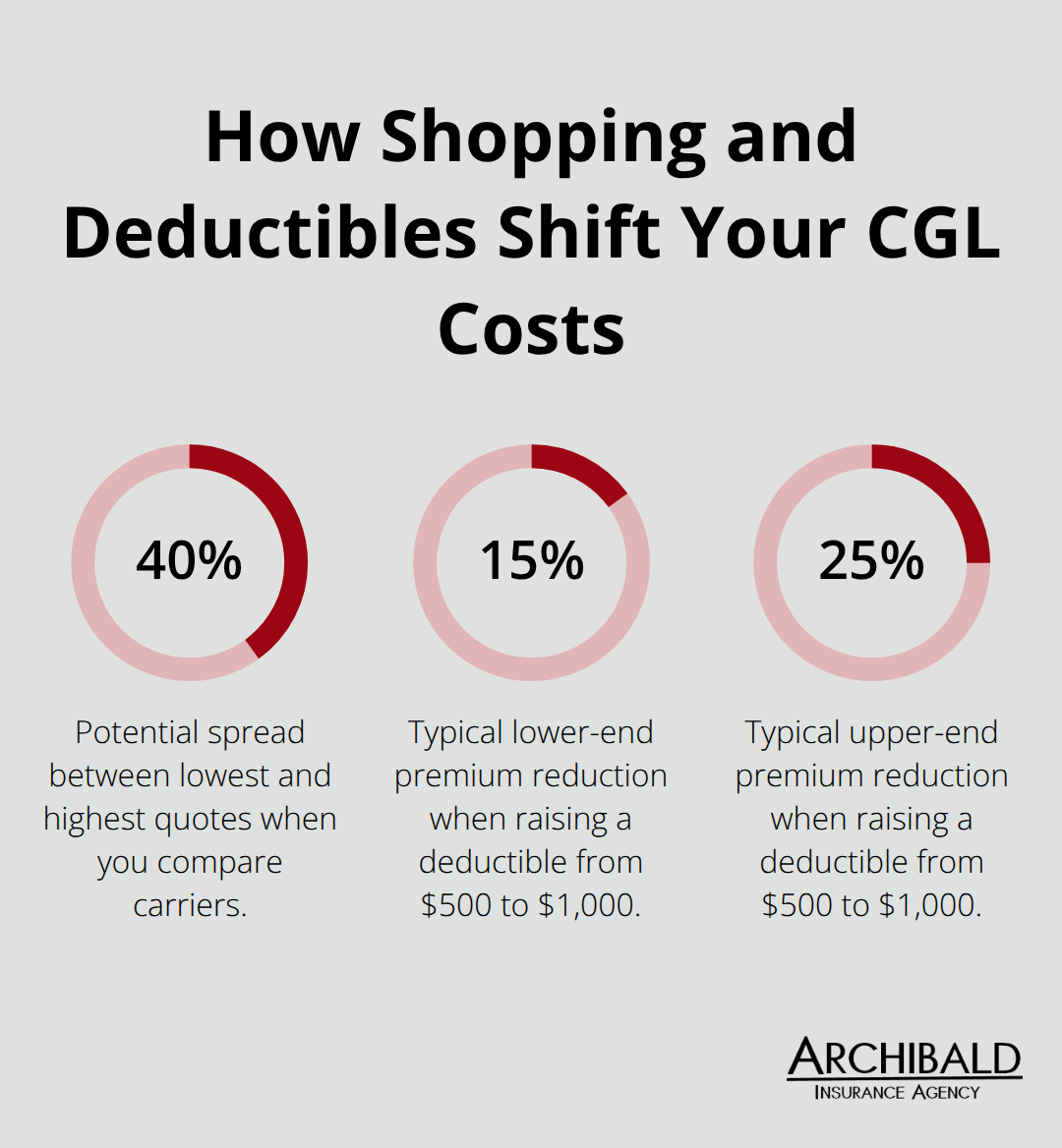
The only way to know where you actually land within these ranges is to stop guessing and start comparing real quotes from multiple carriers. Most Utah business owners compare only two quotes when they should be looking at four to six. Each insurer weights your industry risk, business size, and claims history differently, which means the spread between lowest and highest quote can easily exceed 40 percent.
Obtaining quotes from at least four different carriers reveals where you have negotiating power and which insurer truly understands your specific risk profile. The variation between carriers often surprises business owners who assumed all insurers price similarly.
Active Risk Management Cuts Your Premium
Reducing your premium requires moving beyond passive shopping and into active risk management. Contractors who implement daily safety toolbox talks see measurable premium reductions compared to those without formal programs. Raising your deductible from $500 to $1,000 typically cuts your annual premium by 15 to 25 percent, though this only makes sense if your business can absorb that deductible without financial strain.
Request loss control surveys from insurers-most major carriers offer these free assessments that identify specific risk reduction opportunities in your operations. When you present an insurer with evidence of your safety culture, your claims record, and your commitment to preventing incidents, you shift the conversation from your industry classification to your individual risk management approach.
Negotiation Strategies That Work
This distinction matters enormously because it moves you from the average cost for your industry type into a lower-risk category within that same industry. After you’ve gathered quotes and identified which carrier offers the best combination of price and coverage terms, negotiate. Tell your chosen insurer what other quotes you’ve received (without naming specific competitors). Most will adjust their offer rather than lose your business. Your documented safety practices and clean claims history become your leverage in these conversations.
Wrapping Up
Small business CGL costs in Utah depend on three factors you now control: your industry type, your business size, and your claims history. Your claims history reflects your risk management choices, and your documented safety practices shift how insurers price your coverage. Most Utah business owners leave money on the table by accepting the first quote they receive instead of comparing multiple carriers and negotiating based on their actual risk profile.
Gather quotes from at least four different insurers to see where your business actually lands within the cost ranges for your industry. Implement or strengthen your loss control measures and request free safety surveys from carriers to identify specific risk reduction opportunities. Use your documented safety practices and clean claims record as negotiating leverage with your chosen insurer.
We at Archibald Insurance Agency represent numerous insurance carriers, which means we compare quotes and find coverage that fits your actual budget rather than pushing you toward one insurer’s standard offering. Our team knows which carriers weight construction risk differently than service businesses, and we’ve helped countless Utah small business owners reduce their premiums by 20 to 40 percent through proper comparison and negotiation. Your small business CGL costs in Utah don’t have to remain a mystery.
Disclaimer: The information provided in this blog is for general informational purposes only and does not constitute legal, financial, or insurance advice. Coverage options, terms, and availability may vary. Please consult with a licensed professional for advice specific to your situation


