

Guide to Life Insurance: Understanding Your Options
Life insurance is one of the most important financial decisions you’ll make, yet many people put it off because the options feel overwhelming. At Archibald Insurance Agency, we’ve helped countless Utah families navigate this guide to life insurance and find coverage that actually fits their situation.
The right policy protects your loved ones when it matters most. Let’s walk through your options so you can make an informed choice.
Three Life Insurance Types That Actually Work
Term Life Insurance: Affordable Protection for Your Peak Years
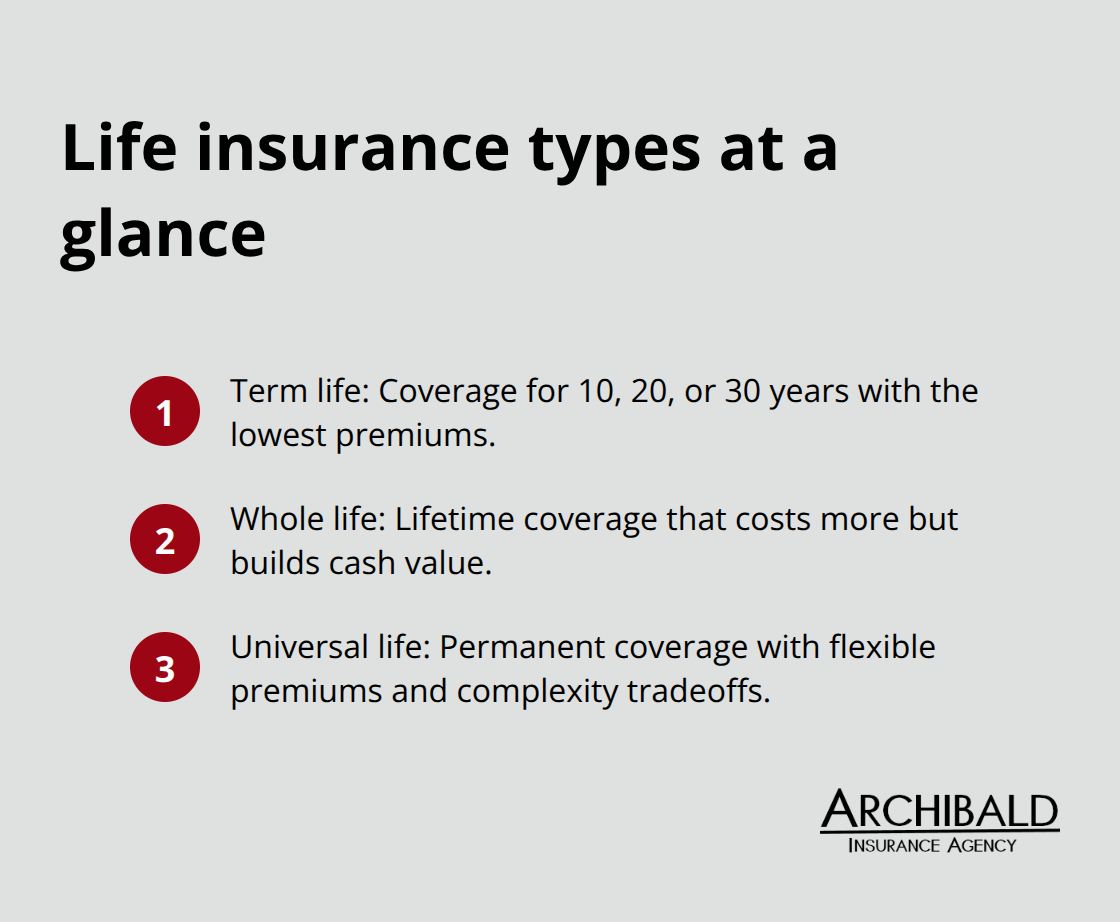
Term life insurance covers you for a specific period-typically 10, 20, or 30 years-and pays your beneficiaries a death benefit if you pass away during that window. This is the most affordable option for most Utah families. Term life insurance costs around $26 a month for a $500,000 policy for a healthy 40-year-old.
Term insurance makes sense if you have young children, a mortgage, or significant debt. Once the term ends, coverage stops, so you need to plan ahead.
Whole Life Insurance: Permanent Coverage with Cash Value
Whole life insurance covers you for your entire lifetime as long as you pay premiums. It’s expensive-roughly 8 to 10 times more than term insurance for the same death benefit-but it builds cash value over time that you can borrow against or withdraw. This appeals to people who want permanent protection and don’t want to worry about losing coverage later.
Universal Life Insurance: Flexibility in the Middle
Universal life insurance sits between these two, offering permanent coverage with more flexibility than whole life. Your premiums can adjust based on market performance, and you have more control over how much you pay and when. However, this flexibility creates complexity; if you don’t pay enough, your policy can lapse, leaving you unprotected.
Matching Your Policy to Your Life Stage
The right choice depends on your timeline and wallet. If you’re supporting dependents, term insurance typically covers your highest-risk years at a price that doesn’t strain your budget. Most financial advisors recommend buying enough term coverage to replace your income for 8 to 10 years and cover outstanding debts. If you’re older, have accumulated wealth, and want coverage that won’t end, permanent life insurance coverage makes more sense. In Utah, where many families balance housing costs with savings goals, term insurance remains the most practical starting point.
An independent agent can match the policy type to your actual situation rather than settling for what a single company pushes. This personalized approach matters when you’re making a decision that affects your family’s financial security.
How Much Coverage Do You Actually Need
Calculate Your Income Replacement Need
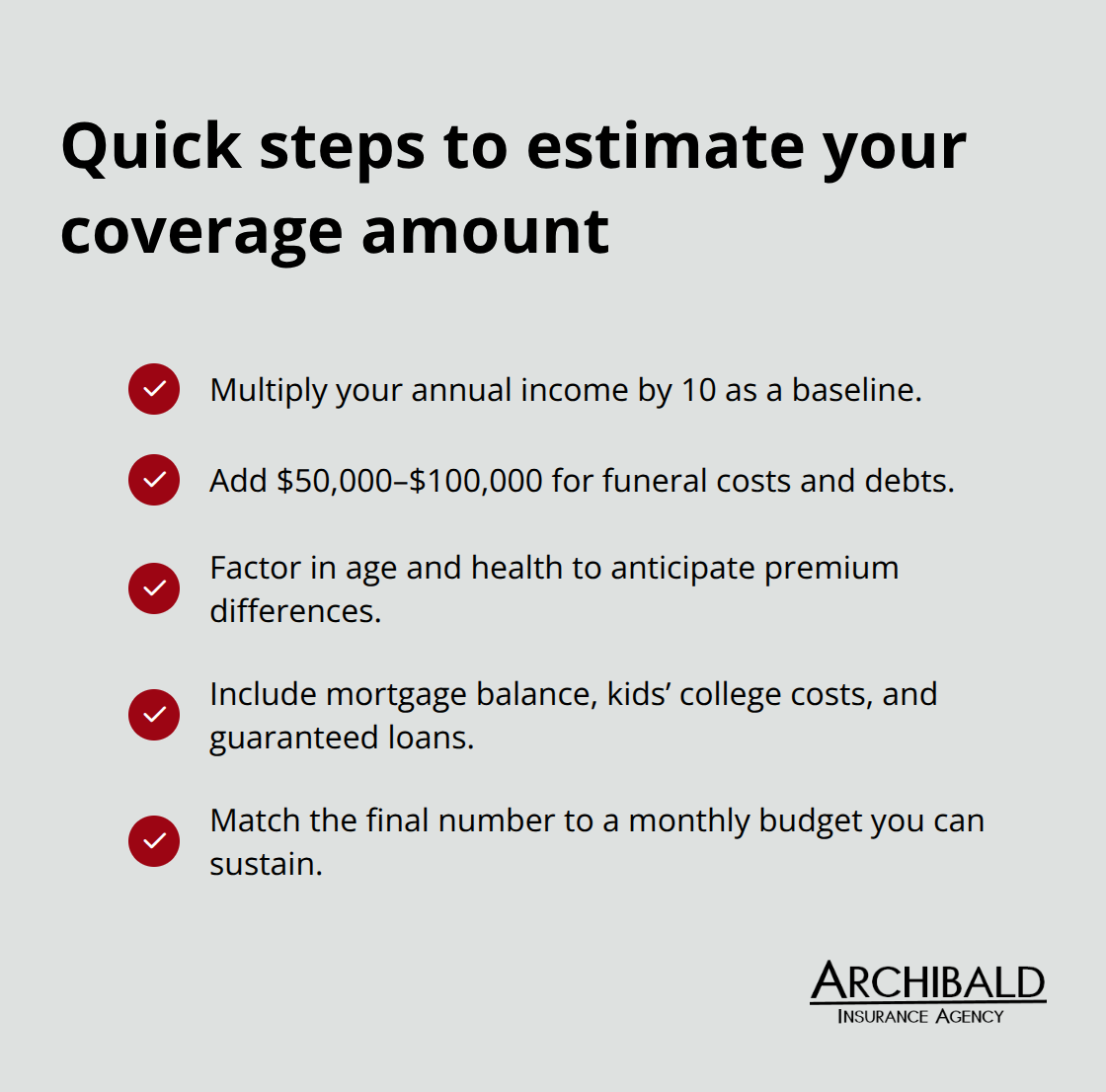
Getting the coverage amount right matters more than picking the perfect policy type. Utah families typically make two mistakes: they buy too little and leave their families exposed, or they buy too much and waste money on premiums they don’t need. The math is straightforward. Start with your annual income and multiply it by 10. If you earn $60,000 a year, you need roughly $480,000 to $600,000 in coverage. This replaces your income for a decade, which gives your family time to adjust financially and keeps them from losing the house if something happens to you.
Account for Debts and Final Expenses
Add another $50,000 to $100,000 to cover your funeral expenses and outstanding debts, including credit cards and car loans. The median funeral cost in the United States is an estimated $9,170 with burial or about $6,940 with cremation. Don’t skip this calculation-it protects your family from inheriting financial stress on top of grief.
Factor in Your Age and Health Status
Your age and health directly impact what you’ll pay monthly. A healthy 35-year-old can get a $500,000 term policy for roughly $20 to $30 per month, while a 50-year-old pays closer to $50 to $75 monthly for the same coverage. The difference is age and health, both of which you can’t change, so buying coverage when you’re younger locks in lower rates.
Assess Your Family’s Financial Obligations
If you have dependents under age 18, your family obligations increase significantly. Count your mortgage balance, your children’s expected college costs, and any loans you’ve personally guaranteed. A Utah parent with two kids, a $300,000 mortgage, and $100,000 in student loans needs substantially more coverage than someone with no dependents and a paid-off house.
Match Coverage to Your Budget
Your budget constraints are real, and life insurance should fit into your monthly expenses without causing stress. Once you know your number, compare it against what you can afford monthly. If the gap is too wide, term insurance closes it affordably. If you can comfortably pay more, permanent coverage becomes worth considering for the long-term protection and cash value it provides. The goal isn’t perfection-it’s protecting the people who depend on your income. With your coverage amount locked in, the next step involves evaluating which policy type actually fits your financial situation and timeline.
What Happens to Your Family’s Finances When You’re Gone
Income Loss Creates Immediate Financial Crisis
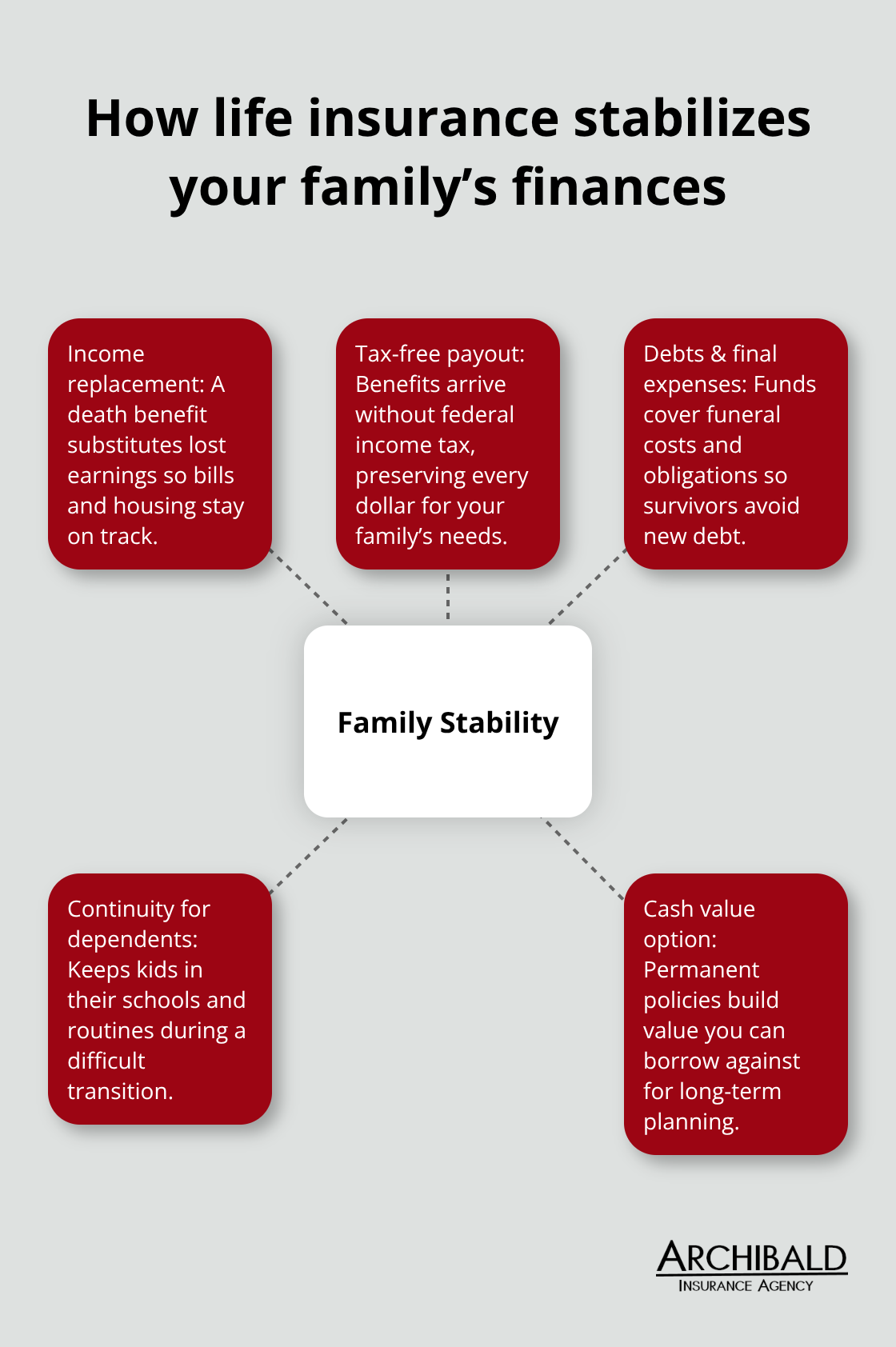
Life insurance works because it replaces the income your family loses when you die. Without it, your spouse faces a brutal choice: sell the house to cover bills, pull kids out of school to work, or drain savings that took decades to build. The math here is unforgiving. According to the U.S. Census Bureau, median household income in Utah was $87,460 in 2025. If you earn that and die tomorrow, your family loses $87,460 in annual income immediately. A $500,000 policy replaces roughly six years of that income, giving your spouse time to adjust, keep the kids in their current schools, and avoid financial panic during grief.
Tax-Free Death Benefits Protect Every Dollar
The death benefit arrives tax-free to your beneficiary, which means every dollar goes to your family without the IRS taking a cut. That differs from your paycheck, where taxes consume 20 to 30 percent before it hits your account. This tax advantage makes life insurance far more efficient than other savings vehicles for protecting your family’s immediate needs.
Debt and Final Expenses Demand Coverage
Your family also needs coverage to handle the financial wreckage you leave behind. The average funeral costs $8,300 for burial and $6,280 for cremation. Add your mortgage balance, car loans, credit card debt, and any personal loans you’ve guaranteed, and your family suddenly inherits tens of thousands in obligations alongside their grief. A $50,000 to $100,000 portion of your life insurance policy absorbs these costs without forcing your spouse to liquidate retirement accounts or take on additional debt.
Permanent Insurance Builds Wealth Over Time
For families building wealth over time, permanent life insurance adds another layer because the cash value component grows tax-deferred and you can borrow against it during your lifetime. If you’re 40 and buy a whole life policy, that cash value compounds for 25 or 30 years before you retire. Some Utah families use this feature to supplement retirement savings or cover unexpected expenses without touching taxable investments. The tradeoff is obvious: permanent coverage costs significantly more monthly, so it only makes sense if you can comfortably afford the premiums and plan to keep the policy for decades.
Term Insurance Solves the Core Problem Affordably
Term insurance solves the core problem faster and cheaper for most people, but permanent insurance solves it more completely if your budget allows.
Final Thoughts
You now have the knowledge to match your situation to the right life insurance type and coverage amount. Term insurance protects your family affordably during peak earning years, while whole life and universal life provide permanent coverage with added benefits at higher monthly costs. Your age, health, income, debts, and family obligations determine which option actually works for your budget and timeline.
An independent agent makes the difference between generic advice and a plan tailored to your life. We at Archibald Insurance Agency represent multiple carriers, so we compare options across different companies rather than pushing one product. Contact Archibald Insurance Agency to discuss your situation with someone who listens before recommending coverage.
We’ll walk through your income, debts, and family obligations, then show you what different coverage amounts cost monthly. You’ll see your options side by side and understand exactly what you’re paying for. This guide to life insurance gives you the foundation-now get the personalized advice that turns knowledge into action.
Disclaimer: The information provided in this blog is for general informational purposes only and does not constitute legal, financial, or insurance advice. Coverage options, terms, and availability may vary. Please consult with a licensed professional for advice specific to your situation


