
Understanding CGL Policy Utah: A Practical Guide
Running a business in Utah means protecting yourself from liability risks that could drain your finances fast. A CGL policy in Utah is your first line of defense against bodily injury claims, property damage lawsuits, and other common business exposures.
We at Archibald Insurance Agency help Utah business owners understand what coverage they actually need and where dangerous gaps hide in their policies. This guide walks you through the essentials so you can make informed decisions about your protection.
What Commercial General Liability Actually Covers
Commercial General Liability insurance protects your Utah business from financial ruin when someone gets hurt on your property or you accidentally damage someone else’s belongings. Unlike theoretical definitions, CGL pays for medical bills, legal defense costs, and settlements when a customer slips in your store, a client’s equipment gets damaged during your work, or your advertising accidentally harms someone’s reputation. CGL isn’t optional for most Utah businesses-it’s the foundation that prevents a single accident from destroying everything you’ve built.
Who Actually Needs This Coverage in Utah
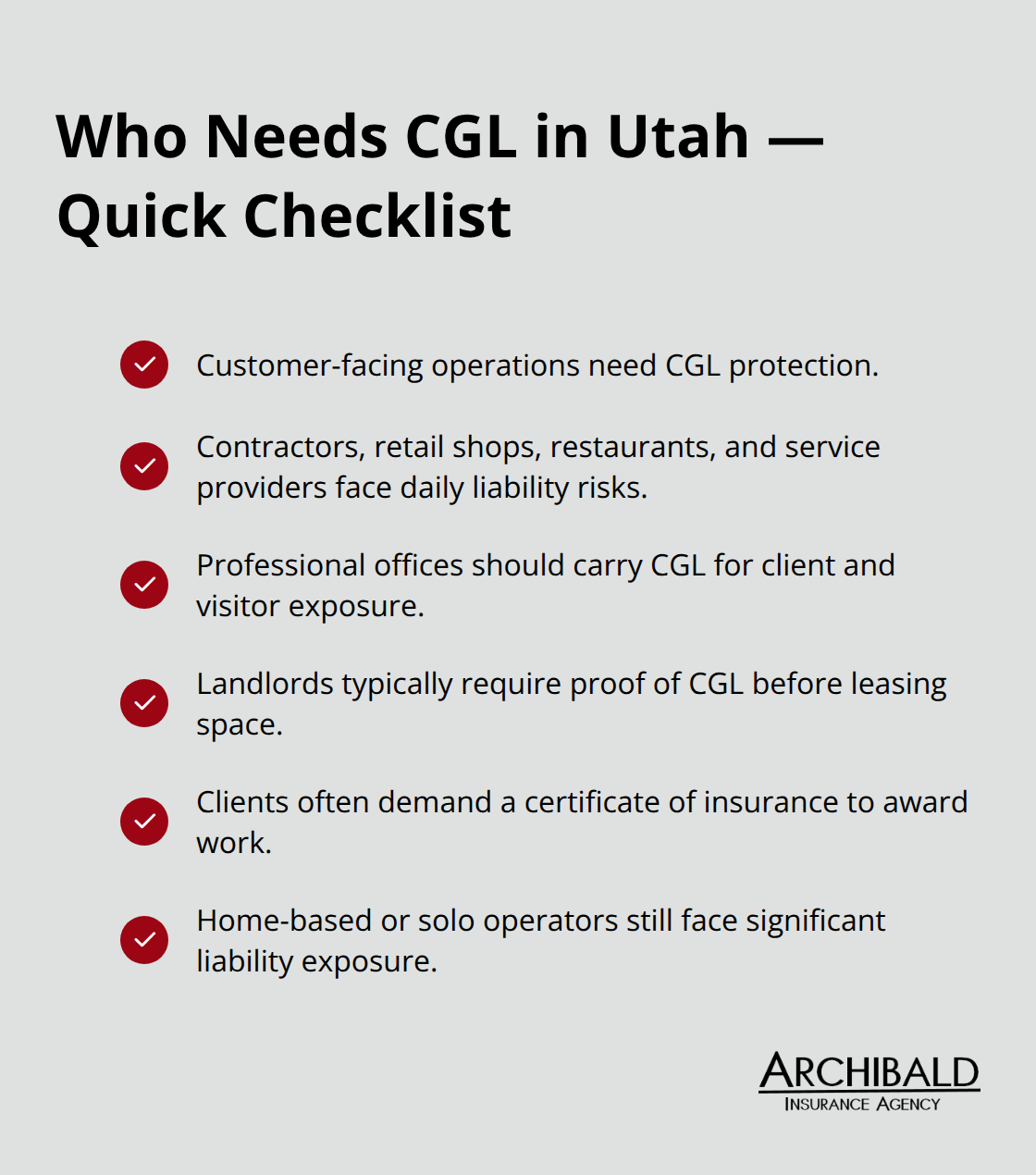
If you operate any business where customers, clients, or the public interact with your operations, you need CGL protection. Contractors, retail shops, restaurants, service providers, and professional offices all face serious liability risks daily. Your landlord will demand proof of CGL before you sign a lease, and most clients won’t hire you without a certificate of insurance. Even if you work from home or operate solo, a liability claim can create significant financial exposure before legal fees enter the picture.
Utah’s Legal Requirements and Industry Standards
Utah doesn’t mandate CGL insurance across all businesses like some states do, but that’s misleading-the market demands it anyway. Contractors in Utah must carry liability insurance to obtain most project bids, and municipalities often require proof before issuing permits. If you hold any professional licenses in Utah, your regulatory body likely requires minimum coverage levels. More importantly, the risk of operating without CGL is financial suicide. A customer injured in your business can sue you personally, attach your bank accounts, and pursue your personal assets for years. The specific coverage levels you need depend on your industry, location, and the nature of your operations-which is why understanding what CGL actually covers matters before you move forward with selecting a policy.
Key Coverage Areas in CGL Policies
Bodily Injury Coverage Protects Your Bottom Line
Bodily injury coverage is where most Utah business owners focus, and rightfully so. When a customer trips on your stairs, suffers a burn in your restaurant, or gets injured during your service work, this coverage pays their medical expenses, lost wages, and legal settlements if they sue. Your policy limit matters tremendously here-a $300,000 limit sounds adequate until a serious injury case requires $500,000 in settlements and legal fees.
Property Damage Coverage Handles Accidents You Cause
Property damage coverage protects against accidental damage you cause to someone else’s belongings. If your crew damages a client’s flooring during renovation work or your equipment punctures a neighbor’s roof, this section covers repair costs and liability settlements. Utah contractors particularly need strong property damage limits because project sites involve expensive client property constantly. This coverage responds when your actions create financial losses for others, not when someone gets physically hurt.
Personal and Advertising Injury Coverage Addresses Non-Physical Claims
Personal and advertising injury coverage protects against claims that have nothing to do with physical accidents. Defamation claims, copyright infringement accusations, and false advertising allegations fall here-areas most Utah business owners completely overlook until they face a lawsuit. If your social media marketing uses someone’s image without permission or your advertising copy gets accused of making false claims about a competitor, this coverage responds. Most Utah business owners drastically underestimate this protection compared to bodily injury and property damage.
Products and Completed Operations Coverage Extends Long-Term Protection
Products and completed operations coverage extends protection beyond your immediate work environment. If you sell products that later injure someone, or if a customer gets hurt months after you complete a service, this coverage applies. A Utah landscaper might face a claim years after planting if someone gets injured by a tree that fails, and this coverage section handles that exposure. This protection matters most when your work or products create delayed risks that surface long after the transaction ends.
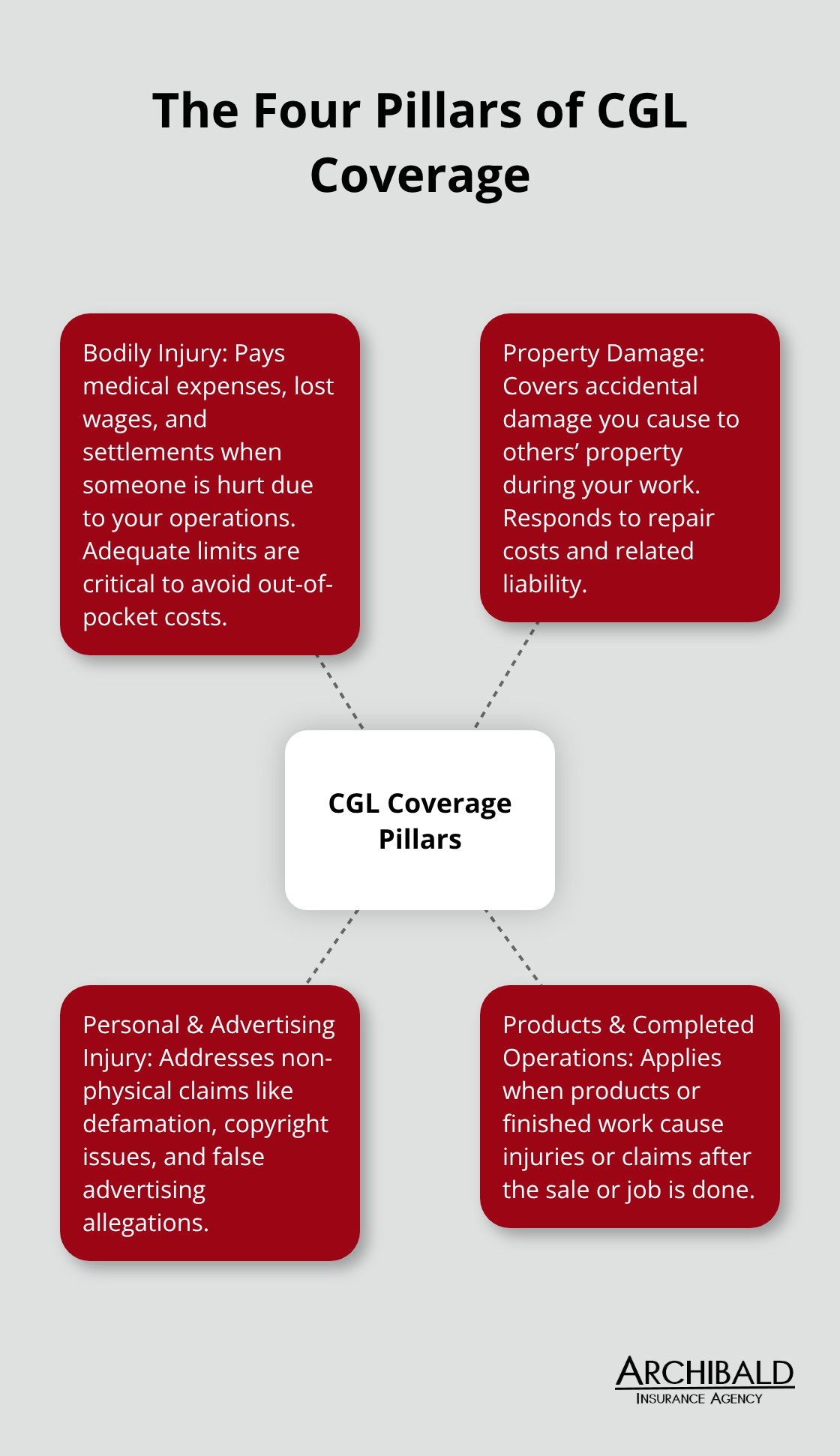
Understanding these four coverage pillars reveals why many Utah businesses operate with dangerous gaps in their protection. The next section shows you exactly which exclusions hide in standard policies and what additional coverages can fill those holes before a claim exposes your vulnerability.
Common Gaps and How to Avoid Them
Exclusions That Hide in Standard CGL Policies
Standard CGL policies exclude entire categories of risk that Utah business owners assume they’re covered for, and discovering these gaps after a claim arrives is catastrophic. Pollution liability, employment practices liability, and contractual liability sit outside standard CGL protection in most policies. A Utah contractor who agrees to indemnify a client in a construction contract faces a coverage denial when that indemnification clause triggers a claim, because standard CGL explicitly excludes contractual liability unless you pay extra. Professional service providers operating in Utah frequently miss that CGL doesn’t cover errors and omissions at all-an accountant, consultant, or engineer needs separate professional liability coverage because their mistakes create financial losses, not bodily injury. Intentional acts, criminal conduct, and violations of employment law also face automatic exclusions. Most Utah business owners operate with gaps in their protection that standard CGL policies don’t address.
Additional Coverages That Fill Protection Gaps
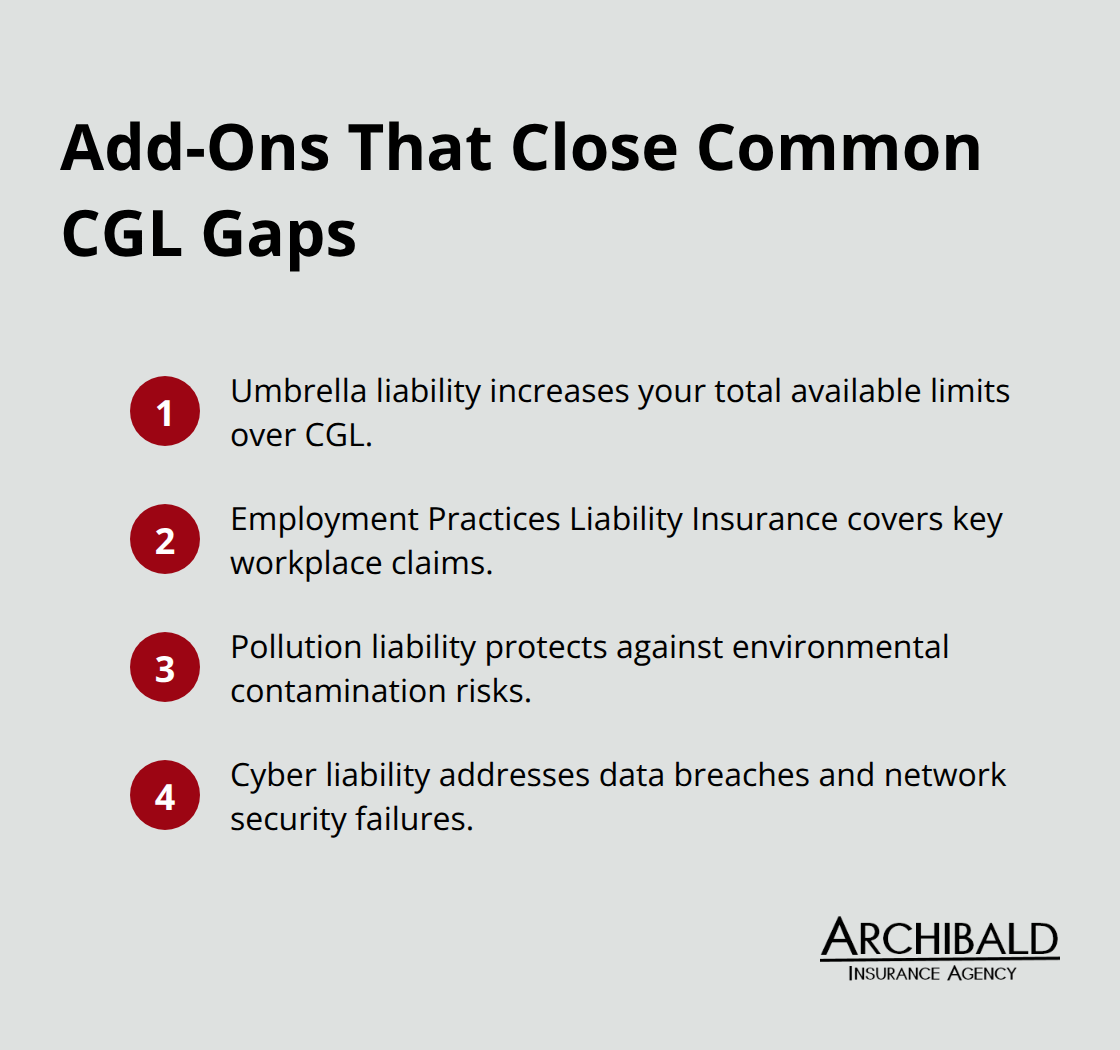
Additional coverages transform your policy from dangerously incomplete to genuinely protective. Umbrella liability coverage extends your limits when a single claim exceeds your CGL policy maximum-a $1 million umbrella policy adds substantial protection for modest annual premiums. Employment practices liability insurance covers wrongful termination, discrimination, and harassment claims that CGL explicitly rejects. Pollution liability protects contractors, manufacturers, and service businesses from environmental contamination exposures. Cyber liability coverage addresses data breaches and network security failures, increasingly critical for Utah businesses handling customer information.
Matching Additional Coverage to Your Industry
Your specific industry determines which additional coverages matter most. A restaurant needs liquor liability and spoilage coverage, while a construction company needs equipment breakdown and inland marine protection. The mistake most Utah business owners make is treating CGL as complete coverage rather than a foundation requiring supplemental protection.
Working with an Independent Agent to Close Gaps
An independent agent who represents multiple insurance carriers can layer these coverages strategically, identifying which additional protections deliver maximum value for your specific operations rather than overselling unnecessary coverage. This layered approach costs less than you’d expect because carriers often bundle related coverages and offer discounts when you consolidate multiple policies with one insurer. At Archibald Insurance Agency, our team represents numerous carriers, allowing us to build customized protection plans that address your actual exposures without unnecessary additions.
Final Thoughts
CGL policy Utah coverage forms the foundation of business protection, but only when you understand what actually gets covered and where gaps exist. Bodily injury and property damage claims destroy businesses that lack adequate liability protection, and standard policies exclude far more than most Utah business owners realize. Your specific industry, location, and operational risks determine exactly which coverage limits and additional protections you need to operate safely.
Pull your declarations page and compare your bodily injury limits, property damage limits, and additional coverages against your actual business exposures. If you operate in construction, manufacturing, or professional services, your gaps are probably larger than you think. If you haven’t reviewed your policy in over two years, your coverage almost certainly doesn’t match your current operations (especially if your business has expanded or changed focus).
Contact Archibald Insurance Agency to review your current CGL policy Utah coverage and identify which additional protections matter most for your business. Our team analyzes your specific industry, operations, and risk profile to deliver genuine protection that addresses your actual exposures. We represent numerous insurance carriers, which means we can build customized protection plans without unnecessary additions.
Disclaimer: The information provided in this blog is for general informational purposes only and does not constitute legal, financial, or insurance advice. Coverage options, terms, and availability may vary. Please consult with a licensed professional for advice specific to your situation


