

Life Insurance Salt Lake: Local Guide to Protection and Peace of Mind
Life insurance in Salt Lake City isn’t optional-it’s the foundation of financial security for your family. Without it, your loved ones face the burden of debt, lost income, and mounting expenses when you’re gone.
We at Archibald Insurance Agency help Utah families understand their options and find coverage that actually fits their lives. This guide walks you through the types of policies available, how to calculate what you need, and why working with a local agent makes all the difference.
Why Life Insurance Matters in Utah
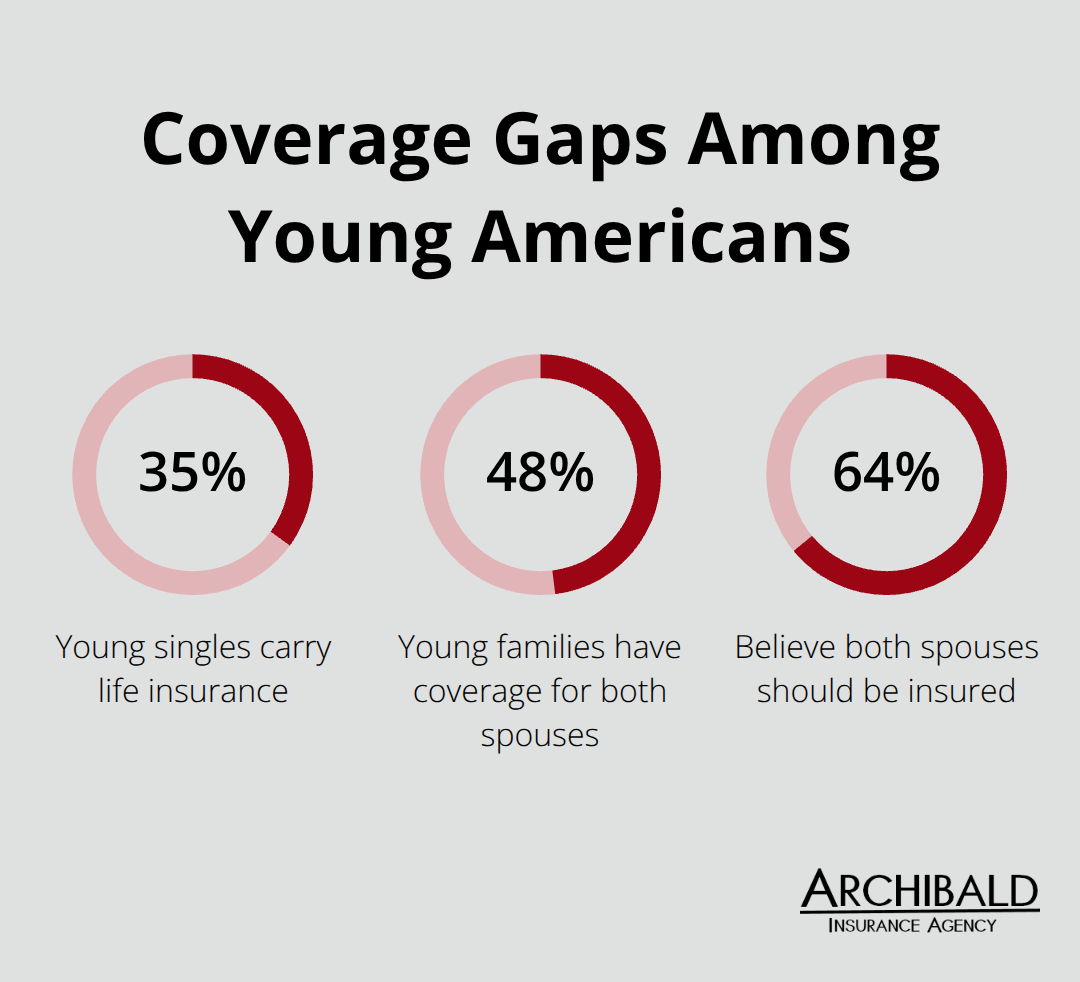
Life insurance exists for one reason: to prevent your family from drowning in financial chaos when you die. According to the National Association of Insurance Commissioners, roughly 35% of young singles carry life insurance, and only 48% of young families have coverage for both spouses despite 64% believing both should be insured. This gap isn’t about laziness-it’s about misunderstanding what life insurance actually protects against.
Without it, your spouse inherits your mortgage, your kids lose college funding, and funeral costs drain whatever savings exist. The average funeral in Utah costs about $8,300, and that’s before you factor in outstanding debts, property taxes, or lost income. Life insurance isn’t a luxury product; it’s the financial equivalent of a fire extinguisher in your home.
Your Income Has a Dollar Value Your Family Depends On
If you earn $60,000 annually and work until age 65, your remaining income represents roughly $300,000 in earning potential. Your family needs that money to pay the mortgage, buy groceries, and cover utilities after you’re gone. Term life insurance replaces that income stream for a defined period-typically 10, 20, or 30 years-at premiums far lower than permanent policies. A healthy 35-year-old male can secure a $500,000 20-year term policy for approximately $30 to $50 monthly, according to industry benchmarks. Whole life and universal life policies cost significantly more upfront but provide lifetime coverage and build cash value over time. The choice depends on your timeline: if you need protection until your kids finish college and your mortgage is paid, term insurance makes the smarter financial move. If you want coverage that lasts your entire life and doubles as a savings vehicle, permanent policies make sense, though you’ll pay higher premiums for that flexibility.
Debts Don’t Disappear When You Do
Your family inherits your debts when you pass away. Credit card balances, car loans, and especially your mortgage become their responsibility unless life insurance pays them off. A $300,000 mortgage on a $500,000 home means your surviving spouse either sells the house in a difficult market or struggles to keep up payments on a single income. Student loans you co-signed transfer to your children if you die. Medical debt from a final illness can deplete an estate quickly. Life insurance proceeds pay these obligations directly, protecting your family’s assets and preventing forced asset sales during grief. This is why calculating your coverage needs must include a detailed audit of what you actually owe, not just guesses about what feels right.
What Happens Next: Finding Your Coverage Amount
The gap between what you think you need and what actually protects your family often comes down to one thing: a proper calculation. Your next step involves adding up your debts, replacing your income, and accounting for inflation over the years ahead. This is where most people stumble-they either underestimate what their family truly needs or overpay for coverage they’ll never use. Working with a local agent ensures the types of policies available in Salt Lake City are matched to your actual situation, and choosing the right one depends on understanding how each one works.
Types of Life Insurance Available in Salt Lake City
Term Life Insurance: Affordable Protection for a Set Period
Term life insurance provides straightforward protection for a specific timeframe, making it the most affordable option for families who need coverage until major financial obligations disappear. A healthy 35-year-old pays roughly just $23 per month for a $500,000 20-year term policy. This coverage bridges the gap between now and when your mortgage shrinks, your kids finish college, and your retirement savings kick in.
The trade-off is clear: once your term ends, the policy expires with no cash value to show for your premiums. Renewal remains possible but comes with dramatically higher rates since you’re older and potentially less healthy. Some term policies include conversion riders that allow you to switch to permanent coverage without a medical exam, which matters if your health declines during the initial term.
Choosing the right term length depends on your timeline. A 30-year term makes sense if you’ll still have a mortgage at 65, while 10-year term works only if you’re aggressively paying down debt and building retirement savings simultaneously. The National Association of Insurance Commissioners reports that about 28% of young adults actually understand the difference between term and permanent policies, so this decision trips up most people.
Whole Life Insurance: Lifetime Coverage with Cash Value Growth
Whole life insurance takes the opposite approach: it lasts your entire life and builds cash value that grows tax-deferred. Premiums stay level throughout your lifetime, typically running $200 to $400 monthly for that same $500,000 policy at age 35. The trade-off is immediate and painful-you pay five to eight times more than term insurance for the same death benefit.
However, your policy accumulates real cash value over time that you can borrow against, withdraw, or use to pay premiums if income drops. Whole life policies prove particularly useful if you have dependents who’ll need protection well into your 70s or 80s, or if you’re building an estate that requires liquidity after death. The guaranteed nature of whole life (level premiums, predictable cash value growth) appeals to people who want certainty and don’t want to monitor their policy annually.
Universal Life Insurance: Flexibility with Built-In Risk
Universal life insurance sits between term and whole life, offering premium flexibility and adjustable death benefits tied to interest rates and policy charges. Your premiums can fluctuate, and your cash value depends on credited interest rates-currently hovering around 3 to 5 percent annually at most carriers. This flexibility attracts people who expect income changes, but it creates real risk: if interest rates drop or you skip premium payments, your policy can lapse unexpectedly, leaving you uninsured.
Universal life requires annual reviews and illustrations showing year-by-year projections; skipping this step is how people discover too late that their policy will collapse in five years without additional payments. The policy’s performance hinges on factors outside your control, making it less predictable than whole life but more flexible than term.
Matching Your Needs to the Right Policy Type
The decision between these three hinges on one question: how long do you actually need protection? If you’re 35 with a 30-year mortgage and kids heading to college in 14 years, term life is almost always the smarter math. If you’re 55 with aging parents who depend on you and substantial assets to protect, permanent coverage makes sense despite the higher cost. If your income fluctuates or you expect major life changes, universal life’s flexibility prevents you from overpaying for coverage you might not sustain.
Utah regulations under R590-177 require carriers to provide standardized illustrations showing guaranteed versus projected values, so demand year-by-year projections from any agent before committing. Compare policies from multiple carriers-no single company dominates pricing across all ages and health profiles. A healthy 40-year-old might find the best term rates at one carrier while another excels at whole life pricing.
This is where working with an independent agent who represents multiple carriers becomes invaluable, since they show you real quotes side-by-side rather than pushing you toward whatever pays the highest commission. We at Archibald Insurance Agency represent numerous carriers, which means we match you with the policy and price that actually fits your situation. Understanding which type works best for you sets the stage for the next critical step: calculating exactly how much coverage your family actually needs.
How to Choose the Right Life Insurance Policy
Calculate Your Actual Coverage Needs
Start with a brutal calculation instead of guessing what you need. Add your outstanding debts, including your mortgage balance, car loans, credit cards, and any student loans you co-signed. Then multiply your annual household expenses by the number of years your family would need support if you died today. The National Association of Insurance Commissioners emphasizes that most people underestimate this number significantly.
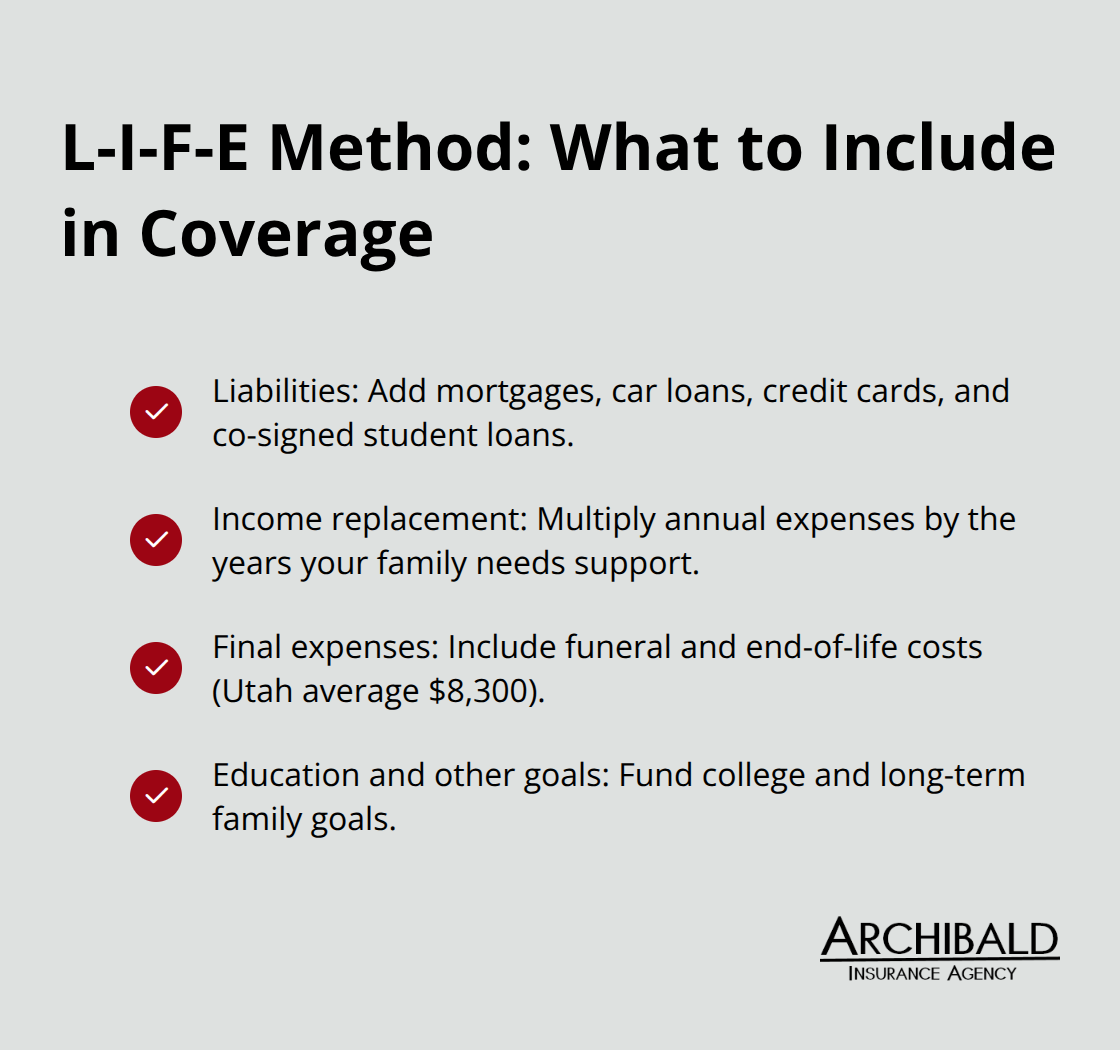
If you earn $70,000 annually and your family would need 25 years of income replacement, that’s $1.75 million in coverage required just for income replacement alone. Add your debts, final expenses averaging $8,300 in Utah, and a buffer for inflation, and your actual need might climb to $2 million or higher. Some advisors suggest coverage equal to 7–10× your income, using the L-I-F-E method as a guide: L: Liabilities; I: Income replacement; F: Final expenses; E: Education and other goals. This calculation isn’t theoretical because underinsurance leaves your family vulnerable to forced asset sales, bankruptcy, or relocation.
Use a detailed worksheet that accounts for each category rather than a simple online calculator that asks three questions and spits out a number. Utah regulations under R590-79 require carriers to provide a standardized Buyers Guide that walks through these calculation steps, so request one from any agent you contact.
Compare Quotes from Multiple Carriers
Once you know how much coverage you need, demand quotes from multiple carriers before committing to anything. No single insurance company offers the best rates for everyone at every age and health profile. A 40-year-old male might find competitive term rates at one carrier while another dominates whole life pricing for the same person.
When comparing policies, ignore the premium price alone and examine the illustrations required under Utah’s R590-177 rule, which shows guaranteed versus projected values year by year. Universal life policies with lower initial premiums often include illustrations showing the policy collapsing in 15 years without additional payments, while whole life illustrations demonstrate stable, predictable growth.
Request annual illustrations for at least 20 years so you understand what actually happens to your cash value and death benefit over time. Ask your agent directly which parts of the premium or benefit are guaranteed and which parts depend on interest rates or market performance. If an agent refuses to answer or becomes vague about guarantees, that’s your signal to look elsewhere.
Work with a Local Agent Who Understands Utah’s Regulatory Framework
An independent agent who represents multiple carriers helps you understand coverage, compare quotes, and choose policies that align with your interests. This approach protects you from bias toward any one insurer and expands your options significantly.
A local agent understands Utah’s specific regulatory environment and can explain how R590-93 replacement rules affect switching policies, how R590-155 guaranty association protections work if an insurer fails, and how your policy interacts with your broader financial plan. We at Archibald Insurance Agency represent numerous carriers, which means you access personalized insurance solutions tailored to your specific needs and budget. Our team provides expert advice on how these regulations protect you and which policy structure makes sense for your situation.
Final Thoughts
Life insurance in Salt Lake protects your family from financial collapse when you die, and the policy type you select matters far less than calculating your actual coverage needs through debts, income replacement, and final expenses. The three options available-term, whole life, and universal life-each serve different timelines and budgets, but all accomplish the same mission: preventing your loved ones from facing crisis after your death. Your coverage amount determines whether your family maintains stability or struggles to pay the mortgage, fund education, and cover basic expenses.
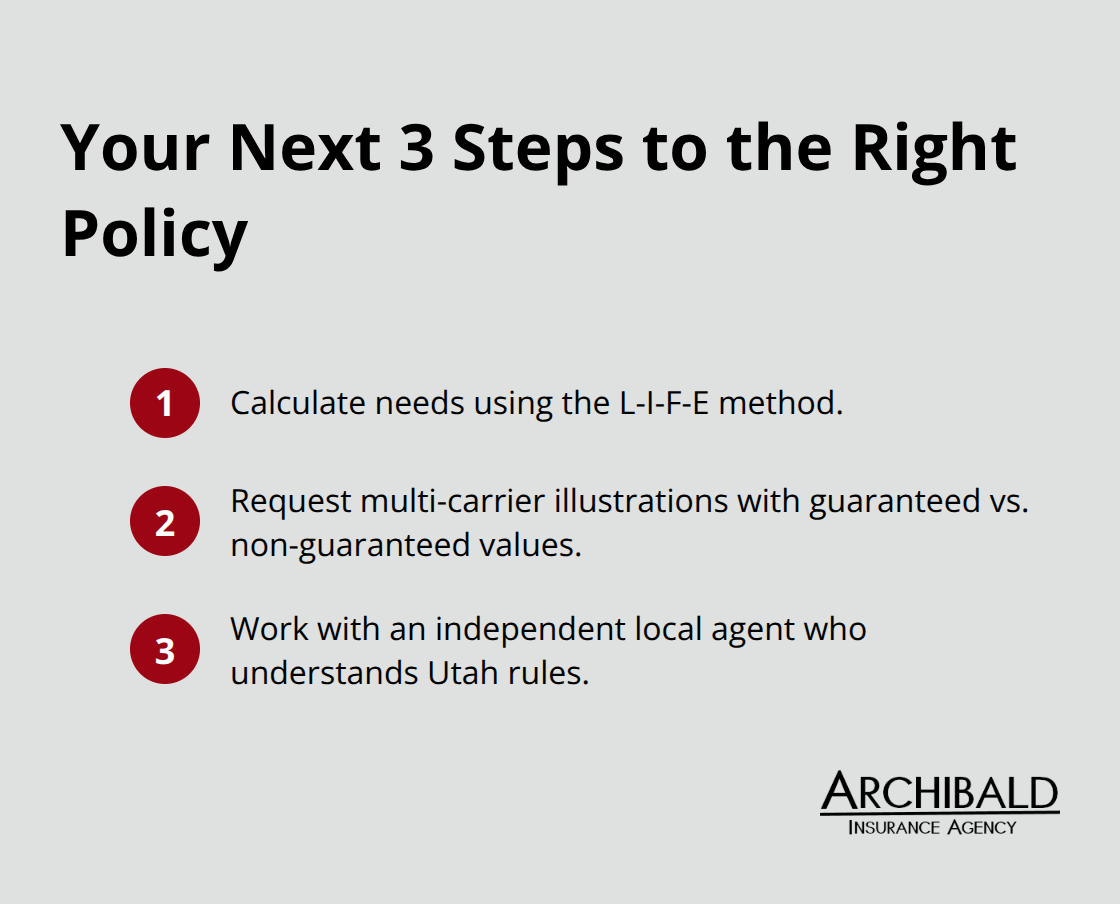
Three concrete actions move you forward immediately. First, calculate your coverage needs using the L-I-F-E method (Liabilities, Income replacement, Final expenses, Education) rather than guessing at a number that feels comfortable. Second, request illustrations from multiple carriers that show year-by-year projections of cash value and death benefits, comparing guaranteed versus non-guaranteed elements side by side. Third, work with an agent who represents numerous insurers and understands Utah’s regulatory framework, ensuring your policy aligns with your actual situation rather than what generates the highest commission.
We at Archibald Insurance Agency represent multiple carriers, which means you access personalized solutions tailored to your needs and budget rather than being steered toward a single company’s products. Contact Archibald Insurance Agency to discuss your coverage needs and find the protection that actually fits your life.
Disclaimer: The information provided in this blog is for general informational purposes only and does not constitute legal, financial, or insurance advice. Coverage options, terms, and availability may vary. Please consult with a licensed professional for advice specific to your situation


