

Utah Local Insurance Brokers: Compare and Choose Wisely
Choosing the right insurance broker in Utah makes a real difference in how well your coverage fits your life. Utah local insurance brokers offer something national companies can’t: direct access to multiple carriers and rates tailored to your specific situation.
At Archibald Insurance Agency, we’ve seen firsthand how the right broker relationship saves families and businesses thousands of dollars while giving them peace of mind. This guide walks you through exactly how to find and evaluate brokers who actually understand Utah’s unique insurance landscape.
Why Local Brokers Beat National Companies
Multiple Carriers Create Real Competition for Your Business
Local Utah insurance brokers operate fundamentally differently than national companies, and that difference shows up in your rates and coverage. When you work with an independent broker, you avoid being locked into one insurer’s offerings. Instead, brokers shop your information across multiple carriers simultaneously, which creates real competition for your business. Salt Lake City full-coverage auto insurance averages about $1,766 per year according to Policygenius data, but rates vary dramatically by carrier and ZIP code. GEICO quotes around $1,042 annually, while USAA sits at $1,101, Auto-Owners at $1,220, and Nationwide at $1,336. A broker pulls quotes from all of them at once rather than forcing you to contact each company separately. This matters because the difference between the cheapest and most expensive option can exceed $700 per year on auto coverage alone.
Local Knowledge Beats Generic Solutions
Utah’s insurance landscape has specific demands that generic national solutions miss entirely. Utah is a no-fault state, which fundamentally changes how claims work and what coverage actually protects you. You file claims with your own insurer for injuries rather than pursuing the at-fault driver, and you need at least $3,000 in PIP coverage per state law. A local broker explains this upfront and ensures your policy reflects these realities instead of defaulting to coverage designed for other states. Home insurance in Utah averages around $1,500 annually, but brokers familiar with regional risks recommend specific endorsements for wildfire exposure, hail damage, or flood risk depending on your location. They also know that bundling auto with home or renters insurance can lower your overall rates substantially.
Advocacy and Relationships Matter During Claims
National call centers lack the flexibility to advocate for you when claims become complicated or when you need coverage adjustments mid-year. A local broker in Salt Lake City understands that 84108 residents face different rate pressures than those in 84113 or 84103, and they can explain why your neighbor’s quote differs from yours. When you need workers’ compensation for a small business, cyber liability for a professional practice, or umbrella coverage for assets you want to protect, local brokers access carriers like WCF and RLI through established networks that national websites simply don’t connect you with. A broker advocates during claims, helps you navigate policy language, and adjusts coverage as your life changes, rather than disappearing after the initial sale.
The next step involves understanding exactly how to evaluate which brokers in Utah actually deliver on these advantages.
How to Evaluate Utah Brokers Before You Sign
Verify Licensing and Credentials
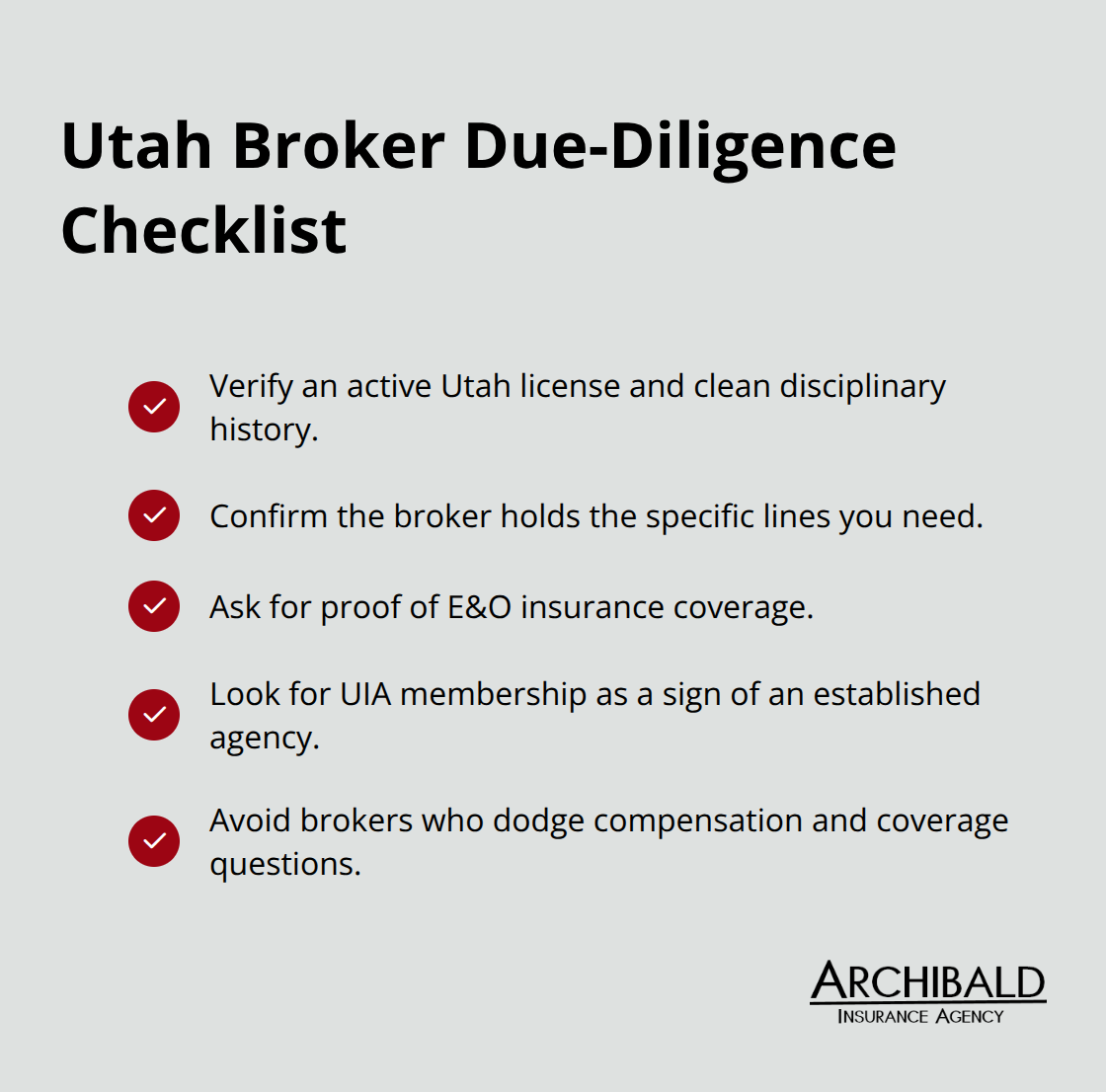
Verifying that a Utah broker holds legitimate credentials takes five minutes and protects you from unlicensed operators. The Utah Insurance Department maintains a searchable database where you can confirm that any broker holds a current license and has no disciplinary history. Check for the specific license types your coverage requires-auto, home, business, or life insurance-because not all brokers hold every credential. The Utah Insurance Agents Association (UIA) represents legitimate member agencies across the state and has served since 1919, so membership signals established operations rather than fly-by-night outfits.
When you call a broker, ask directly about their E&O insurance coverage, which protects you if they make a mistake on your policy. Brokers who hesitate or dodge this question aren’t worth your time.
Understand Commission Structures and Fee Transparency
Commission structures vary dramatically between brokers, and transparency matters because hidden fees erode the savings you expect from shopping multiple carriers. Some brokers charge flat fees, others take commissions from insurers, and some use hybrid models. A reputable broker explains upfront how they get paid and confirms that their compensation method doesn’t create conflicts of interest when recommending coverage. If a broker pushes expensive add-ons without explaining why your specific situation needs them, that’s a red flag.
Assess Customer Testimonials and Agency Reputation
Customer testimonials reveal whether brokers follow through on promises or disappear after the sale. Read past the star count and look for specific mentions of how brokers handled claims, responded to questions, or adjusted coverage when circumstances changed. Complaints about slow responses, difficulty reaching the broker, or feeling pressured into coverage you didn’t understand signal poor service. The difference between a broker who checks in annually versus one who disappears for years shows up in whether you’re actually covered for your current needs.
Request References and Ask the Right Questions
Ask potential brokers for references from clients with your exact insurance type-a business owner’s experience differs from a homeowner’s, and you want to hear from someone in your situation. When you contact references, ask whether the broker proactively suggested coverage improvements, how quickly they responded to questions, and whether claims went smoothly. The difference between a broker who checks in annually versus one who disappears for three years shows up in whether you’re actually covered for your current needs.
Look for Utah-Specific Market Knowledge
A broker familiar with Utah’s specific risks-wildfire zones, hail patterns, no-fault auto regulations-will mention these factors during initial conversations without you having to ask. That knowledge demonstrates they’ve invested in understanding their market rather than treating Utah the same as any other state. Once you’ve narrowed your choices to brokers who meet these standards, the next step involves understanding what specific experience and responsiveness actually look like in practice.
What Matters Most When Selecting a Broker
Specialized Experience Prevents Coverage Gaps
Brokers who specialize in your specific insurance needs outperform generalists who handle everything. If you need business insurance for a construction company, a broker with construction experience understands the difference between general liability and completed operations coverage without you having to explain it. They know which carriers accept construction risk and which ones demand higher premiums or refuse the business entirely. A broker experienced with your industry spots coverage gaps before they become expensive problems. Someone who handles mostly auto and home insurance will miss that your small manufacturing operation needs pollution liability or that your equipment requires inland marine coverage. The best brokers maintain relationships with carriers that specialize in specific industries, not just the big national names. When you contact potential brokers, ask directly about their experience with businesses or situations exactly like yours. If they hesitate or give vague answers, they’re not the right fit.
Responsiveness Reveals True Client Commitment
Responsiveness separates brokers who genuinely serve clients from those who treat insurance like a transactional product. A broker who takes three weeks to return calls during non-crisis periods will become unreachable when you file a claim or need urgent coverage adjustments. Test this before signing by observing how quickly they respond during your initial conversations. The best brokers answer email within 24 hours and phone calls the same business day. They also maintain consistent contact throughout the year rather than vanishing until renewal time. A broker who reaches out in July to review whether your coverage still matches your life changes demonstrates they’re thinking about your protection, not just collecting commission.
Long-Term Relationships Build Deeper Knowledge
Long-term relationships with brokers mean they understand your situation deeply enough to recommend improvements without you asking. They know your home’s roof age, your business’s revenue trends, and whether your family’s needs have shifted (circumstances that change how much coverage you actually need). This accumulated knowledge prevents the coverage gaps that plague people who switch brokers frequently or work with agents who never follow up. A broker invested in your long-term protection adjusts your coverage as your life evolves, rather than leaving you with policies designed for who you were three years ago.
Final Thoughts
Utah local insurance brokers deliver real value that national websites cannot match. They shop multiple carriers simultaneously, understand Utah’s specific insurance landscape, and advocate for you when claims happen. That combination saves money while eliminating the coverage gaps that leave families and businesses exposed.
Start by contacting Utah local insurance brokers in your area and asking the questions outlined in this guide: verify their licensing, understand their commission structure, and assess their experience with your specific insurance type. Request references from clients in your situation and observe how quickly they respond during initial conversations. At Archibald Insurance Agency, we represent numerous carriers and specialize in auto, home, business, and life insurance tailored to Utah families and businesses.
Visit our website to discuss your coverage needs with a broker who understands your local market and commits to long-term protection. The right broker relationship pays for itself through competitive rates, personalized advice, and claims advocacy that national websites simply cannot provide.
Disclaimer: The information provided in this blog is for general informational purposes only and does not constitute legal, financial, or insurance advice. Coverage options, terms, and availability may vary. Please consult with a licensed professional for advice specific to your situation


