
Commercial Auto Insurance Utah: Protecting Your Fleet Without Breaking the Bank
Running a fleet in Utah means balancing protection with your bottom line. Commercial auto insurance in Utah isn’t one-size-fits-all, and many business owners overpay without realizing it.
We at Archibald Insurance Agency help Utah businesses find coverage that actually fits their needs. This guide shows you how to protect your vehicles without unnecessary costs.
What Utah Businesses Actually Need to Know About Commercial Auto Coverage
State Minimum Coverage Requirements
Utah law requires commercial vehicles to carry minimum liability coverage of $25,000 for bodily injury per person, $65,000 per accident, and $15,000 for property damage, according to the Utah Insurance Department. These minimums protect you legally, but they fall short for real business operations. A single accident involving your fleet can easily exceed these limits, leaving your company financially exposed. Most Utah business owners quickly discover that state minimums act as a floor, not a ceiling. Your actual coverage needs depend on your vehicle types, number of drivers, cargo value, and revenue at risk.
Types of Coverage Your Fleet Actually Needs
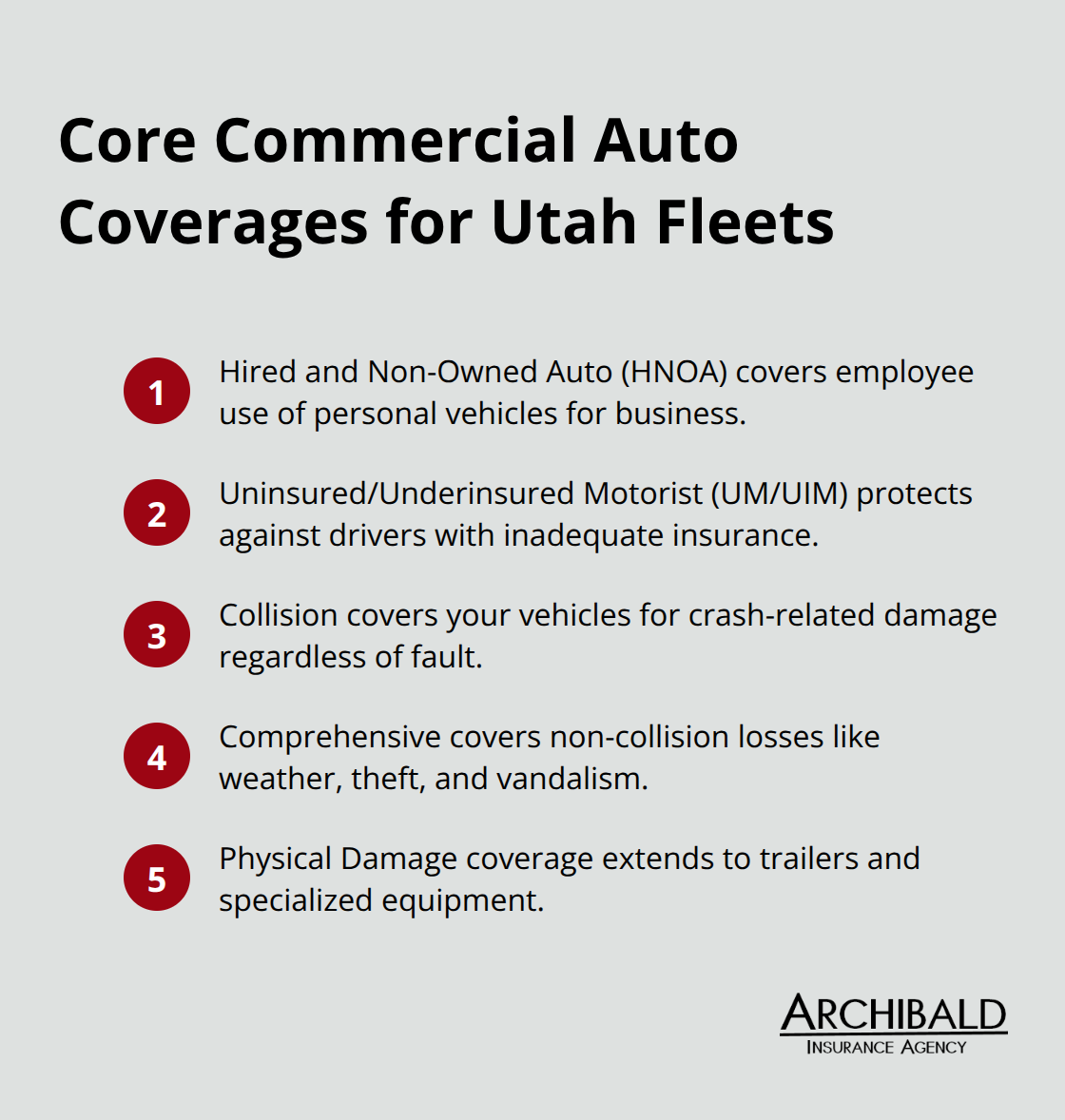
Commercial auto policies come in different shapes depending on your operation. Hired and non-owned vehicle coverage protects you when employees use their personal cars for business purposes-a significant concern if your team makes client visits or deliveries. Uninsured and underinsured motorist coverage shields your fleet against drivers without adequate insurance. Collision and comprehensive coverage handles accidents, weather, and theft, which Utah experiences regularly during winter months. Physical damage coverage for trailers and specialized equipment becomes critical if you operate dump trucks, refrigerated units, or other commercial vehicles.
Matching Coverage to Your Specific Operation
The specific combination you need depends entirely on what your business does, not what an insurance company suggests as standard. A delivery service faces different risks than a construction company with heavy equipment. Your industry, vehicle count, and driver experience all shape what protection makes sense. Utah businesses that regularly transport valuable goods, operate in high-traffic areas, or employ multiple drivers face substantially higher exposure than those with single vehicles and limited use.
The Real Cost of Underinsurance
Fleet protection directly impacts your bottom line because one major accident without proper coverage can cost tens of thousands or bankrupt a small operation. A business with five vehicles and minimal coverage faces catastrophic risk that proper insurance eliminates. The cost difference between underinsured and properly insured fleets typically runs 15 to 30 percent more in premiums, but that investment protects against losses that could exceed hundreds of thousands of dollars.
Understanding your coverage options sets the stage for the next critical step: finding ways to reduce those premiums without sacrificing the protection your fleet actually needs.
How to Cut Commercial Auto Insurance Costs Without Cutting Coverage
Reducing your fleet insurance premiums starts with understanding what discounts actually exist and which ones apply to your specific operation. Most Utah business owners leave money on the table because they never ask their agent about available savings. Insurance companies reward companies that demonstrate lower risk, and that’s where your focus should land. Businesses save money on commercial auto premiums simply by taking advantage of discounts they didn’t know existed or never bothered to claim.
Bundling Policies Creates Real Savings
Bundling your commercial auto insurance with business property coverage, general liability, or workers compensation typically reduces your total premium, depending on your carrier and risk profile. This isn’t theoretical math-it’s how insurance companies incentivize customer loyalty. If you operate your business from a physical location, you already carry property insurance, which means bundling becomes immediate low-hanging fruit. Many Utah business owners maintain their commercial auto policy with one carrier and their general liability policy with another, effectively paying a penalty for fragmentation. Consolidating with a single carrier that offers multiple lines of coverage eliminates this inefficiency. The savings compound when you add life insurance or disability coverage to the mix, which many small business owners eventually need anyway.
Safety Features and Driver Training Programs Deliver Measurable Discounts
Vehicles equipped with anti-theft devices, GPS tracking systems, or collision avoidance technology typically qualify for premium reductions because they demonstrably reduce claims frequency and severity. Fleet telematics systems that monitor driver behavior have become standard offerings from most major carriers, and participating in these programs often unlocks additional discounts. Utah businesses with five or more vehicles should invest in formal driver training programs because the discount savings typically exceed the program cost within the first year. Some carriers offer smartphone apps that track driving habits and provide real-time feedback, which appeals to younger drivers and directly correlates with lower accident rates.
Annual Reviews Prevent Premium Creep
Your commercial auto policy requires annual review because your business changes, your fleet composition shifts, and your driving patterns evolve, yet many policies remain static for years. A business that added two vehicles and hired three new drivers likely qualifies for different discounts than it did previously, but those changes don’t automatically adjust your premium downward. Annual reviews with your agent identify coverage gaps created by business growth, eliminate redundancies, and capture new discounts your carrier introduced. Utah businesses that conduct annual policy reviews typically save money on their next renewal simply because their coverage better matches their actual operation. Waiting until renewal time to discuss coverage changes means missing opportunities to adjust mid-year if your business circumstances shift significantly.
What Mistakes Cost You Most
Common errors in fleet insurance management drain thousands from your bottom line each year. Many business owners underinsure their vehicles to save money upfront, only to face catastrophic losses when accidents occur. Others ignore usage-based insurance programs that reward safe driving habits with substantial discounts. Failing to update coverage after business changes-adding vehicles, hiring drivers, or expanding service areas-leaves gaps that claims will expose. These mistakes compound over time, making the next section essential reading for protecting both your fleet and your finances.
Common Mistakes Business Owners Make with Fleet Insurance
Utah business owners make three critical errors with fleet insurance that seem smart in the moment but create financial disasters later. The first mistake is cutting coverage to cut premiums, which works until an accident happens and your business faces bills your insurance won’t cover. A delivery company in Salt Lake City that reduced collision coverage on three vehicles to save $1,200 annually faced a $28,000 repair bill when one vehicle was hit by an uninsured motorist, wiping out five years of premium savings in a single incident. The math looks different when you’re writing a check from your business account instead of watching your insurance bill. State minimums exist specifically because they’re inadequate for real business operations, yet businesses routinely strip coverage below even those minimums thinking they’re being financially savvy.
The Cost of Underinsurance
One accident exposes what underinsurance actually costs your operation. A single claim without proper coverage can wipe out years of premium savings and threaten your business survival. Your competitors who maintain adequate coverage sleep better at night because they know their fleet is protected.
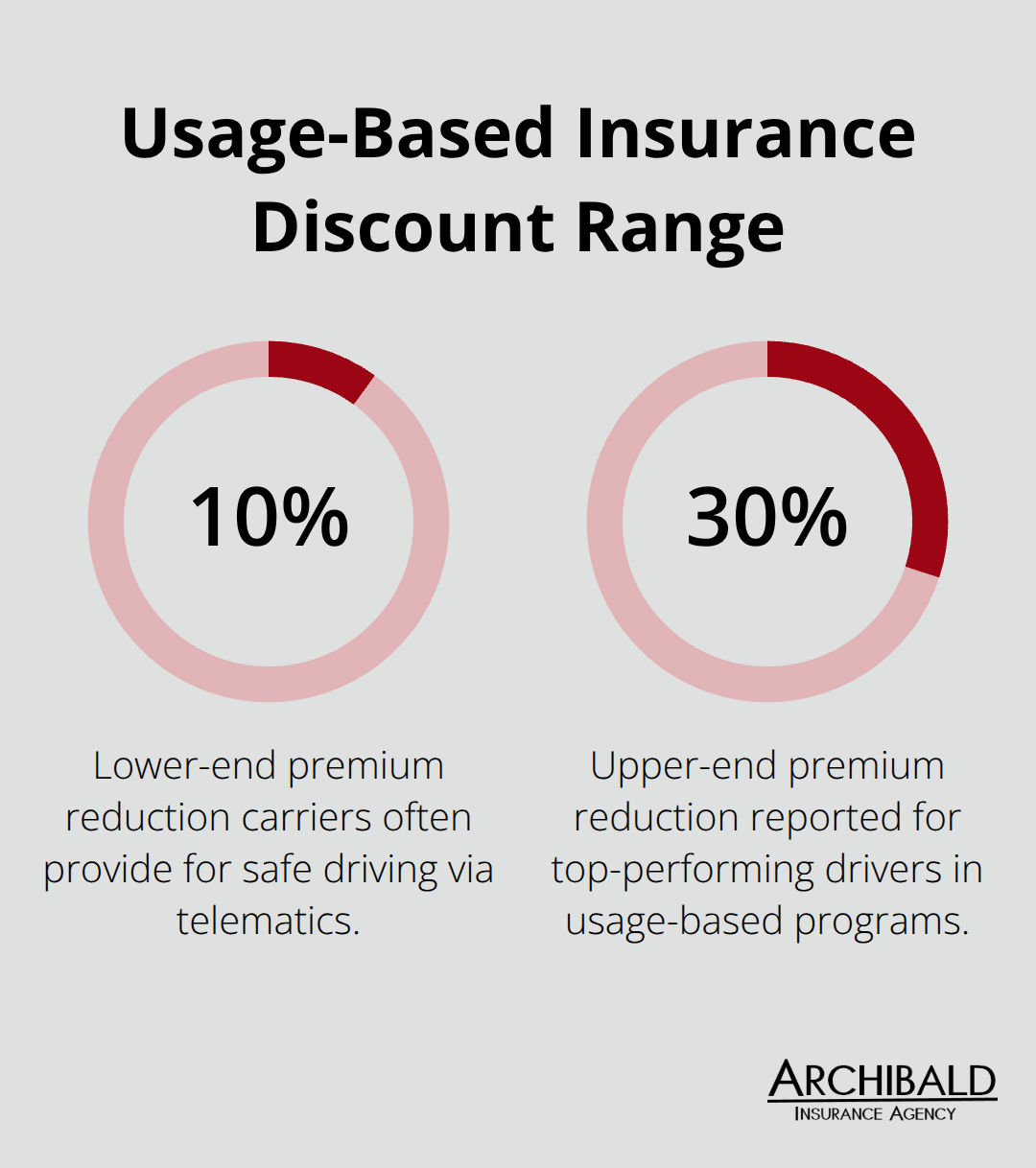
The second critical error is ignoring usage-based insurance programs that your carrier offers, which means leaving substantial discounts unclaimed. Programs like Suretrack or similar telematics systems from major carriers track driver behavior and reward safe driving with premium reductions of 10 to 30 percent, according to insurance industry data. A Utah construction company with five drivers that implemented a usage-based program reduced their annual premium by $3,600 while simultaneously identifying that one driver needed additional training after the data revealed aggressive acceleration patterns.
These programs cost nothing to join and provide real-time feedback that improves driver safety, yet most Utah business owners never ask their agent if their carrier offers this option.
Usage-Based Programs You’re Likely Missing
Your carrier probably offers telematics programs that you’ve never heard about. These systems monitor acceleration, braking, and speed patterns, then reward safe drivers with tangible discounts. A five-vehicle fleet could save thousands annually by simply activating a program that already exists within your current policy.
The third error compounds over time and often goes unnoticed until renewal: failing to update your policy when your business changes. Adding two vehicles, hiring three new drivers, expanding into a different service area, or shifting from local to regional deliveries all change your risk profile and your coverage needs, yet many business owners maintain the same policy for years. Your carrier can’t reduce your premium for improvements you don’t report, and your coverage gaps won’t be discovered until a claim exposes them.
Policy Updates That Actually Matter
Your business changes constantly, but your insurance doesn’t adjust automatically unless you actively communicate those changes to your agent. Adding vehicles seems obvious, but hiring new drivers often gets overlooked because owners assume their existing policy covers anyone driving company vehicles. It doesn’t work that way. Different drivers have different accident histories, ages, and experience levels that directly affect your premium and coverage eligibility.
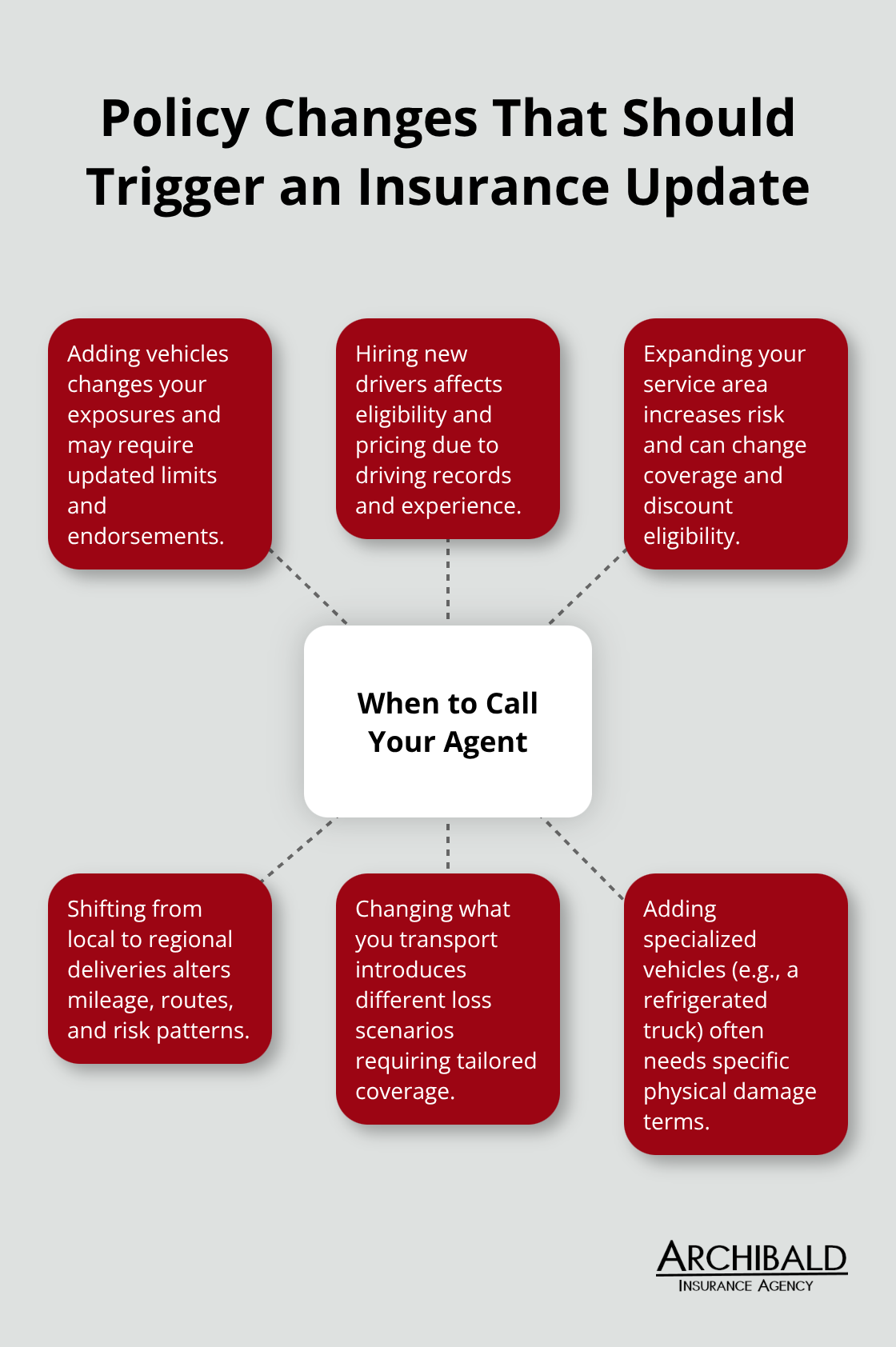
Expanding your service area from Salt Lake County to multiple counties changes your risk exposure and may qualify you for different discounts or require additional coverage types. Changing what you transport matters enormously because hauling construction materials creates different risks than transporting documents or providing services. A business that adds a specialized vehicle like a refrigerated truck needs to communicate this immediately because your existing policy likely doesn’t cover it adequately.
When to Contact Your Agent
Schedule a policy review with your agent whenever your business undergoes significant changes rather than waiting until renewal. These updates should happen within 30 days of any major business change so your coverage and premiums stay aligned with your actual operation. Your agent can identify coverage gaps created by business growth and capture new discounts your carrier introduced.
Final Thoughts
Protecting your fleet in Utah does not require choosing between comprehensive coverage and affordability. Smart business owners reduce their premiums by eliminating waste, not by eliminating protection. State minimums will not save your business when an accident happens, but bundling policies, activating driver safety programs, and conducting annual reviews will save you thousands without sacrificing the coverage your operation needs.
Commercial auto insurance in Utah works best when your policy matches your actual business. A delivery company with five vehicles needs different coverage than a construction contractor with specialized equipment, yet both can find affordable solutions by understanding their specific risks and claiming available discounts. The businesses that overpay typically do so because they never asked their agent about bundling opportunities, usage-based insurance programs, or coverage adjustments after business changes (these oversights cost money year after year).
We at Archibald Insurance Agency help Utah businesses find commercial auto insurance that protects their fleet without unnecessary costs. Contact Archibald Insurance Agency to discuss your fleet’s coverage needs and discover how much you might be overpaying. A thorough review typically takes one conversation and can save your business thousands annually while ensuring your vehicles are properly protected.
Disclaimer: The information provided in this blog is for general informational purposes only and does not constitute legal, financial, or insurance advice. Coverage options, terms, and availability may vary. Please consult with a licensed professional for advice specific to your situation


