

Young Adults Life Insurance: Coverage That Fits Your Stage
Life insurance might not feel urgent when you’re in your twenties or thirties, but young adults life insurance is one of the smartest financial moves you can make right now. The younger you are when you purchase a policy, the lower your premiums will be for the rest of your life.
At Archibald Insurance Agency, we help young adults in Utah understand why starting early matters and which coverage options work best for your current situation. Whether you’re managing student loans, planning for a family, or building wealth, the right life insurance protects what matters most.
Why Young Adults Need Life Insurance Now
Life Insurance Protects Your Most Valuable Asset
Life insurance at twenty-five or thirty-five feels distant because you’re healthy and mortality seems theoretical. That’s exactly why you should act now. The statistics are straightforward: about one in four workers will experience a disability lasting ninety days or longer during their working years. While disability and death are different situations, both can devastate your finances if you lack protection.
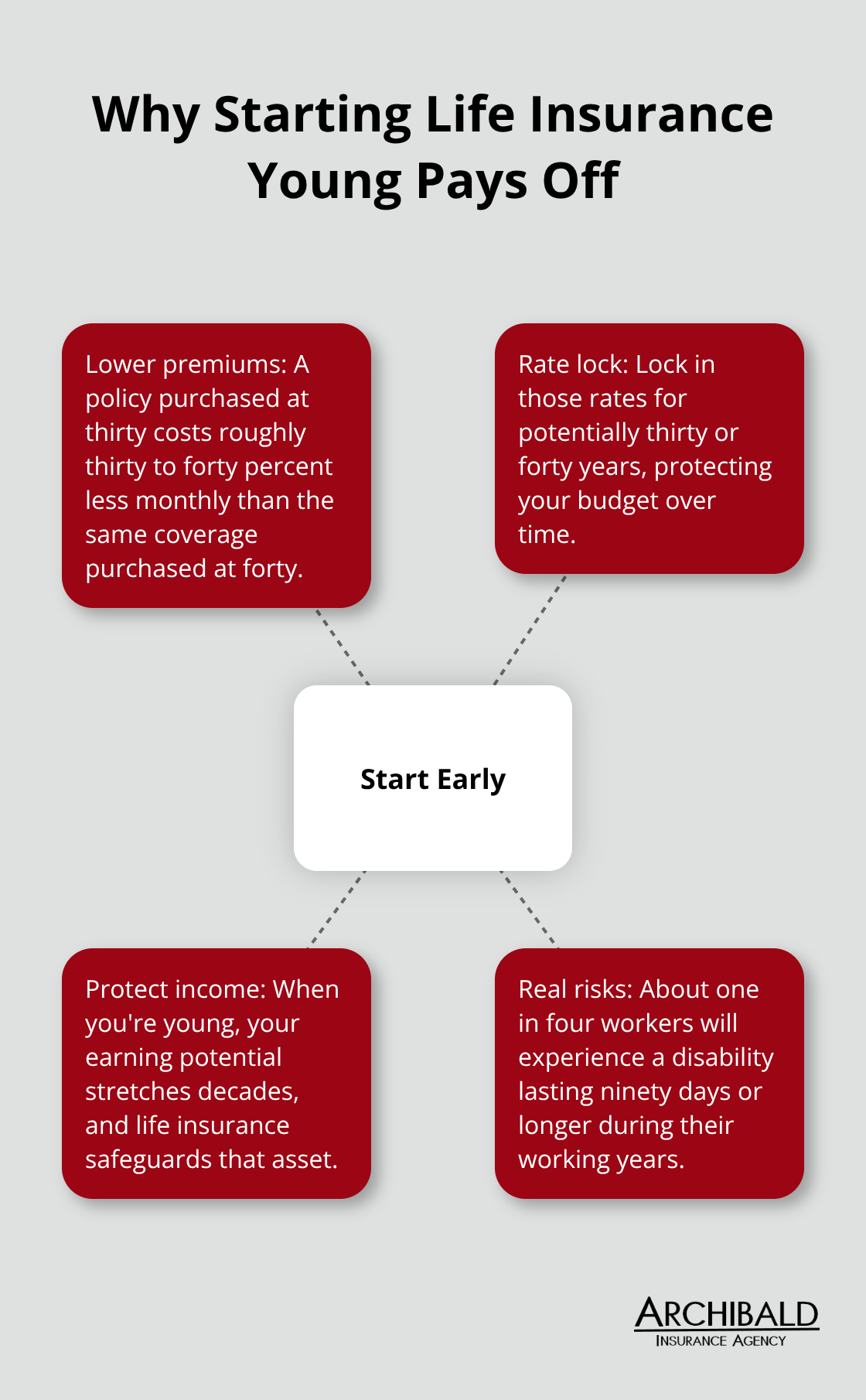
When you’re young, your earning potential stretches decades into the future. That’s your most valuable asset, and life insurance protects it. A policy purchased at thirty costs roughly thirty to forty percent less monthly than the same coverage purchased at forty, according to industry data from the American Council of Life Insurers. This isn’t just about getting cheaper rates; it’s about locking in those rates for potentially thirty or forty years.
The Cost of Waiting Adds Up Fast
If you wait, you’ll pay substantially more every month for the rest of your policy’s life. The math is brutal: a thirty-year-old purchasing a twenty-year term policy pays less per month than a forty-year-old purchasing the identical coverage. Each year you delay, your premiums increase. That difference compounds over decades, costing you thousands of dollars in extra payments.
Your Financial Obligations Are Real Today
Your financial obligations right now are real and specific. Average student loan debt for recent graduates was $29,560 among 2024 bachelor’s degree graduates who borrowed. If you’re married or planning to be, your spouse depends on your income. If you have children or plan to, they depend on you for eighteen years or more.
Even if you’re single, your parents might have co-signed loans or depend on your support. Life insurance isn’t about preparing for something that might happen; it’s about protecting people who depend on your paycheck. Without a policy, your family faces selling assets, relocating, or leaving college unfinished. With one, they maintain stability and financial security.
Understanding Your Coverage Options
The right life insurance policy matches your current situation and your timeline. Term life insurance offers affordable protection for a set number of years. Whole life insurance provides permanent coverage that builds cash value. Universal life insurance gives you flexibility to adjust your premiums and death benefit as your life changes. Each option serves different needs, and the best choice depends on your age, income, and family situation.
Types of Life Insurance for Young Adults
Term Life Insurance: Maximum Protection at Minimum Cost
Term life insurance is the right choice for most young adults in Utah, and here’s why: it’s affordable, straightforward, and covers the years when your financial obligations are heaviest. A twenty-five-year-old can purchase a thirty-year term policy for roughly fifteen to twenty dollars monthly, according to quotes from major carriers. That locks in protection through your thirties, forties, and into your mid-fifties when your kids finish college and your mortgage shrinks.
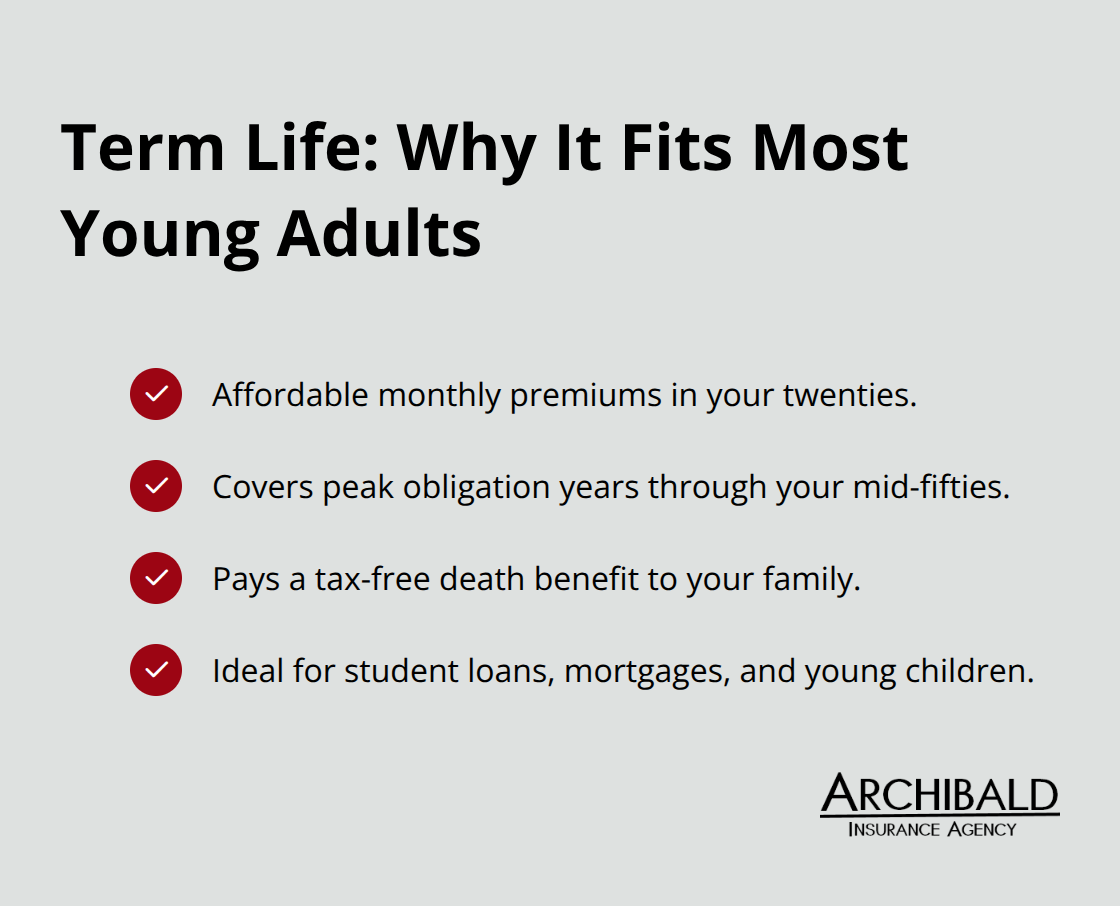
Term policies don’t build cash value, and that’s fine because you’re not buying them as investments. You’re buying them to replace your income if something happens. The death benefit goes directly to your family tax-free, letting them pay off debt, cover living expenses, and maintain stability. Term life insurance works exceptionally well for young professionals with student loans, mortgages, or young children because it provides maximum protection at minimum cost.
Whole Life Insurance: A Tool for Later
Whole life insurance serves a different purpose and typically doesn’t make sense until you’re older and have already built emergency savings. Whole life costs three to five times more monthly than term life for the same death benefit because it includes a cash value component that grows tax-deferred. If you’re in your twenties or early thirties with limited savings, spending four hundred dollars monthly on whole life when you could buy term coverage for fifty dollars is financially backwards.
That extra three hundred fifty dollars should go toward paying down student loans, building a six-month emergency fund, or increasing retirement contributions. Once you’re in your forties or fifties with substantial savings and a mortgage that’s half-paid, whole life becomes worth considering as a wealth-building tool. Right now, term life insurance protects your family while you protect your future through other means.
Universal Life Insurance: Flexibility With Complexity
Universal life offers more flexibility with adjustable premiums and death benefits, but it’s more complex to manage and requires active monitoring. The adjustability sounds appealing until you realize that changing your coverage or missing a premium payment can affect your long-term protection. For young adults still establishing financial stability, this complexity creates unnecessary risk.
The straightforward nature of term life insurance means you purchase coverage, pay your monthly premium, and know exactly what your family receives if something happens. Universal life demands ongoing attention and decision-making that distracts from building your financial foundation. Once you’ve established your career, paid down major debt, and accumulated substantial assets, universal life’s flexibility becomes genuinely useful.
Matching Coverage to Your Current Stage
Your life stage determines which policy makes financial sense right now. Young professionals with student loans, mortgages, and young children need maximum protection at the lowest possible cost-that’s term life insurance. The goal isn’t to build wealth through your life insurance policy; it’s to protect your family’s financial stability while you build wealth through your career, retirement accounts, and investments.
This distinction matters because choosing the wrong policy type wastes money that you need for other financial priorities. Once you’ve addressed your immediate financial obligations and built substantial savings, your insurance strategy can shift toward permanent coverage and cash value accumulation. Understanding your current financial situation and obligations determines which coverage type actually works for your life right now.
How to Choose the Right Coverage Amount
Calculate Your Total Debt First
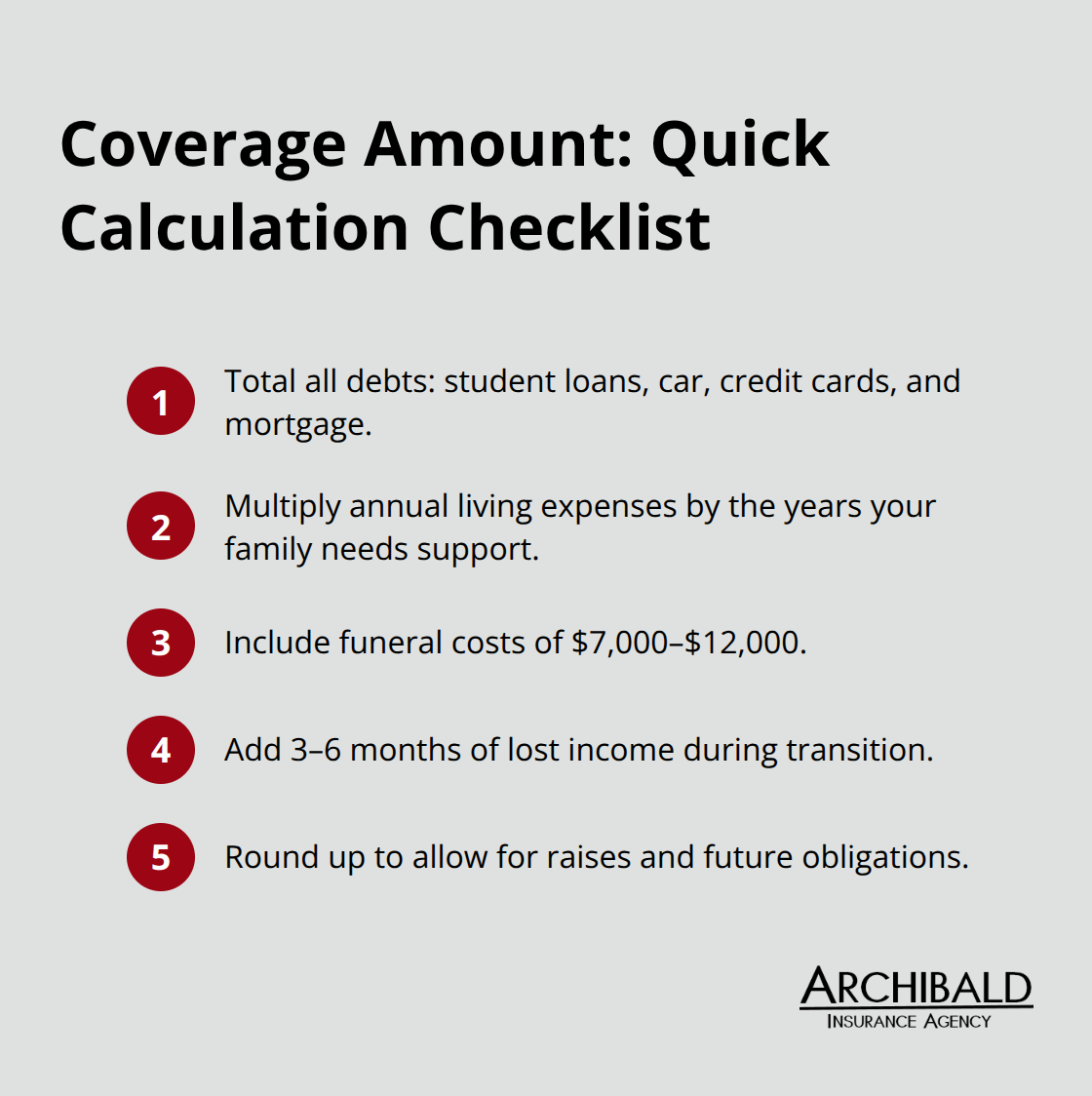
The most common mistake young adults make is guessing their coverage amount instead of calculating it. You need a specific number based on your actual financial obligations, not a round figure that sounds reasonable. Start with your total debt: student loans, car payments, credit cards, and mortgage if you own a home. According to the Federal Reserve, the average American household carries over $145,000 in debt across all categories. Your life insurance death benefit should cover every dollar of this debt so your family doesn’t inherit your obligations.
Account for Living Expenses and Income Replacement
Add your annual living expenses multiplied by the number of years your family would need support. If you earn $50,000 annually and have two young children, your family needs roughly $100,000 to $150,000 annually until they reach adulthood or your spouse returns to full-time work. That’s ten to fifteen years of expenses you’re calculating, not a lifetime. Multiply $125,000 by twelve years and you’re looking at $1.5 million in coverage needs just for living expenses.
Most young adults in Utah significantly underestimate this number and purchase policies that leave their families short.
Include Final Expenses and Transition Costs
Consider one additional factor that gets overlooked: final expenses and income replacement during transition periods. Funeral costs average $7,000 to $12,000 according to the National Funeral Directors Association. Your spouse may need time to grieve before returning to work, potentially three to six months of lost income. If your spouse earned $40,000 annually, that’s another $10,000 to $20,000 needed.
Determine Your Specific Coverage Need
Add these figures to your debt and living expense calculations, then round up slightly because your needs will grow as you earn raises and take on a mortgage. A thirty-year-old earning $55,000 with two children and a $250,000 mortgage typically needs $750,000 to $1 million in term life coverage. This sounds substantial until you realize a twenty-year policy providing $1 million costs an average of $86 per month for women and $109 for men (the cost of two coffee subscriptions protecting your family’s entire financial future). Start your calculation today rather than guessing, because the difference between adequate coverage and inadequate coverage means your family either maintains stability or faces financial crisis.
Final Thoughts
Young adults life insurance protects your family’s financial stability while you build your career and wealth. Term life insurance provides affordable protection during the years when your family depends most heavily on your income, and purchasing coverage now locks in lower premiums that you’ll pay for decades. A thirty-year-old pays significantly less monthly than a forty-year-old for identical protection, and that difference compounds into thousands of dollars saved over your policy’s lifetime.
Calculate your actual coverage need by totaling your debt, adding living expenses for the years your family needs support, and including final expenses (roughly $7,000 to $12,000 according to the National Funeral Directors Association). Once you know your specific number, you can compare quotes from multiple carriers to find the best rate for your situation. We at Archibald Insurance Agency help young adults throughout Utah find coverage that matches their financial situation and budget, and our team represents numerous insurance carriers so we can show you options from different companies rather than pushing a single product.
Disclaimer: The information provided in this blog is for general informational purposes only and does not constitute legal, financial, or insurance advice. Coverage options, terms, and availability may vary. Please consult with a licensed professional for advice specific to your situation


