

CGL Coverage for Startups: Building Early Financial Protections
Starting a business in Utah means facing real liability risks from day one. A single accident or injury claim can drain your startup’s resources and derail your growth plans.
At Archibald Insurance Agency, we’ve seen too many new business owners skip CGL coverage for startups, only to face devastating financial consequences later. This guide walks you through what you need to know to protect your business now.
CGL Coverage for Startups: What Protection Actually Looks Like
What CGL Protects
CGL insurance protects your startup from financial devastation when someone gets hurt or property gets damaged because of your business operations. A client slips on a wet floor in your office, a delivery causes property damage to a client’s workspace, or an employee accidentally injures a third party-CGL covers the medical bills, repair costs, and legal fees that follow. The average bodily injury claim was $28,278 in 2024, depending on severity. Property damage claims settle at a median of around $25,000. These numbers stop being abstract the moment you realize your startup’s cash reserves probably can’t absorb even one significant claim without threatening operations. CGL also covers your legal defense costs, which can run substantial amounts before a case settles. Many Utah startups operate with thin margins, making these potential expenses genuinely catastrophic.
Critical Gaps: What CGL Excludes
Standard CGL policies exclude intentional acts, contractual liability that you voluntarily assumed, and employee injuries (those fall under workers compensation). Professional liability isn’t covered either, so if you’re a consultant or contractor providing advice, you need separate coverage. Pollution liability, employment practices claims, and cyber incidents also fall outside CGL.
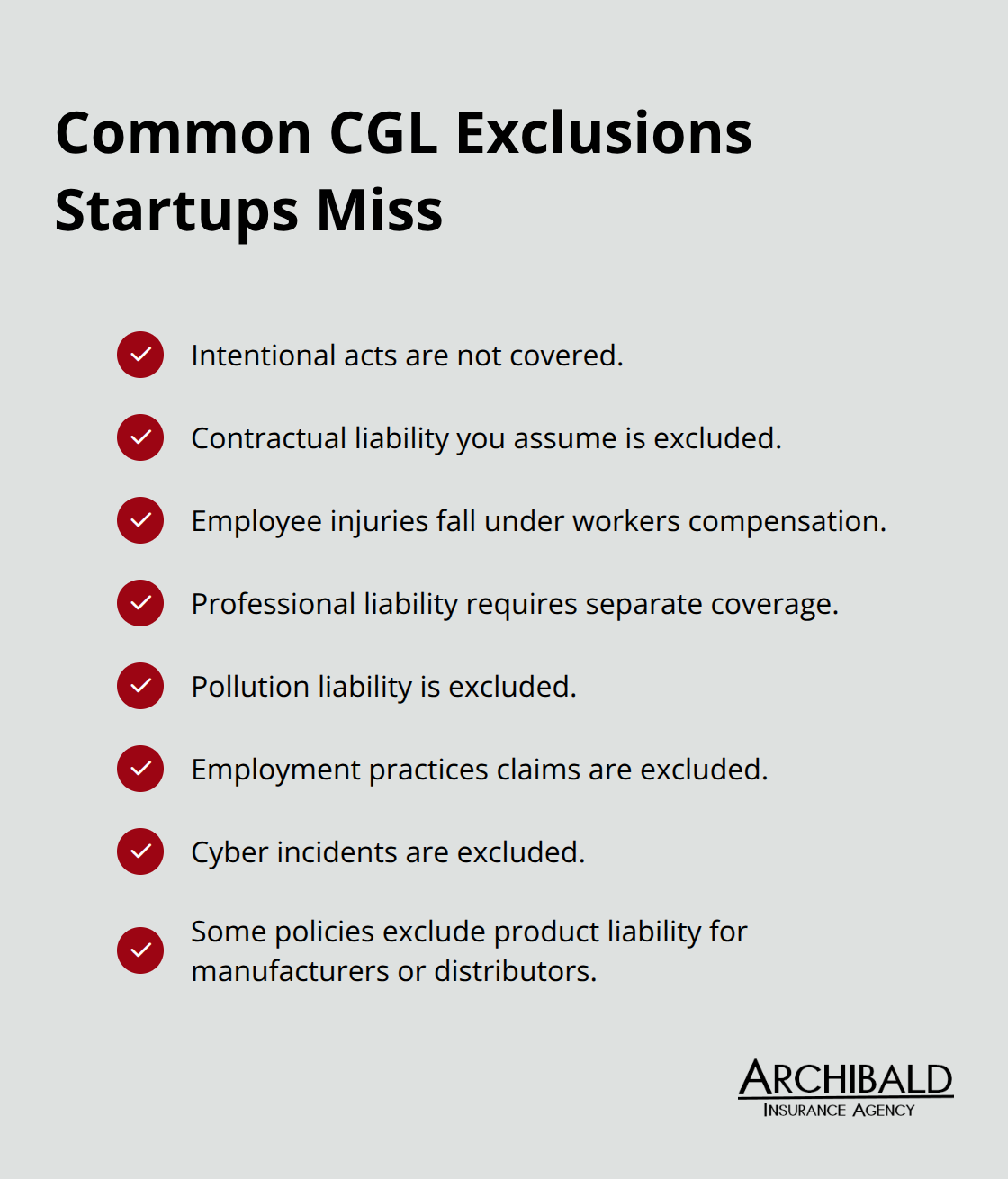
Some policies specifically exclude product liability if you manufacture or distribute goods. The exclusions matter because startups often assume they’re protected when they’re not. Many businesses discover coverage gaps only after filing a claim, which is far too late. Your industry determines which exclusions matter most, which is why customizing your policy matters from the start.
Why Startups Can’t Afford to Wait
Waiting to buy CGL coverage until you’ve grown to 10 employees or $1 million in revenue is a gamble that costs more than it saves. Early-stage startups face the same liability risks as established businesses, just with fewer resources to handle them. A single lawsuit consumes months of management time and thousands in legal fees before insurance even kicks in. Utah’s startup ecosystem has grown significantly, with the state attracting technology, manufacturing, and service businesses that all carry distinct liability exposures. Coverage now means you’re protected during your most vulnerable years, and your premiums lock in at startup rates rather than climbing later. More importantly, many clients and contracts require proof of CGL coverage before working with you, so delaying coverage actually limits your growth opportunities rather than enabling it. Understanding your specific industry risks becomes the next critical step in selecting the right policy for your business.
Key Risks Startups Face Without Adequate CGL Coverage
Bodily Injury Claims Drain Startup Resources Fast
A startup owner in Utah faces genuine financial peril without adequate CGL coverage, and the risks compound faster than most realize. Bodily injury claims hit hard because medical expenses spiral quickly-a slip-and-fall injury requiring surgery, physical therapy, and ongoing treatment easily exceeds $50,000. The National Safety Council reports that workplace injuries cost businesses $181.4 billion annually across all industries, and startups absorb these losses without the financial cushion larger companies maintain. Your startup’s cash reserves probably cannot absorb even one moderate claim without forcing difficult decisions about payroll, equipment purchases, or marketing investments.
Property Damage Claims Create Unexpected Liabilities
Property damage claims follow similar patterns, with a single incident damaging client equipment or facilities creating settlement demands in the $25,000 to $75,000 range depending on what was damaged. A contractor accidentally damages a client’s workspace during installation, or your equipment causes harm to someone else’s property-these scenarios happen regularly in Utah’s diverse startup ecosystem. The financial impact hits immediately, and without coverage, your business pays the full amount from operating capital. Most startups lack the reserves to absorb these expenses without disrupting normal operations.
Legal Defense Costs Multiply Faster Than Expected
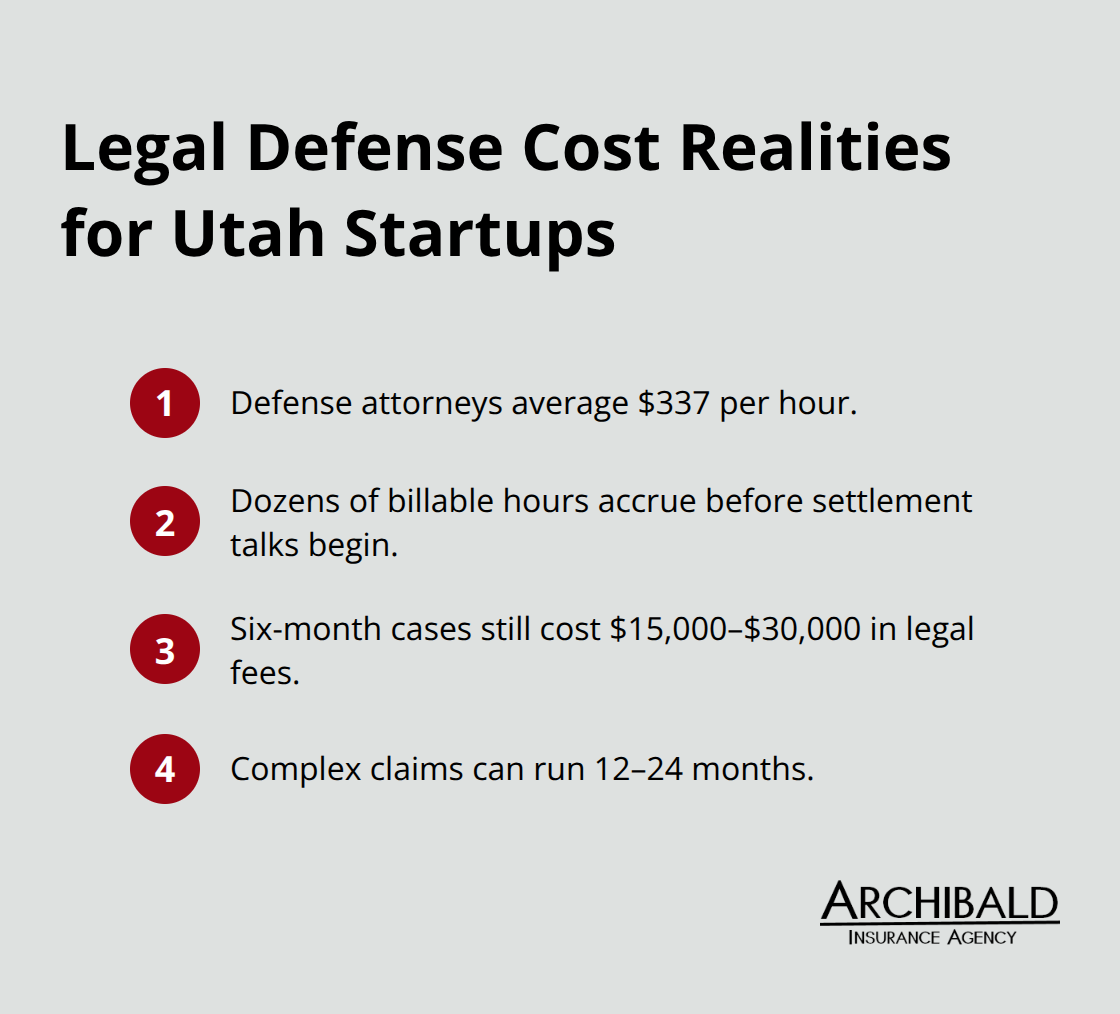
Legal defense costs create a separate financial catastrophe that many startup founders underestimate entirely. Defense attorneys in Utah charge an average of $337 per hour, and defending a liability claim requires dozens of billable hours before any settlement discussion happens. A straightforward claim that settles within six months still generates $15,000 to $30,000 in legal fees your business pays directly if you lack coverage. Complex claims stretch across 12 to 24 months, multiplying those costs exponentially.
Without CGL coverage, your startup covers these expenses from operating capital, diverting money from growth initiatives and operational needs.
Business Interruption Threatens Long-Term Viability
The combination of legal fees and settlement costs often forces startups to exhaust credit lines, delay hiring, or eliminate product development entirely. Management attention fractures between running operations and managing litigation, productivity drops, and clients notice the distraction. A startup facing an uninsured claim simultaneously fights for survival on two fronts: defending the lawsuit and maintaining normal business functions. Growth stalls completely when founders spend weeks in depositions or communicating with attorneys rather than acquiring customers or developing products. This dual impact makes even moderate claims genuinely threatening to startup viability. Selecting the right CGL policy from the beginning protects not just your finances but your entire business trajectory, which is why understanding your specific industry risks becomes the next critical step.
How to Select the Right CGL Policy for Your Startup
Match Coverage Limits to Your Industry’s Real Risks
Your startup’s industry determines everything about CGL coverage, and selecting the wrong limits costs far more than getting it right. A software development company operating from a shared office space faces completely different risks than a home renovation contractor or a fitness studio. The software startup’s main exposure comes from client meetings and occasional equipment damage, while the contractor confronts daily bodily injury and property damage potential at client sites. A fitness studio faces injury claims from equipment use and class participation. You need coverage limits that reflect your actual operations, not generic startup minimums.
Most Utah startups carrying $300,000 in general aggregate coverage are dramatically underinsured for their industry, while others carrying $2 million limits waste premium dollars on unnecessary protection. The median CGL premium for small businesses runs between $500 and $1,500 annually, but coverage limits vary wildly based on industry and business model. Start by documenting your specific operational risks. If you work on client premises, you create property damage exposure that office-based businesses avoid entirely. If you handle products or equipment, you need different protection than service-based startups. If you employ staff or contractors, your injury liability expands significantly compared to solo operations.
Write down every location where you work, every type of client interaction you have, and every product or service you deliver. This concrete list becomes your foundation for selecting appropriate coverage. Most small businesses choose $1 million per occurrence and $2 million aggregate limits for general liability insurance, which directly impacts the coverage limits you need. A construction-related startup should carry minimum general aggregate limits of $1 million to $2 million, while a consulting firm might function adequately with $500,000 to $1 million.
Understand How Coverage Limits Actually Work
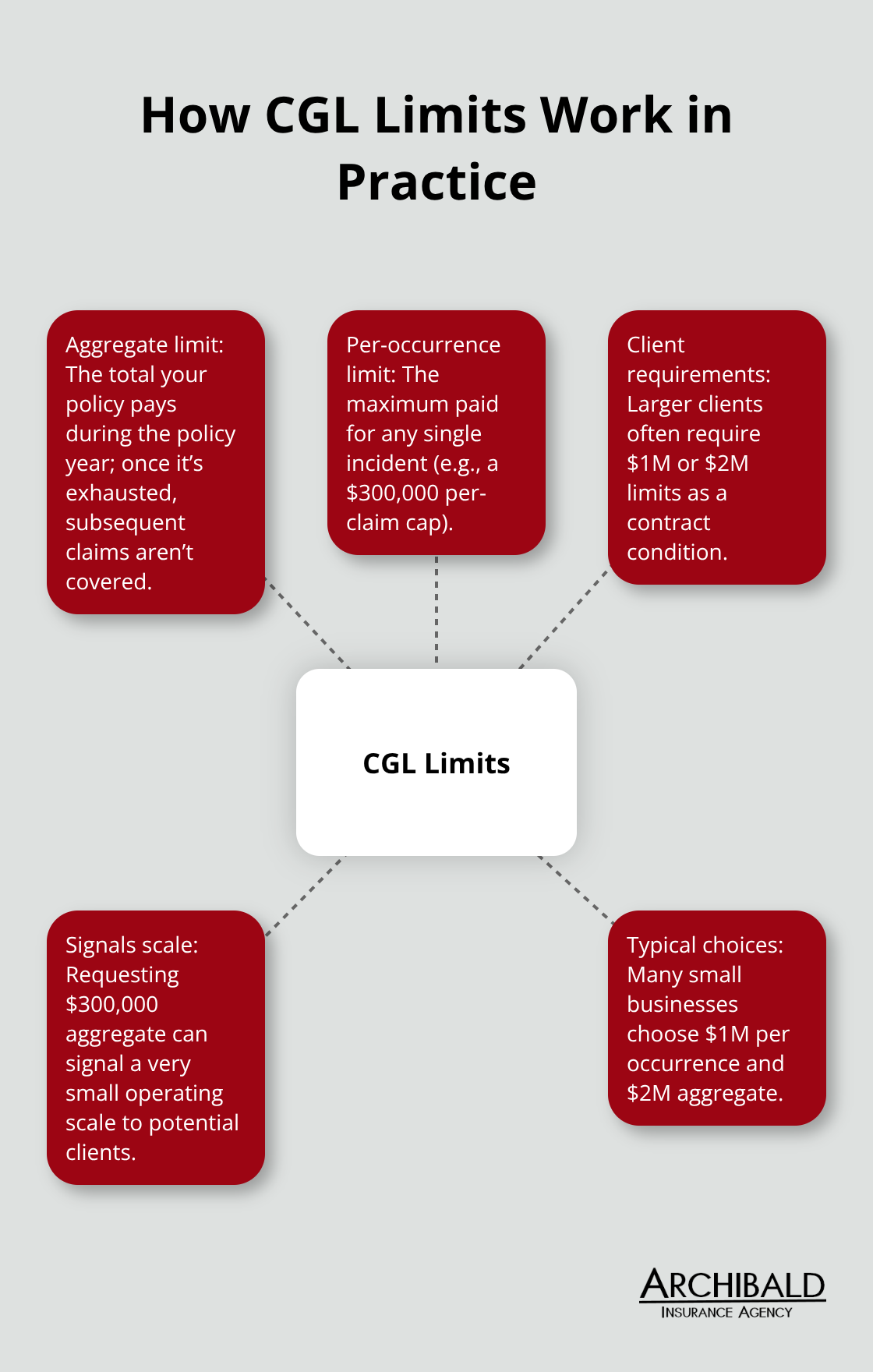
Your industry’s standard practices matter tremendously. Many Utah clients require proof of specific coverage limits before awarding contracts, and requesting $300,000 in general aggregate coverage signals to potential clients that you operate at an extremely small scale. Larger clients often require minimum limits of $1 million or $2 million as a contract condition, which means undershooting your coverage limits actually blocks growth opportunities.
A $1 million general aggregate limit means your policy covers up to $1 million in total claims across the entire policy year, while a per-occurrence limit of $300,000 means any single incident is capped at $300,000. Once your aggregate limit is exhausted, your policy stops paying, leaving subsequent claims uncovered. This distinction matters enormously when a major client requires $2 million in coverage as a contract condition.
Work with an Independent Agent Who Understands Utah Startups
An independent agent who understands Utah’s startup ecosystem provides far better guidance than purchasing coverage online or through national brokers unfamiliar with local business conditions. An independent agent representing multiple insurance carriers can compare coverage options and pricing across different companies, ensuring you’re not locked into a single carrier’s limited offerings. An agent should ask detailed questions about your operations, client base, contracts, and growth plans rather than simply offering generic startup packages. They should also review any client contracts you’ve signed, since many include insurance requirements that dictate your minimum coverage levels.
Your agent should explain exactly what your chosen limits mean in practical terms and discuss endorsements that expand or customize your coverage for your specific situation. Additional insured endorsements allow clients to be named on your policy, which many clients require before you work on their premises. Contractual liability coverage extends protection to liability you assume under client contracts. Hired and non-owned auto coverage protects you when using rental vehicles or employee vehicles for business purposes. These customizations cost relatively little but dramatically improve your actual protection.
Adjust Coverage as Your Startup Grows
Review your policy annually as your startup grows, since your coverage needs change as you hire employees, expand into new services, or move to larger facilities. A startup that starts with $500,000 in coverage because it’s a solo operation needs significantly higher limits once it reaches five employees and takes on larger client projects. Your agent should track these changes and recommend coverage adjustments that keep pace with your business expansion.
Final Thoughts
CGL coverage for startups isn’t optional protection you add later when your business reaches a certain size. It’s the financial foundation that allows your startup to operate without catastrophic risk hanging over every decision. The claims we’ve discussed throughout this guide happen regularly to Utah businesses, and the difference between having coverage and facing an uninsured claim determines whether your startup survives or collapses under legal and financial pressure.
Document your specific operational risks, identify the locations where you work, and list every type of client interaction your startup involves. This concrete information becomes the basis for selecting coverage limits that actually protect your business rather than leaving dangerous gaps. Many startups discover too late that their chosen limits fall short of what their clients require or what their industry standard demands, which is why CGL coverage for startups demands careful attention from the start.
Contact Archibald Insurance Agency to discuss your startup’s coverage needs. We’ll review your operations, explain what different coverage limits mean in practical terms, and recommend endorsements that customize your protection for your specific situation. Building strong financial protections now means your startup can focus on growth rather than worrying about uninsured liability exposure.
Disclaimer: The information provided in this blog is for general informational purposes only and does not constitute legal, financial, or insurance advice. Coverage options, terms, and availability may vary. Please consult with a licensed professional for advice specific to your situation


