

Term Life Versus Whole: Understanding Your Life Insurance Options
Life insurance is one of the most important financial decisions you’ll make, yet many people feel confused about their options. Term life versus whole life insurance represent two fundamentally different approaches to protecting your family’s future.
We at Archibald Insurance Agency work with Utah families every day who struggle with this exact choice. The right option depends on your budget, timeline, and long-term financial goals.
Term Life Insurance: Affordable Protection for Defined Needs
How Term Life Works and Why It’s Affordable
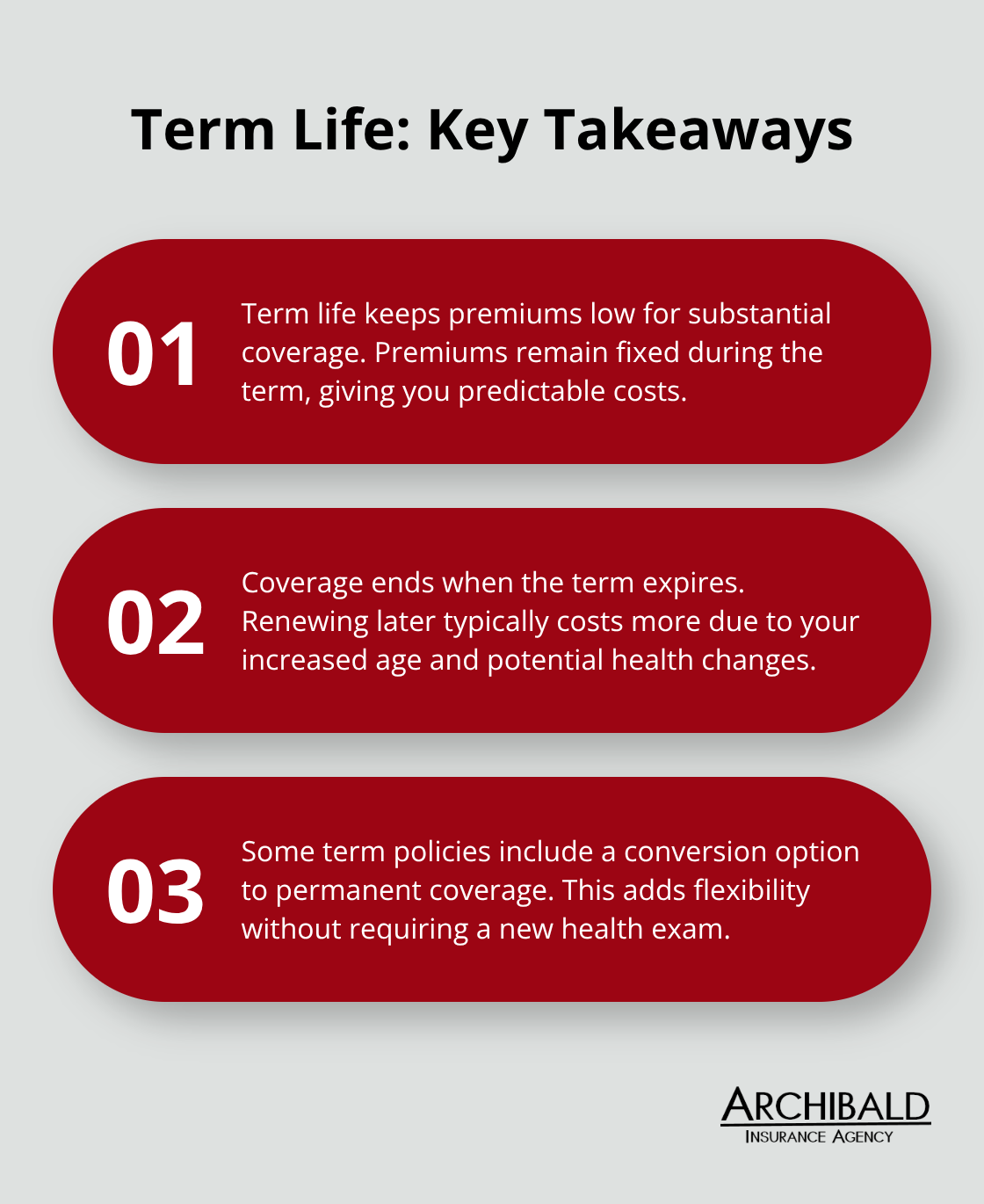
Term life insurance provides temporary protection for a set period, typically 10 to 30 years. You pay a fixed monthly premium, and if you pass away during that term, your beneficiaries receive the death benefit tax-free. The appeal is straightforward: term policies cost significantly less than permanent options. According to LifeStein data, a 40-year-old male can secure $500,000 in coverage for roughly $28 per month on a 20-year term, compared to around $460 monthly for whole life. This dramatic cost difference makes term the go-to choice for families on tight budgets who need substantial protection right now.
The trade-off is real. Once your term ends, the coverage stops. You won’t receive any payout if you outlive the policy, and renewing coverage later means higher premiums based on your age and current health status.
Why Term Aligns with Specific Financial Goals
Term life matches responsibilities that have an endpoint. If you carry a 15-year mortgage, have children heading to college in 12 years, or need income replacement for the next two decades, term coverage aligns with these timelines exactly. You avoid paying for protection you won’t need after your kids graduate or your mortgage disappears.
Many families use straightforward protection to cover the years when dependents rely most heavily on their income. The policy delivers straightforward value: pure death benefit protection without the complexity of cash value components.
Conversion Options Provide Future Flexibility
Some term policies include a conversion option, allowing you to switch to permanent coverage without undergoing another health exam. This flexibility proves valuable if your circumstances change and you later decide you need lifetime protection.
Ask your agent upfront whether conversion is available and what it costs-not all term policies include this option. Understanding these details now prevents surprises later when your needs shift.
What Happens When Your Term Ends
At the end of your term, you face a decision. You can let the coverage lapse, apply for a new policy (which will cost more at your current age), or convert to permanent coverage if that option exists in your original contract. Some policies offer renewal at higher rates, though this depends on the specific contract terms.
The permanent protection option-whole life insurance-works differently and addresses the limitations term coverage presents.
Whole Life Insurance: Protection That Lasts Your Lifetime
How Whole Life Works and What Sets It Apart
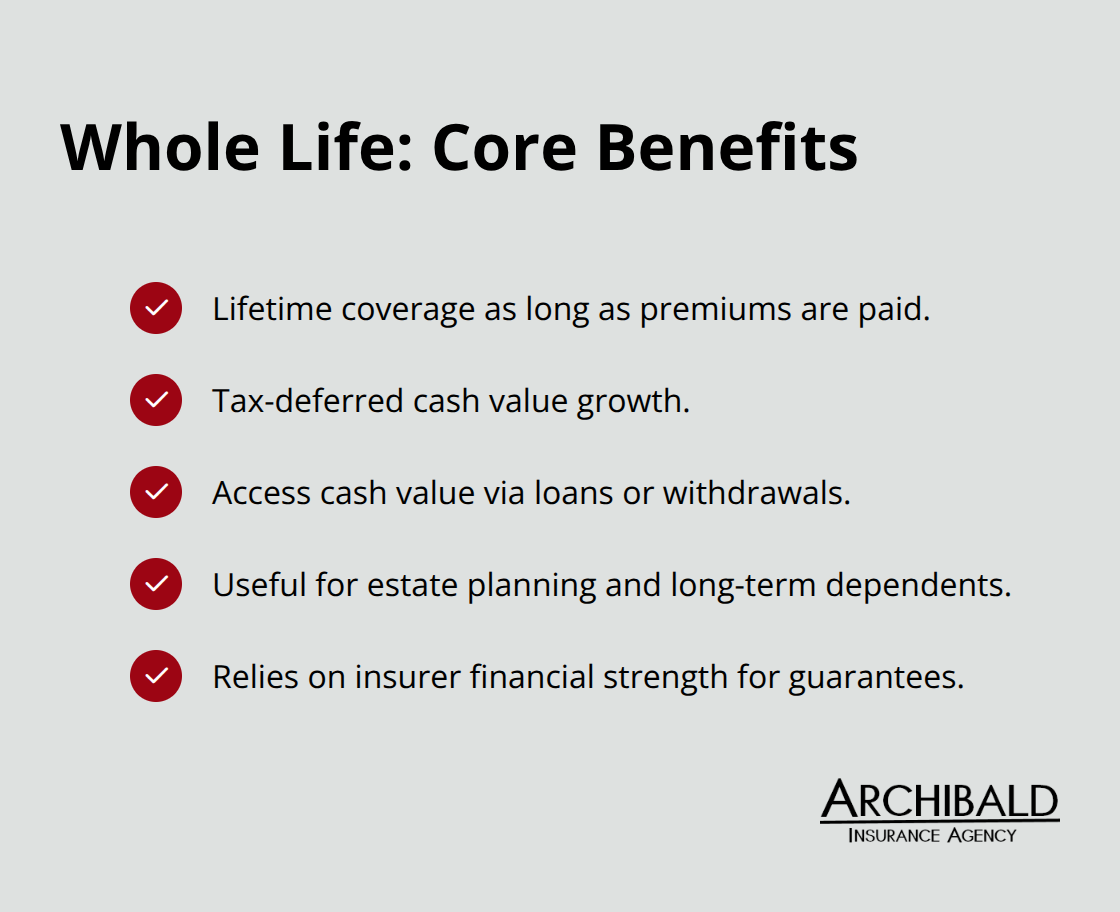
Whole life insurance operates on a completely different premise than term coverage. Instead of temporary protection, you receive permanent coverage that lasts as long as you pay premiums-which means protection for your entire life. Guardian Life, which carries an A++ Superior rating from A.M. Best, has paid annual dividends to whole life policyholders since 1868, demonstrating how these policies can grow beyond their guaranteed death benefit. The monthly cost is substantially higher than term. That same 40-year-old male paying $28 monthly for term coverage would pay approximately $460 monthly for $500,000 in whole life protection. This significant premium difference exists because whole life includes a cash value component that builds over time, separate from your death benefit.
Cash Value: Building Wealth While Protected
The cash value grows on a tax-deferred basis, meaning you don’t pay taxes on the growth each year. You can access this cash value during your lifetime through policy loans or withdrawals, use it to pay premiums if you encounter financial difficulty, or simply let it accumulate as a financial cushion. This dual function-providing death protection while simultaneously building accessible wealth-makes whole life fundamentally different from term insurance.
The practical advantage of whole life emerges when you consider your full financial picture. If you need protection beyond a specific timeline, whole life eliminates the problem of coverage ending when you still need it. A 55-year-old who purchased term life 20 years ago now faces renewal premiums that could exceed $300 monthly for the same coverage, or they can convert to whole life if their original policy included that option.
Whole Life for Estate Planning and Long-Term Needs
Whole life also serves estate planning purposes effectively. If you have dependents with ongoing needs (such as special-needs beneficiaries who will require financial support throughout their lives), whole life provides a guaranteed pool of tax-free death benefit money. The cash value component offers genuine utility-you can borrow against it for emergencies, education expenses, or opportunities without surrendering the policy or losing death benefit protection.
The Commitment Whole Life Requires
Whole life demands long-term commitment. The high premiums make sense only if you can sustain them for decades. Cash value growth moves slowly in early years for most policies but accelerates later, so surrendering a policy in year five or ten typically yields minimal cash value compared to what you invested in premiums. The guarantees provided by whole life depend entirely on your insurance company’s financial stability. Choosing a carrier with proven strength, like Guardian Life’s century-plus track record of dividend payments, matters significantly when you’re committing to lifetime premiums.
Moving Forward: Comparing Your Options
Understanding how whole life builds wealth over time sets the stage for comparing it directly with term coverage. The choice between these two approaches hinges on specific factors about your finances, timeline, and what you want your insurance to accomplish beyond basic death benefit protection.
Choosing Between Term and Whole Life
The Cost Reality and What It Means
The cost difference between term and whole life is so dramatic that it shapes the entire decision for most families. A 40-year-old male pays roughly $28 monthly for $500,000 in 20-year term coverage versus $460 monthly for equivalent whole life protection. Over 20 years, that amounts to $6,720 in term premiums compared to $110,400 for whole life. The math alone eliminates whole life for many households, but cost tells only part of the story. Your actual choice depends on three concrete factors: how long you need protection, whether you want your insurance to build financial value, and what happens to your coverage needs after your current responsibilities shrink.
Matching Coverage Duration to Your Life Timeline
Term life works brilliantly if you can identify a specific endpoint for your coverage need. You need income replacement until your mortgage disappears in 18 years? A 20-year term covers that timeline with a two-year buffer. Your children will become financially independent in 15 years? A 15-year term aligns perfectly. This matching of coverage duration to actual need is term’s greatest strength, and it’s why term remains the most popular choice among Utah families. Whole life becomes attractive only if you genuinely expect to need death benefit protection decades from now. If you’re 35 years old and think you’ll still need substantial life insurance at 75, whole life’s lifetime coverage and tax-deferred cash value growth start making financial sense.
The catch is honest self-assessment. Many people overestimate how long they’ll need coverage. Your income-replacement needs fade as you build retirement savings, your mortgage disappears, and your children become self-sufficient. A 30-year term policy at $28 monthly provides substantial security during your working years without committing to decades of $460 monthly payments for protection you may never use.
When Whole Life’s Cash Value Matters
Your financial goals beyond basic death benefit protection tip the decision toward whole life. If you want to build accessible cash reserves within a tax-advantaged structure, or if you need to fund a trust for a dependent with lifelong needs, whole life’s cash value component delivers genuine utility. For families with special-needs beneficiaries or those planning multi-generational wealth transfer, whole life’s guaranteed death benefit combined with accumulating cash value offers tools that pure term coverage cannot match. However, whole life only makes sense if you can afford the premiums without strain. Missing payments on a $460 monthly whole life policy after five years leaves you with minimal cash value and a policy lapse, wasting the premiums you’ve already paid.
Building Your Coverage Strategy
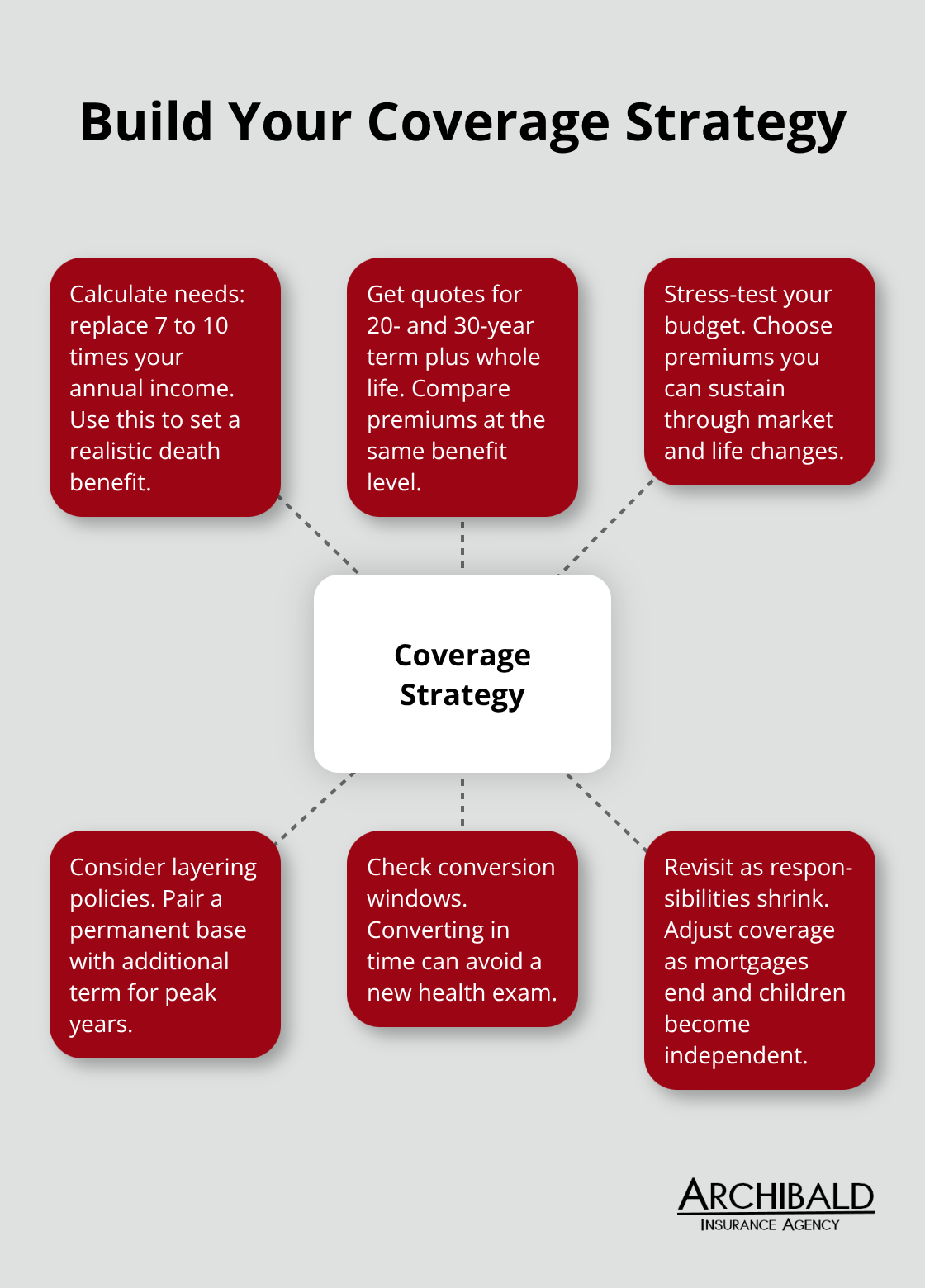
Start by calculating how much death benefit your family actually needs-most financial advisors suggest replacing 7 to 10 times your annual income-then obtain quotes for both term and whole life at that benefit level. Look specifically at a 20-year term and a 30-year term alongside whole life quotes. The premium differences will clarify what your budget can realistically sustain. Many families benefit from layering coverage: a whole life policy providing a permanent base of $250,000 combined with a 20-year term policy adding $500,000 temporary protection. This approach balances lifetime security with affordability during peak family needs.
If your original term policy included a conversion option, ask your agent exactly when that window closes and what the conversion would cost. Converting before the window expires lets you shift to permanent coverage without another health exam, which matters if your health status changes. The decision between term and whole life ultimately reflects your honest answer to this question: Do you need protection for a defined period while your family depends on your income, or do you need lifetime protection with a cash value component that builds wealth?
Final Thoughts
Term life versus whole life insurance forces you to answer one critical question: do you need protection for a specific period, or do you need lifetime coverage with wealth-building potential? Term delivers affordable protection when your family depends most on your income, while whole life provides permanent security with tax-deferred cash value growth. Your budget, timeline, and financial goals determine which option actually works for your situation.
We at Archibald Insurance Agency help Utah families make this decision by presenting real quotes for both approaches and showing how layering coverage can balance affordability with long-term protection. Our team works with multiple carriers, which means we show you genuine options rather than pushing a single product. Contact Archibald Insurance Agency to schedule a consultation where we’ll calculate your family’s actual death benefit needs and compare term and whole life quotes at that benefit level.
Your next step is straightforward: call our Salt Lake City office or visit our website to speak with an agent who understands your situation and can present solutions that fit your budget. We’ll explain conversion options, discuss policy flexibility, and help you understand exactly what you’re buying so you can protect your loved ones with confidence.
Disclaimer: The information provided in this blog is for general informational purposes only and does not constitute legal, financial, or insurance advice. Coverage options, terms, and availability may vary. Please consult with a licensed professional for advice specific to your situation


