Benefits of Combined Home and Auto Insurance Quotes
Utah homeowners can save hundreds of dollars annually by bundling their home and auto insurance policies. Combined home and auto insurance quotes typically offer discounts ranging from 5% to 25% compared to separate policies.
We at Archibald Insurance Agency see clients reduce their insurance costs while simplifying their coverage management. The bundling approach streamlines everything from billing to claims processing.
How Much Money Can Bundling Save You
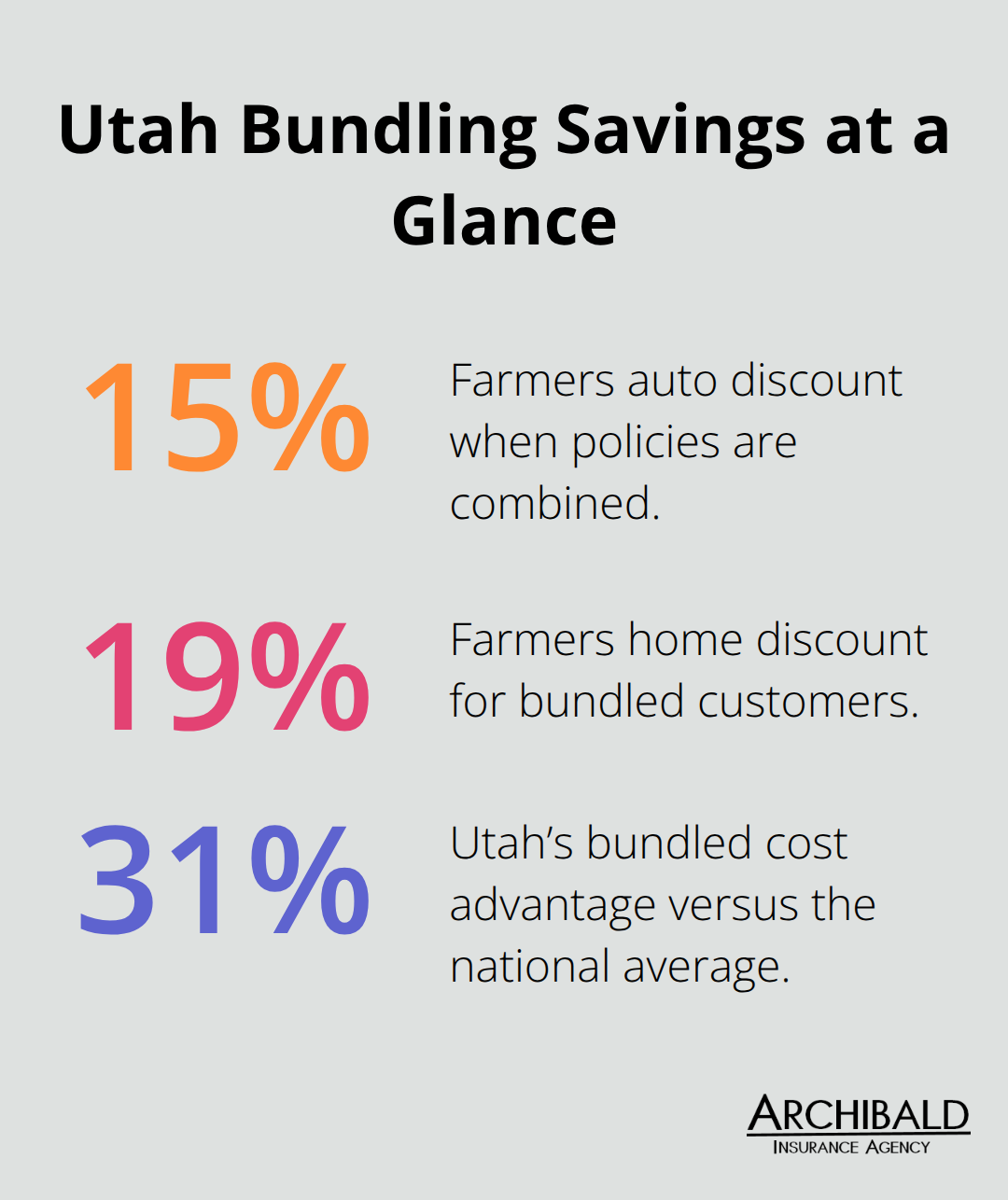
Utah residents who bundle home and auto insurance can save up to $1,356 with State Farm, with some carriers offering discounts up to 25%. Farmers Insurance provides Utah customers a 15% auto discount and 19% home discount when they combine policies, while Progressive reports new bundled customers save over $1,086 in their first year. The average annual cost for bundled coverage in Utah sits at $2,124, which runs 31% below the national average of $3,094.
Single Payment Eliminates Multiple Bills
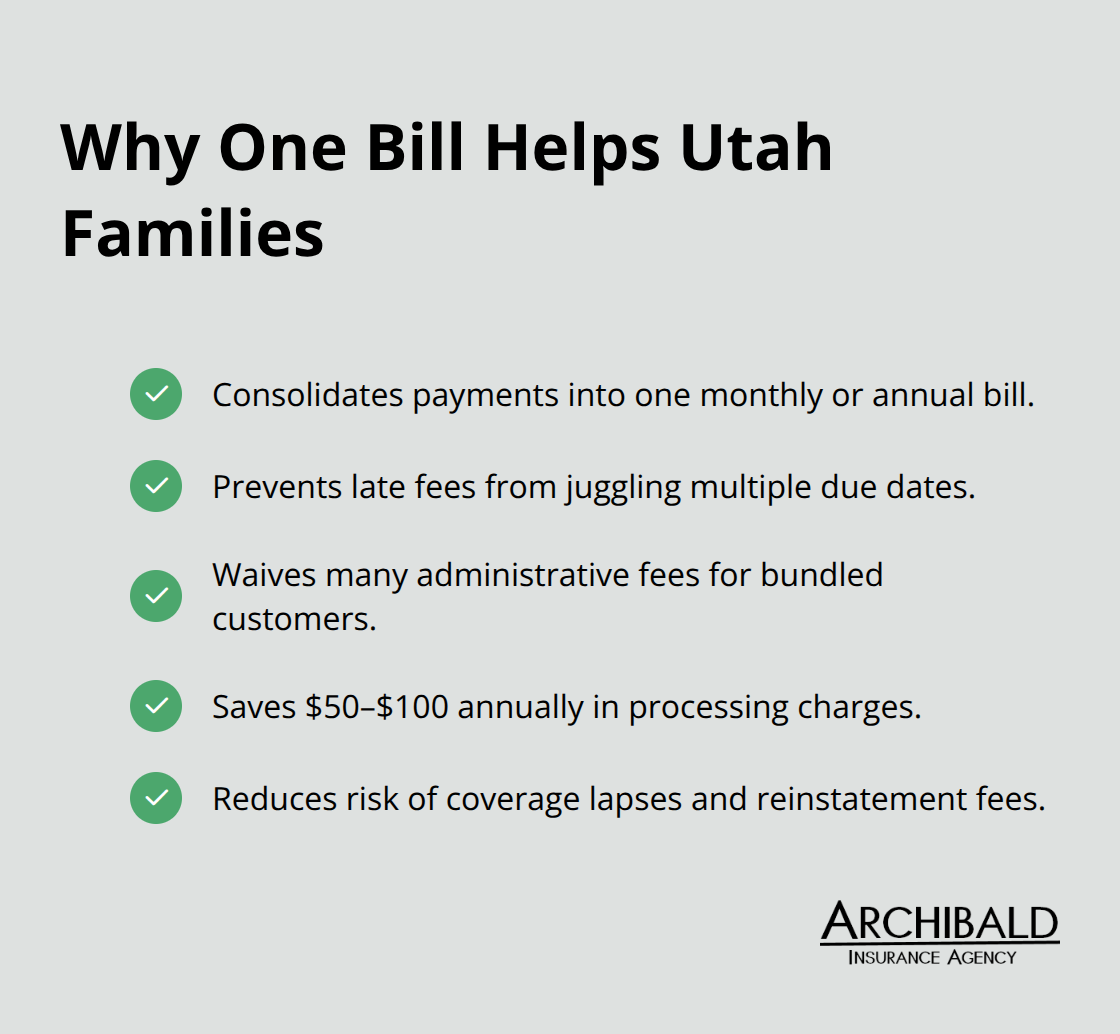
Bundled policies consolidate your insurance payments into one monthly or annual bill, which eliminates the hassle of tracking separate due dates and payment methods. This single payment structure prevents late fees that occur when you juggle multiple insurance companies with different billing cycles. Most carriers waive administrative fees for bundled customers, which saves an additional $50 to $100 annually in processing charges (depending on your carrier). The streamlined payment system also reduces the risk of coverage lapses that can result in expensive reinstatement fees or higher rates.
Lower Deductibles and Administrative Savings
Insurance companies reduce their operational costs when they manage fewer individual policies, and they pass these savings directly to bundled customers through lower administrative fees. When both home and auto claims stem from the same incident, bundled policies typically require only one deductible payment instead of two separate deductibles. With a multi-policy discount, you may be able to save time and money by combining two or more insurance policies together, while others reduce annual service charges by 20% to 30% for bundled accounts (making your overall insurance costs more predictable).
These financial benefits extend beyond simple discounts, as bundled policies also offer enhanced convenience features that save both time and money. Insurance agents can help you navigate rate comparisons and identify additional money-saving opportunities.
How One Agent Simplifies Your Insurance Experience
A single agent eliminates the confusion that comes from coordinating between multiple representatives who may offer conflicting advice or maintain different service standards. USAA received the highest customer service rating for bundled home and auto insurance according to J.D. Power, largely because customers work with one dedicated representative who understands their complete insurance profile. When you need to update coverage limits, add a new driver, or modify home insurance after renovations, one phone call handles everything instead of separate conversations with different companies that may not communicate effectively.
Faster Claims Resolution Through Coordinated Service
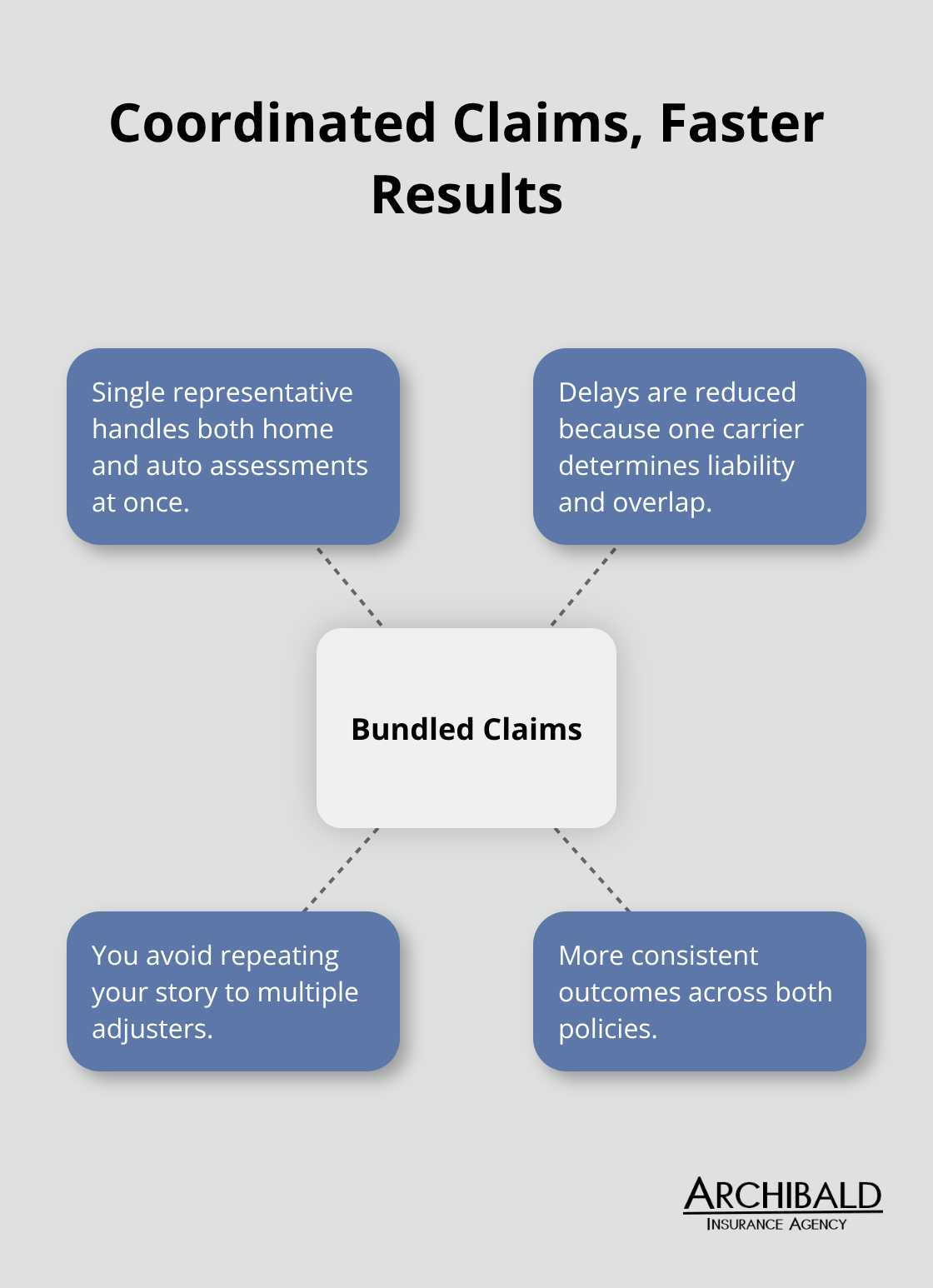
Bundled policies accelerate claims processing when incidents affect both your home and vehicle, such as hail damage or theft. Progressive demonstrates strong performance with their 68.9 loss ratio, which bested competitors like GEICO by nearly 3 points and Allstate by almost 4 points, showing their efficiency in claims handling. When your car sustains damage in your driveway during a storm that also damages your roof, one claims representative handles both assessments simultaneously. This coordination prevents delays that occur when separate insurers need to determine liability or coverage overlap, and you avoid the frustration of repeating your story to multiple adjusters who may reach different conclusions about the same incident.
Streamlined Policy Updates and Life Changes
Life changes like marriage, home moves, or new vehicle purchases require updates across multiple insurance policies, but bundled coverage streamlines these modifications through a single system. Farmers Insurance customers can update their address, add family members, or adjust coverage limits for both policies in one transaction, which prevents coverage gaps that occur when timing becomes misaligned between separate insurers. Utah residents who move frequently for work save significant time per move when they manage policy updates through one provider rather than coordinate separate transfers with different companies.
These convenience benefits extend beyond simple communication improvements, as bundled policies also provide enhanced coverage options that individual policies cannot match.
What Extra Protection Do Bundled Policies Provide
Bundled home and auto insurance unlocks coverage enhancements that separate policies cannot match, particularly through higher liability limits and specialized protection features. Auto-Owners Insurance demonstrates this advantage when they offer bundled discounts up to 25% while they provide comprehensive coverage options that extend beyond basic requirements. When insurers manage both your home and auto policies, they can offer umbrella coverage that protects assets across both policies with limits that reach $1 million or more, which costs significantly less than separate excess coverage for each policy.
Enhanced Liability Protection Across Properties
Insurance companies provide higher liability limits for bundled customers because they understand your complete risk profile and can price coverage more accurately. Travelers offers bundled customers liability limits up to $500,000 for both home and auto coverage, compared to standard $300,000 limits for individual policies. This enhanced protection becomes essential when accidents occur on your property or when you cause significant vehicle damage, as Utah courts frequently award damages that exceed basic coverage limits. Bundled policies also include automatic coverage extensions that protect you when you drive rental cars or when guests suffer injuries at your home, which eliminates gaps that occur between separate insurers who may dispute coverage responsibility.
Specialized Riders and Add-On Benefits
Bundled policies provide access to unique protection features like identity theft restoration, which Nationwide includes at no additional cost for customers who combine home and auto coverage. These specialized riders typically cost $100 to $300 annually when you purchase them separately, but bundled customers receive them as standard benefits. Amica offers bundled customers enhanced replacement cost coverage that guarantees full rebuilding costs even when construction prices increase after a covered loss, while their auto coverage includes gap protection for financed vehicles.
Advanced Technology and Monitoring Programs
Progressive bundled customers can access their telematics programs like Snapshot, which monitors driving habits and can reduce premiums by up to 30% based on safe driving behaviors. These technology-based programs create additional savings opportunities that individual policies rarely provide (and often require separate enrollment processes with different carriers). Farmers customers can utilize their Signal telematics program to potentially save up to 15% on car insurance while they maintain their bundled home coverage benefits.
Final Thoughts
Combined home and auto insurance quotes deliver substantial financial benefits for Utah residents, with potential savings that reach $1,356 annually through multi-policy discounts and reduced administrative fees. The convenience of one agent eliminates coordination headaches while accelerating claims processing when incidents affect multiple properties. Enhanced coverage options, including higher liability limits and specialized riders, provide protection that individual policies cannot match.
Bundled coverage makes the most financial sense when you own both a home and vehicle, maintain good credit, and plan to stay with the same insurer for multiple years. Utah families who compare rates across multiple insurers often find significant cost differences between carriers (sometimes exceeding $500 annually for identical coverage). The streamlined payment system and unified claims process create additional value beyond simple premium discounts.
We at Archibald Insurance Agency represent numerous carriers to help Utah families find the best bundled coverage options. Our independent approach allows us to compare rates across multiple insurers and identify the most cost-effective solutions for your specific situation. Contact our Salt Lake City team to receive personalized combined home and auto insurance quotes that maximize your savings while providing comprehensive protection for your family’s assets.