Get Instant Auto Insurance Quotes Online

Shopping for car insurance has never been easier thanks to auto insurance quotes online. Utah drivers can now compare rates from multiple carriers in minutes rather than spending hours calling different companies.

We at Archibald Insurance Agency understand that finding affordable coverage shouldn’t be complicated. The digital revolution has transformed how consumers shop for insurance, making it faster and more transparent than ever before.

How Online Auto Insurance Quotes Work

Digital Application Process

Online auto insurance quotes start with a digital application that takes 5 to 10 minutes to complete. The Insurance Information Institute reports that over 70% of consumers now prefer to shop for auto insurance online because of the speed and transparency. You need basic information including your driver’s license number, vehicle identification number, current insurance details, and your complete record for the past five years. The application also requires details about your vehicle such as make, model, year, annual mileage, and where you park overnight.

Real-Time Rate Calculations

Modern insurance platforms use sophisticated algorithms that instantly calculate rates from multiple carriers at once. These systems access real-time data from insurance companies and factor in your specific information to generate accurate quotes within minutes. Nearly 60% of drivers remain unaware of all available discounts according to industry research, which makes the instant comparison feature valuable for locating savings you might otherwise miss.

Percentages showing online preference, discount awareness, and bundling savings for auto insurance shoppers in the U.S.

Instant Comparison Features

Online quote platforms display coverage options, deductibles, and premiums from different insurers in an easy-to-read format. You can adjust coverage levels and see how changes affect your premium instantly. The Zebra reports that it has provided over 74 million quotes (demonstrating the massive shift toward digital insurance shopping). This immediate comparison capability eliminates the need to contact multiple agents individually and gives you complete control over your coverage decisions. Most platforms also show customer ratings and financial strength ratings from agencies like A.M. Best to help you evaluate insurer reliability alongside price.

Understanding how online quotes work sets the foundation for smart insurance shopping, but several key factors will ultimately determine what rates you receive from carriers.

Factors That Affect Your Auto Insurance Quote

Your Driving Record Sets the Foundation

Your driving record impacts your insurance premium more than any other single factor. Insurance companies examine your history for the past three to five years and focus on traffic violations, accidents, and claims. Multiple violations or at-fault accidents can double your rates or make you uninsurable with standard carriers. DUI convictions carry the heaviest penalties and often require SR-22 filings while increasing premiums significantly for three years.

Compact list of the main rating factors that influence Utah auto insurance premiums. - auto insurance quotes online

Clean driving records qualify for safe driver discounts that reduce premiums with most carriers.

Vehicle Choice Affects Your Premium

The type of vehicle you drive significantly affects your insurance costs. Sports cars typically carry higher premiums than sedans or SUVs. Newer vehicles with advanced safety features like automatic emergency braking and blind spot monitoring qualify for safety discounts. The age of your vehicle also matters since older cars cost less to insure but may lack modern safety technology that reduces rates.

Location Within Utah Matters

Your location within Utah plays a major role in rate calculations. Salt Lake City drivers pay higher premiums than rural Utah residents due to increased theft rates, vandalism, and accident frequency. Insurance companies use detailed ZIP code data to assess risk with some urban areas seeing higher premiums than suburban locations. Population density and crime statistics directly influence what you pay for coverage.

Coverage Levels and Deductibles Give You Control

Coverage levels and deductible choices give you direct control over costs. Increasing your deductible from $500 to $1,000 typically reduces premiums. Choosing minimum liability limits versus full coverage can cut costs in half but leaves you financially exposed. The amount of coverage you select for comprehensive and collision directly affects your monthly premium.

These rate factors work together to determine your final premium, but smart shopping strategies can help you find the best rates available from multiple carriers.

Tips for Getting the Best Auto Insurance Rates Online

Compare Rates From at Least Five Different Carriers

Quote comparison from multiple companies remains the most effective strategy to reduce your insurance costs. Most drivers only compare quotes once every two years according to industry data, which means they miss significant savings opportunities. Request quotes from at least five different carriers because rates vary dramatically between companies for identical coverage.

Three detailed tips for saving on car insurance using online tools and programs. - auto insurance quotes online

Liberty Mutual data shows potential savings of over $700 when drivers switch carriers, with some drivers saving $817 compared to GEICO or $839 compared to State Farm.

Bundle Home and Auto Policies for Maximum Discounts

Auto insurance bundled with homeowners or renters insurance generates substantial savings with most carriers. Bundling discounts typically hover around 20% on your total premium costs. The discount applies to both policies, which means you save money on home and auto coverage simultaneously. Independent agents can compare options across different carriers to find the combination that delivers the highest total savings rather than limit you to one company’s bundle offer.

Target High-Value Discounts and Usage Programs

Focus on discounts that provide the largest premium reductions rather than chase small percentage savings. Safe driver discounts typically offer 10% to 15% reductions for clean records. Usage-based programs like Progressive’s Snapshot or Liberty Mutual’s RightTrack can deliver savings up to 30% for low-mileage drivers (according to the Insurance Information Institute). Driver education course discounts reduce rates in many states and remain available to drivers of all ages. Military discounts, student discounts for good grades, and professional association memberships often provide additional savings that stack with other discount programs.

Review and Update Your Coverage Annually

Annual policy reviews help you catch rate increases and identify new discount opportunities. Insurance companies adjust rates frequently based on claims data and market conditions. Your life circumstances change throughout the year (new job, moved residence, or added safety features to your vehicle), which can qualify you for additional discounts. Set a calendar reminder to review your policy before renewal and request fresh quotes from multiple carriers to maintain competitive rates.

Final Thoughts

Auto insurance quotes online offer clear advantages over traditional phone-based shopping. Digital platforms save time and deliver multiple quotes in minutes rather than hours spent on phone calls with individual companies. Online comparison tools provide transparency that phone quotes often lack and allow you to see coverage details and pricing side by side.

The best approach combines online efficiency with local expertise. We at Archibald Insurance Agency represent numerous insurance carriers and provide personalized solutions that fit your specific needs and budget. Our team offers the personal touch that online-only platforms cannot match and builds relationships based on trust and reliability within the local community.

Utah drivers should start by collecting auto insurance quotes online to understand their options and pricing. Compare at least five carriers and focus on coverage that meets Utah’s minimum requirements (bodily injury liability of $30,000 per person and $65,000 per accident). Contact our team for expert advice that goes beyond basic quotes to find coverage that truly protects your financial future.

Homeowners Insurance for Fire Damage Protection

Fire damage costs Utah homeowners an average of $76,000 per incident, making proper coverage essential for protecting your investment.

We at Archibald Insurance Agency see too many families struggle with inadequate homeowners insurance for fire damage when disaster strikes. Understanding your policy’s fire protection details can mean the difference between full recovery and financial hardship.

Understanding Fire Damage Coverage in Homeowners Insurance

Your homeowners insurance covers far more fire-related damage than most Utah homeowners realize. Standard policies protect against fire from cooking accidents, electrical faults, lightning strikes, and even wildfires. The Insurance Information Institute provides comprehensive data on homeowners insurance claims and trends.

Your dwelling coverage rebuilds your home’s structure, while personal property coverage replaces damaged items at replacement cost. Additional expenses pay for hotels and increased costs when your home becomes uninhabitable during repairs.

Coverage Exclusions That Surprise Homeowners

Fire damage from arson or intentional acts faces exclusion from every policy. Older homes with knob-and-tube wiring encounter potential coverage gaps if the wiring caused the fire and wasn’t properly maintained. Outdoor structures like detached garages need separate other structures coverage (often 10% of your dwelling coverage). Business equipment stored at home requires additional endorsements for full protection.

How Insurance Companies Handle Fire Claims

Fire claims trigger immediate action from your insurer’s adjuster team. Document everything with photos before cleanup begins, save receipts for temporary repairs, and maintain detailed records of damaged items. The U.S. Fire Administration reports that fire departments responded to an estimated 170,000 home cooking fires in 2021, making kitchen incidents the most common claims.

Your adjuster evaluates structural damage, personal property losses, and additional expenses separately. Most insurers advance funds for immediate needs while they investigate the full extent of damage.

Chart showing key fire-related insurance percentages for Utah homeowners - homeowners insurance for fire damage

Average Costs and Payout Expectations

Fire damage costs vary dramatically based on the fire’s source and extent. Kitchen fires average $15,000 in damage, while whole-house fires can exceed $200,000. Utah homeowners face unique wildfire risks that can destroy entire neighborhoods, making adequate coverage limits essential for complete protection.

Understanding these coverage basics prepares you for Utah’s specific fire risks and the prevention strategies that can protect your home.

Fire Risk Factors and Prevention Strategies for Utah Homeowners

Utah homeowners face extreme wildfire danger due to the state’s arid climate and mountainous terrain. The Wasatch Front experiences severe fire weather conditions with sustained winds exceeding 40 mph and humidity levels below 15 percent during peak fire season from July through September. These conditions create the perfect storm for rapid fire spread, with flames advancing at speeds of 14 miles per hour across dry vegetation.

Wildfire Zones Demand Immediate Action

Properties within the Wildland-Urban Interface face the highest risk, particularly homes in foothill areas of Salt Lake, Utah, and Weber counties. The National Interagency Fire Center data shows Utah experiences significant wildfire activity annually. Homes located within one mile of natural vegetation need defensible space that extends 100 feet from all structures. Remove dead vegetation, trim tree branches within 10 feet of your roof, and replace wood mulch with gravel or rock within 30 feet of your home. Install metal screens with mesh no larger than 1/8 inch on all vents and openings.

Kitchen Safety Prevents Most Home Fires

Cooking causes 50 percent of all residential fires, with unattended stovetops accounting for the majority of incidents. Never leave cooking food unattended, keep pot handles turned inward, and maintain a three-foot clear zone around your stove. Electrical fires rank second, often starting from overloaded circuits and damaged extension cords. Replace any cord that shows wear, avoid daisy-chaining power strips, and install arc-fault circuit interrupters in bedrooms and living areas.

Fire-Resistant Materials Save Homes

Class A fire-rated roofing materials like metal, tile, or composite shingles significantly reduce ember ignition risk compared to wood shakes. Install dual-pane windows with tempered glass and metal frames rather than vinyl, which melts at 500 degrees. Choose fiber cement or stucco siding over wood, and seal gaps around utility penetrations with fire-resistant caulk. Plant fire-resistant landscaping like manzanita, ceanothus, and native grasses that retain moisture and burn slowly (creating natural firebreaks around your property).

Hub-and-spoke chart of fire-resistant upgrades for Utah homes

These prevention strategies work hand-in-hand with proper insurance coverage limits to protect your investment. Understanding how to maximize your fire damage protection requires careful attention to coverage amounts and policy details.

How Much Fire Coverage Do You Actually Need

Utah homeowners consistently underestimate their fire damage coverage needs and create dangerous gaps when reconstruction costs surge after major fires. Dwelling coverage must equal 100 percent of your home’s replacement cost, not its market value. Construction costs in Utah continue to fluctuate based on market conditions, which means a home valued at $400,000 might cost significantly more to rebuild.

Most insurers require 80 percent coverage minimum to avoid coinsurance penalties, but this leaves you severely underprotected. Calculate replacement costs with current construction rates of $150 to $200 per square foot for standard Utah homes. Personal property coverage should equal 50 to 70 percent of your dwelling amount and cover everything from furniture to electronics at replacement cost rather than actual cash value.

Additional Living Expenses Coverage Prevents Financial Stress

Fire damage repairs take four to eight months for major incidents, which makes Additional Living Expenses coverage essential for maintaining your lifestyle. Standard policies provide 12 months of coverage at 20 percent of your dwelling limit, but complex fire restoration often exceeds this timeframe.

Three-step guide to maximizing Additional Living Expenses coverage after a fire - homeowners insurance for fire damage

Request extended coverage periods of 24 months and increase limits to 30 percent of dwelling coverage. Hotel costs in Salt Lake City average $120 nightly, while temporary rentals cost $2,500 monthly for comparable housing. Restaurant meals add $75 daily per family member when you cannot cook at home. Document every expense with receipts (including pet boarding, storage units, and commuting costs to temporary housing).

Digital Documentation Accelerates Claims Processing

The National Association of Insurance Commissioners reports that homeowners with detailed inventories receive claim settlements 40 percent faster than those without proper documentation. Photograph every room from multiple angles quarterly and focus on serial numbers for electronics and appliances.

Store digital copies in cloud storage separate from your home, including purchase receipts and appraisal documents for valuable items. Video walkthroughs work better than photos for capturing room contents comprehensively. Update your inventory immediately after major purchases, home improvements, or seasonal decoration changes.

Professional appraisals for jewelry, art, and collectibles worth over $2,500 provide concrete values that adjusters cannot dispute during settlement negotiations (making the claims process smoother and more accurate).

Final Thoughts

Fire damage protection requires three essential elements: adequate coverage limits, comprehensive documentation, and proactive risk reduction. Utah homeowners need dwelling coverage at 100 percent replacement cost, extended additional living expenses protection, and detailed home inventories that they update quarterly. Prevention strategies like defensible space creation and fire-resistant materials work alongside proper insurance to minimize both risk and financial exposure.

Local Utah agents provide distinct advantages over national carriers or online platforms when you need homeowners insurance for fire damage coverage. We at Archibald Insurance Agency understand Utah’s unique wildfire risks, construction costs, and seasonal weather patterns that affect coverage needs. Our agency represents multiple carriers, which allows us to compare options and find policies that match your specific property location and risk profile.

Review your current policy immediately by checking dwelling coverage amounts against current construction costs and verifying additional living expenses limits exceed 20 percent of dwelling coverage. Confirm your personal property inventory reflects recent purchases (including any valuable items acquired in the past year). Schedule annual policy reviews after major home improvements or market changes, and contact your agent within 30 days of any home modifications that could affect replacement costs or fire risk factors.

Affordable Life Insurance for the Elderly: Your Guide

Finding affordable life insurance for the elderly can feel overwhelming with so many options and varying costs. Many seniors assume coverage will be too expensive or that age makes them ineligible.

We at Archibald Insurance Agency help Utah families navigate these challenges every day. The right policy exists for your situation and budget.

Which Life Insurance Types Work Best for Seniors

Term life insurance remains the most affordable option for seniors, but availability becomes limited after age 75. Legal & General America offers competitive rates for healthy non-smokers (females pay about $23 per month and males pay $27 for a $500,000 20-year term policy). However, seniors in their mid-to-late 70s face increasing difficulty when they seek term coverage, which makes timing essential for this option.

Whole Life Insurance Provides Lifelong Coverage

Whole life insurance costs significantly more than term but offers permanent protection and cash value growth. MassMutual stands out when it offers whole life policies up to age 75 with an A++ financial stability rating from AM Best. The policy builds cash value through dividends, which creates a financial asset while it provides death benefits. Premiums stay level throughout your life, which appeals to seniors on fixed incomes who want predictable costs.

Guaranteed Issue Policies Accept All Applicants

Guaranteed issue life insurance accepts applicants regardless of health conditions, which makes it ideal for seniors with serious medical issues. Mutual of Omaha excels in this area when it offers final expense coverage for ages 80 to 85 without medical exams. These policies typically have two-year waiting periods before full benefits activate, and coverage amounts stay lower than traditional policies. Premiums cost more per dollar of coverage, but approval rates reach nearly 100 percent for eligible ages.

Quick overview of life insurance types for seniors and their key benefits

Final Expense Insurance Covers End-of-Life Costs

Final expense insurance targets seniors who need coverage for burial and funeral costs (which average approximately $8,300 as of 2023). This type of policy requires no medical exam and accepts applicants up to age 85. Coverage amounts typically range from $5,000 to $25,000, which makes premiums more affordable for seniors on tight budgets. The application process takes minutes rather than weeks, and benefits pay out quickly to help families during difficult times.

Understanding these options helps you evaluate which type fits your specific situation and budget constraints. Choosing the right life insurance policy requires careful consideration of your health, age, and financial goals.

What Drives Your Life Insurance Premium Costs

Age stands as the single most powerful factor that determines life insurance premiums for seniors. A 60-year-old pays between $60 to $100 monthly for term life insurance according to industry data, while a 70-year-old faces premiums that can double or triple for identical coverage. Health status creates an equally dramatic impact on costs. Seniors with controlled diabetes or high blood pressure often qualify for standard rates with companies like Legal & General America, but those with heart conditions or cancer history face significantly higher premiums or potential coverage denials. The National Association of Insurance Commissioners reports that 37% of life insurance policies lapse before paying benefits, often leading seniors to purchase insufficient coverage amounts that seem affordable but fail to meet their family’s financial requirements.

Chart showing the share of life insurance policies that lapse before paying benefits - affordable life insurance for the elderly

Coverage Amount Determines Base Premium Costs

The death benefit amount you select directly correlates with premium costs, but the relationship isn’t always linear. A $250,000 policy doesn’t cost exactly half of a $500,000 policy due to administrative fees and underwriting costs. Most insurers offer better per-dollar rates for higher coverage amounts, which makes $500,000 policies more cost-effective than multiple smaller policies. Policy type creates substantial cost differences too. Term life insurance for a healthy 65-year-old might cost $50 monthly, while whole life insurance for the same person could reach $300 monthly for equivalent death benefits.

Lifestyle Choices Impact Underwriting Decisions

Smoking status dramatically affects premiums, with smokers paying two to three times more than non-smokers for identical coverage. Legal & General America offers reduced rates after one year of cessation, which provides immediate savings for seniors who quit tobacco. Medical history requirements vary significantly between insurers and policy types. Lincoln Financial accepts applicants with pre-existing conditions like depression or controlled heart conditions at competitive rates, while other carriers might decline coverage entirely. Accurate disclosure during the application process prevents claim denials during the two-year contestable period (which Utah law allows insurers to investigate policy applications).

These cost factors work together to create your final premium quote, but smart shopping strategies can help you find affordable coverage despite these variables.

How Can You Find Affordable Coverage

Independent insurance agents represent multiple carriers and access wholesale rates that direct consumers cannot obtain. We at Archibald Insurance Agency work with numerous insurers, which allows us to compare policies from Prudential, Legal & General America, MassMutual, and Pacific Life at once. This approach saves seniors significant time and money compared to contact with each company individually. Independent agents also understand underwriting guidelines for different health conditions. A senior with controlled diabetes might face rejection by one carrier but receive standard rates from another. The Financial Industry Regulatory Authority recommends quote comparison from at least three insurers before purchase, but independent agents can provide five to ten quotes in a single meeting.

Checklist of practical steps seniors can take to reduce life insurance premiums - affordable life insurance for the elderly

Quote Comparison Reveals Dramatic Price Differences

Premium variations between carriers can reach 200 to 300 percent for identical coverage amounts and applicant profiles. A healthy 65-year-old male who seeks $250,000 term coverage might receive quotes that range from $45 monthly to $135 monthly (depending on the insurer). Online comparison tools provide quick estimates, but they often lack accuracy for seniors with health issues or specific coverage needs. Direct contact with carriers or independent agents produces more precise quotes that reflect actual underwriting decisions. The Utah Life and Health Insurance Guaranty Association protects policyholders up to $500,000 in death benefits if an insurer fails, so choice of financially stable companies becomes vital. AM Best financial strength ratings help identify reliable carriers, with A-rated companies that offer better long-term security than lower-rated alternatives.

Group Coverage Through Employers and Organizations

Group life insurance through employers or professional associations costs significantly less than individual policies because risk spreads across many participants. AARP offers its members benefits for affordable permanent and term life insurance from New York Life with coverage options. Former employers sometimes allow retirees to continue group coverage at group rates, which provides substantial savings compared to new individual policies. Veterans qualify for Servicemembers Group Life Insurance conversion options that offer competitive rates regardless of health status.

Medical Exam Alternatives Speed Up Applications

No-medical-exam policies eliminate lengthy underwriting processes but typically cost 15 to 25 percent more than traditional policies. Pacific Life offers universal life insurance options for adults up to age 80 without medical exams, which makes coverage accessible for older customers with health concerns. Simplified issue policies require only health questionnaires rather than full medical exams. These options work well for seniors who need coverage quickly or have minor health issues that complicate traditional underwriting.

Final Thoughts

Affordable life insurance for the elderly demands strategic action and expert advice. Term life insurance provides the lowest premiums for healthy seniors under 75, while whole life insurance delivers permanent coverage with cash value benefits. Guaranteed issue policies accept all applicants regardless of health status, which makes them perfect for seniors with serious medical conditions.

Time works against you when you delay coverage decisions. A 60-year-old pays $60 to $100 monthly for term coverage, but those who wait until 70 face costs that double or triple (according to industry data). Less than 50% of seniors believe their current coverage meets their needs, which shows why regular policy reviews matter.

We at Archibald Insurance Agency represent multiple carriers and provide personalized solutions for Utah families. Our independent approach allows us to compare quotes from numerous insurers and find the best rates for your specific situation. Contact us today to explore your life insurance options and secure the protection your family deserves.

Benefits of Combined Home and Auto Insurance Quotes

Utah homeowners can save hundreds of dollars annually by bundling their home and auto insurance policies. Combined home and auto insurance quotes typically offer discounts ranging from 5% to 25% compared to separate policies.

We at Archibald Insurance Agency see clients reduce their insurance costs while simplifying their coverage management. The bundling approach streamlines everything from billing to claims processing.

How Much Money Can Bundling Save You

Utah residents who bundle home and auto insurance can save up to $1,356 with State Farm, with some carriers offering discounts up to 25%. Farmers Insurance provides Utah customers a 15% auto discount and 19% home discount when they combine policies, while Progressive reports new bundled customers save over $1,086 in their first year. The average annual cost for bundled coverage in Utah sits at $2,124, which runs 31% below the national average of $3,094.

Key percentage savings for Utah residents who bundle home and auto insurance. - combined home and auto insurance quotes

Single Payment Eliminates Multiple Bills

Bundled policies consolidate your insurance payments into one monthly or annual bill, which eliminates the hassle of tracking separate due dates and payment methods. This single payment structure prevents late fees that occur when you juggle multiple insurance companies with different billing cycles. Most carriers waive administrative fees for bundled customers, which saves an additional $50 to $100 annually in processing charges (depending on your carrier). The streamlined payment system also reduces the risk of coverage lapses that can result in expensive reinstatement fees or higher rates.

Benefits of consolidating payments with bundled home and auto insurance.

Lower Deductibles and Administrative Savings

Insurance companies reduce their operational costs when they manage fewer individual policies, and they pass these savings directly to bundled customers through lower administrative fees. When both home and auto claims stem from the same incident, bundled policies typically require only one deductible payment instead of two separate deductibles. With a multi-policy discount, you may be able to save time and money by combining two or more insurance policies together, while others reduce annual service charges by 20% to 30% for bundled accounts (making your overall insurance costs more predictable).

These financial benefits extend beyond simple discounts, as bundled policies also offer enhanced convenience features that save both time and money. Insurance agents can help you navigate rate comparisons and identify additional money-saving opportunities.

How One Agent Simplifies Your Insurance Experience

A single agent eliminates the confusion that comes from coordinating between multiple representatives who may offer conflicting advice or maintain different service standards. USAA received the highest customer service rating for bundled home and auto insurance according to J.D. Power, largely because customers work with one dedicated representative who understands their complete insurance profile. When you need to update coverage limits, add a new driver, or modify home insurance after renovations, one phone call handles everything instead of separate conversations with different companies that may not communicate effectively.

Faster Claims Resolution Through Coordinated Service

Bundled policies accelerate claims processing when incidents affect both your home and vehicle, such as hail damage or theft. Progressive demonstrates strong performance with their 68.9 loss ratio, which bested competitors like GEICO by nearly 3 points and Allstate by almost 4 points, showing their efficiency in claims handling. When your car sustains damage in your driveway during a storm that also damages your roof, one claims representative handles both assessments simultaneously. This coordination prevents delays that occur when separate insurers need to determine liability or coverage overlap, and you avoid the frustration of repeating your story to multiple adjusters who may reach different conclusions about the same incident.

How bundled policies streamline claims across home and auto. - combined home and auto insurance quotes

Streamlined Policy Updates and Life Changes

Life changes like marriage, home moves, or new vehicle purchases require updates across multiple insurance policies, but bundled coverage streamlines these modifications through a single system. Farmers Insurance customers can update their address, add family members, or adjust coverage limits for both policies in one transaction, which prevents coverage gaps that occur when timing becomes misaligned between separate insurers. Utah residents who move frequently for work save significant time per move when they manage policy updates through one provider rather than coordinate separate transfers with different companies.

These convenience benefits extend beyond simple communication improvements, as bundled policies also provide enhanced coverage options that individual policies cannot match.

What Extra Protection Do Bundled Policies Provide

Bundled home and auto insurance unlocks coverage enhancements that separate policies cannot match, particularly through higher liability limits and specialized protection features. Auto-Owners Insurance demonstrates this advantage when they offer bundled discounts up to 25% while they provide comprehensive coverage options that extend beyond basic requirements. When insurers manage both your home and auto policies, they can offer umbrella coverage that protects assets across both policies with limits that reach $1 million or more, which costs significantly less than separate excess coverage for each policy.

Enhanced Liability Protection Across Properties

Insurance companies provide higher liability limits for bundled customers because they understand your complete risk profile and can price coverage more accurately. Travelers offers bundled customers liability limits up to $500,000 for both home and auto coverage, compared to standard $300,000 limits for individual policies. This enhanced protection becomes essential when accidents occur on your property or when you cause significant vehicle damage, as Utah courts frequently award damages that exceed basic coverage limits. Bundled policies also include automatic coverage extensions that protect you when you drive rental cars or when guests suffer injuries at your home, which eliminates gaps that occur between separate insurers who may dispute coverage responsibility.

Specialized Riders and Add-On Benefits

Bundled policies provide access to unique protection features like identity theft restoration, which Nationwide includes at no additional cost for customers who combine home and auto coverage. These specialized riders typically cost $100 to $300 annually when you purchase them separately, but bundled customers receive them as standard benefits. Amica offers bundled customers enhanced replacement cost coverage that guarantees full rebuilding costs even when construction prices increase after a covered loss, while their auto coverage includes gap protection for financed vehicles.

Advanced Technology and Monitoring Programs

Progressive bundled customers can access their telematics programs like Snapshot, which monitors driving habits and can reduce premiums by up to 30% based on safe driving behaviors. These technology-based programs create additional savings opportunities that individual policies rarely provide (and often require separate enrollment processes with different carriers). Farmers customers can utilize their Signal telematics program to potentially save up to 15% on car insurance while they maintain their bundled home coverage benefits.

Final Thoughts

Combined home and auto insurance quotes deliver substantial financial benefits for Utah residents, with potential savings that reach $1,356 annually through multi-policy discounts and reduced administrative fees. The convenience of one agent eliminates coordination headaches while accelerating claims processing when incidents affect multiple properties. Enhanced coverage options, including higher liability limits and specialized riders, provide protection that individual policies cannot match.

Bundled coverage makes the most financial sense when you own both a home and vehicle, maintain good credit, and plan to stay with the same insurer for multiple years. Utah families who compare rates across multiple insurers often find significant cost differences between carriers (sometimes exceeding $500 annually for identical coverage). The streamlined payment system and unified claims process create additional value beyond simple premium discounts.

We at Archibald Insurance Agency represent numerous carriers to help Utah families find the best bundled coverage options. Our independent approach allows us to compare rates across multiple insurers and identify the most cost-effective solutions for your specific situation. Contact our Salt Lake City team to receive personalized combined home and auto insurance quotes that maximize your savings while providing comprehensive protection for your family’s assets.

How to Find the Top Rated Life Insurance Policy

Finding a top rated life insurance policy requires more than just comparing premiums. The financial strength of the insurance company and the specific features of each policy matter just as much.

We at Archibald Insurance Agency help Utah families navigate these complex decisions every day. This guide breaks down the rating systems, policy features, and comparison strategies you need to make an informed choice.

What Do Life Insurance Rating Systems Actually Tell You

AM Best, Standard & Poor’s, Moody’s, and Fitch rate insurance companies based on their ability to pay claims when you need them most. These agencies assign letter grades from A++ down to D, with anything below B+ signaling serious financial concerns. These rating systems provide extensive databases of life/health and property/casualty insurance companies worldwide, offering comprehensive financial analysis that helps consumers evaluate insurer stability.

Financial Strength Ratings Matter More Than Marketing Claims

A company’s financial strength rating reflects its claims-paying ability over decades, not just current year profits. Legal & General America maintains an A rating from AM Best, while companies with lower ratings may offer cheaper premiums but higher risk of future payment issues. The rating agencies analyze debt ratios, reserve adequacy, and management quality with data unavailable to consumers.

Three key takeaways about life insurer financial strength ratings and why they matter. - top rated life insurance policy

Companies rated A- or higher by multiple agencies demonstrate consistent financial performance across different economic cycles, while those with single-agency ratings or B-level grades often face operational challenges that could affect your beneficiaries.

Company Ratings vs Policy Performance Are Completely Different Metrics

Company ratings measure financial stability, while policy performance depends on underwriting practices, claims processing speed, and customer service quality. A highly-rated company might still deny valid claims through aggressive underwriting or delay payments beyond required settlement periods. Within 15 days of receiving notice of loss, insurers must provide necessary claim forms and reasonable assistance to claimants. Lincoln Financial earns strong financial ratings but specializes in coverage for pre-existing conditions (showing how company strength and policy features serve different purposes). Smart buyers examine both the insurer’s AM Best rating and their actual claims payment history, complaint ratios with state regulators, and customer satisfaction scores from J.D. Power studies rather than rely solely on financial strength grades.

How Rating Changes Signal Real Problems

Rating downgrades often precede major company problems by 12-18 months. When agencies lower a company’s rating from A to A-, they typically cite concerns about reserve adequacy or management decisions that could affect future stability. These downgrades matter because they can trigger policy cancellations (as institutional investors often require A-rated or higher carriers) and force companies to raise premiums to maintain profitability. The specific features that make policies truly valuable go beyond these basic financial metrics.

What Makes Life Insurance Policies Worth Your Premium

Coverage amounts mean nothing without affordable premiums that fit your actual budget. A healthy 35-year-old female pays around $25.76 monthly for $500,000 in term coverage through Legal & General America, while whole life policies cost 5 to 15 times more for the same death benefit. Term life makes financial sense for temporary needs like mortgage protection or income replacement during child-rearing years, since 97% of term policies never pay death benefits as policyholders outlive their coverage periods. MassMutual leads whole life options for those who need permanent coverage with cash value growth, though these policies require long-term commitment and higher premiums that many families cannot sustain.

Percentage of term life policies that do not pay a death benefit because policyholders outlive the term.

Policy Flexibility Separates Good from Great Coverage

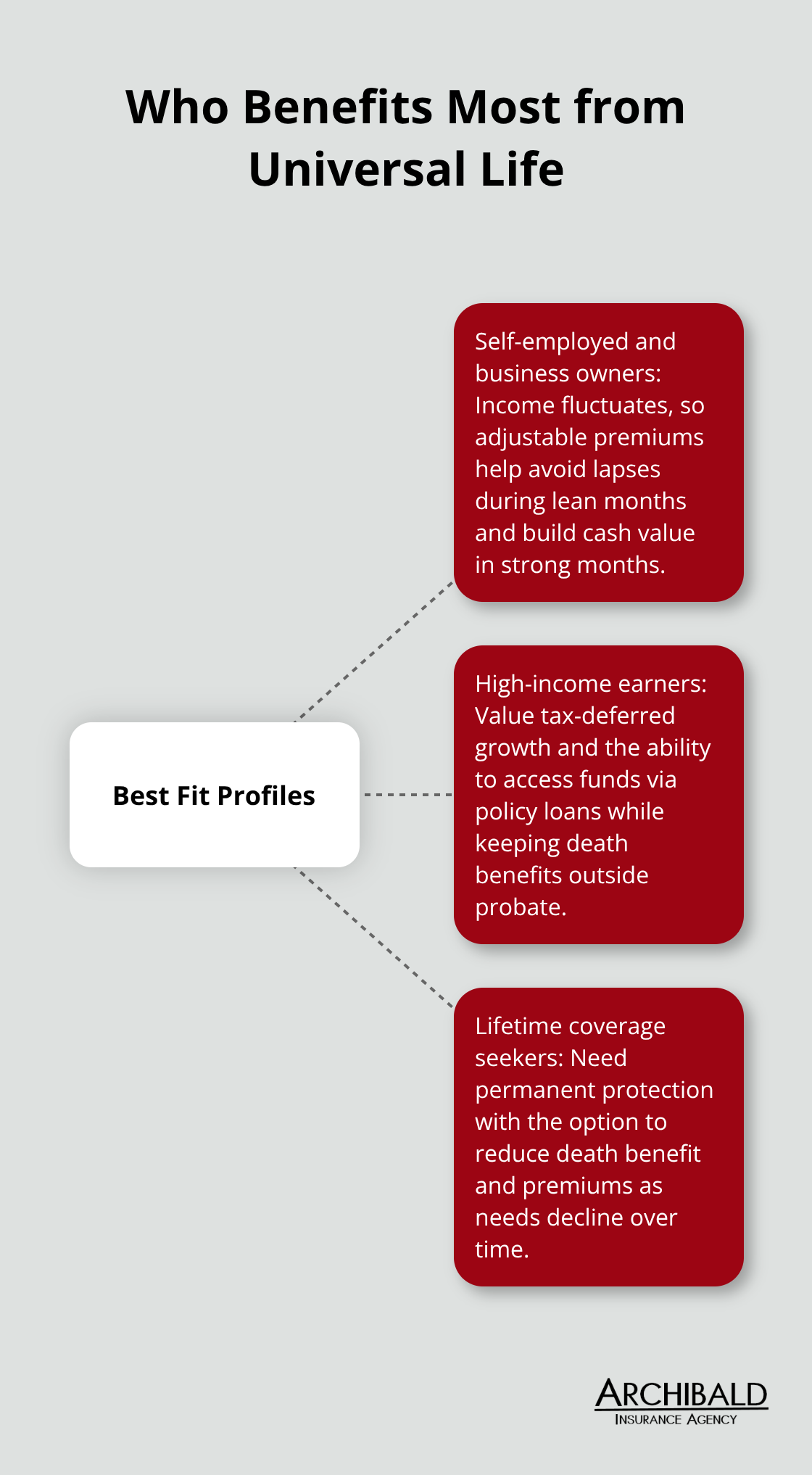
Universal life policies from carriers like Lincoln Financial allow premium payment flexibility for those with fluctuating incomes, while guaranteed universal life provides low-cost permanent coverage without complex cash value features. Conversion options in term policies let you switch to permanent coverage without new medical exams as health changes, though this feature expires at specific ages that vary by carrier. Return of premium riders refund all payments if you outlive term coverage but increase costs by 20-30% annually. Pacific Life offers no-medical-exam coverage up to $3 million for those who cannot qualify through traditional underwriting (though premiums reflect the additional risk these policies represent).

Claims Processing Speed Reveals Company Priorities

Utah law requires insurers to timely pay every valid insurance claim, yet some companies consistently exceed reasonable timelines while others pay within 7-10 days. The Utah Life and Health Insurance Guaranty Association protects policyholders up to $500,000 in death benefits if insurers become insolvent (though this safety net cannot replace the need to choose financially stable companies from the start). Customer service quality shows in claim denial rates, appeals processing times, and complaint ratios filed with state regulators rather than marketing promises about support.

Premium Stability Protects Your Long-Term Investment

Term life premiums can increase dramatically at renewal periods, especially for policies without level premium guarantees. Some carriers offer 20-year level term policies that maintain the same premium throughout the entire term, while others provide only 10-year guarantees before rates adjust based on your age and health status. Whole life policies lock in premiums for life but require higher initial payments that strain many family budgets. The key lies in understanding exactly when and how much your premiums might change before you commit to any policy.

These policy features matter most when you need to compare actual options from multiple carriers and evaluate which combination of benefits fits your specific situation.

How Do You Actually Compare Life Insurance Companies

Start with the NAIC’s company complaint database and state insurance department records before you look at marketing materials. Utah’s insurance department publishes complaint ratios that show how often each company faces regulatory action compared to their market share. Legal & General America maintains low complaint ratios while they offer competitive rates that start at $23 monthly for healthy females who seek $500,000 in 20-year term coverage. Pacific Life shows strong performance metrics for no-exam policies up to $3 million, though their complaint data reveals longer processing times for complex underwriting cases.

State Records Reveal Real Company Performance

Check each company’s claims payment speed through state insurance department annual reports rather than rely on company websites that highlight best-case scenarios. These reports show actual settlement times, denial rates, and regulatory violations that marketing materials never mention. Companies with consistent regulatory problems often face higher complaint ratios and slower claims processing (which directly affects your beneficiaries when they need payments most).

A compact step-by-step list to evaluate and compare life insurance companies in Utah. - top rated life insurance policy

Online Tools Miss Critical Policy Details

Comparison websites show premium quotes but hide policy restrictions, medical exam requirements, and renewal terms that affect long-term costs. The NAIC Life Insurance Policy Locator reveals how often companies actually pay claims versus deny them through technicalities, since millions in benefits go unclaimed annually due to poor company communication with beneficiaries. Request actual policy contracts from each carrier to review exclusions, suicide clauses, and premium increase schedules that online calculators cannot capture.

Independent Agents Access Better Options

Lincoln Financial’s pre-existing condition expertise shows in their underwriting guidelines, not their quoted premiums, which makes direct company contact necessary for accurate pricing. Independent agents access wholesale pricing and underwriting flexibility unavailable through direct-to-consumer channels. They handle claims advocacy when companies delay or dispute payments during your family’s most difficult moments, plus they represent multiple carriers to find coverage that fits your specific health and financial situation.

Final Thoughts

You need systematic evaluation of company financial strength ratings, policy features, and actual claims performance data to find a top rated life insurance policy. Start with AM Best ratings of A- or higher, then examine complaint ratios through state insurance departments and premium stability guarantees that protect your investment. These steps help you avoid companies that offer attractive premiums but lack the financial strength to pay claims when your family needs them most.

Your coverage needs change as your financial situation evolves. Marriage, children, mortgage payments, and income growth all affect how much protection you require. Utah residents receive a 10-day free look period and 30-day grace period for missed payments, but these protections cannot replace active policy management (which prevents coverage gaps during life transitions).

Experienced professionals who understand Utah’s insurance landscape can access multiple carriers for comparison and help you navigate complex policy terms. We at Archibald Insurance Agency represent numerous insurance carriers and provide personalized solutions that fit your specific needs and budget. Contact us today to review your life insurance options and secure the protection your family deserves.