Family Car Insurance Utah: Protecting Your Loved Ones on the Road

Every day, Utah families navigate roads with real risks-accidents happen, and the right insurance makes all the difference.

Family car insurance in Utah isn’t just a legal requirement; it’s your financial safety net when the unexpected occurs. We at Archibald Insurance Agency help families understand their coverage options so they can drive with confidence.

What Coverage Do Utah Families Actually Need?

Utah law requires all registered vehicles to carry No-Fault coverage, bodily injury liability, and property damage liability under Utah Code Ann. §31A-22-302, but minimum coverage alone leaves most families dangerously exposed. The state minimum liability limits fail to protect your family’s assets if you cause a serious accident. We recommend carrying liability limits well above the state minimum-at least 100/300/100, meaning $100,000 per person and $300,000 per accident for bodily injury, plus $100,000 for property damage. This protects your family’s home, savings, and future income if a lawsuit follows an at-fault collision.

Comprehensive and Collision Coverage for Your Vehicles

Comprehensive and collision coverage protects your own vehicles from damage caused by accidents, theft, weather, or vandalism. Comprehensive covers non-collision events like hail, theft, and animal strikes, while collision covers damage from accidents with other vehicles or objects. For vehicles financed or leased, lenders require both coverages; for owned vehicles, the decision depends on your car’s value and your financial situation.

Hub-and-spoke showing Utah-required and recommended family auto coverages - Family car insurance Utah

If your vehicle is worth less than $5,000, dropping collision coverage may make financial sense, but comprehensive is worth keeping for theft and weather protection.

Uninsured and Underinsured Motorist Protection

Uninsured motorist coverage protects your family when another driver causes an accident but lacks adequate insurance-a real problem in Utah where some drivers still operate uninsured despite legal penalties starting at $400 for first offenses. Nearly 1 in 8 drivers nationally operate without insurance, according to the Insurance Research Council, and Utah’s Insure-Rite verification system has identified thousands of uninsured vehicles. When an uninsured driver hits your family, your uninsured motorist coverage steps in to pay for medical expenses, lost wages, and pain and suffering up to your coverage limit. Underinsured motorist coverage fills the gap when another driver’s insurance limits fall short of covering your family’s damages. Try setting these limits equal to your liability limits-if you carry 100/300 liability, carry 100/300 uninsured and underinsured motorist coverage.

Medical Payments Coverage for Immediate Protection

Medical payments coverage or personal injury protection, available depending on your insurer, pays medical bills regardless of fault, which matters for families with young children or members with existing health conditions. This coverage activates immediately after an accident and covers hospital visits, surgeries, and rehabilitation without waiting for a liability determination. Utah families with multiple drivers or teenage drivers should seriously consider medical payments coverage, since even low-speed accidents can trigger expensive emergency room visits. Your choice of coverage limits and deductibles directly shapes how well your family is protected when accidents happen-and the next section shows you how to evaluate these options against your family’s actual driving patterns and financial situation.

Choosing the Right Coverage for Your Family’s Situation

Map Your Household’s Actual Driving Patterns

Your family’s insurance needs depend entirely on how you actually drive, not on what the law requires or what your neighbor carries. Start by documenting your household’s driving patterns over the past year-annual mileage, commute distances, whether teen drivers participate, and how often you drive in winter conditions. A family with one parent commuting 40 miles daily in Salt Lake City faces different risks than a family using vehicles primarily for weekend errands in rural areas. Driving patterns and risk factors like urban theft and accident rates differ from rural driving, which increases comprehensive claims from weather and animal strikes. Document these patterns honestly, because they directly determine whether you need higher liability limits, comprehensive coverage, or medical payments protection.

Account for Teen Drivers in Your Premium Calculations

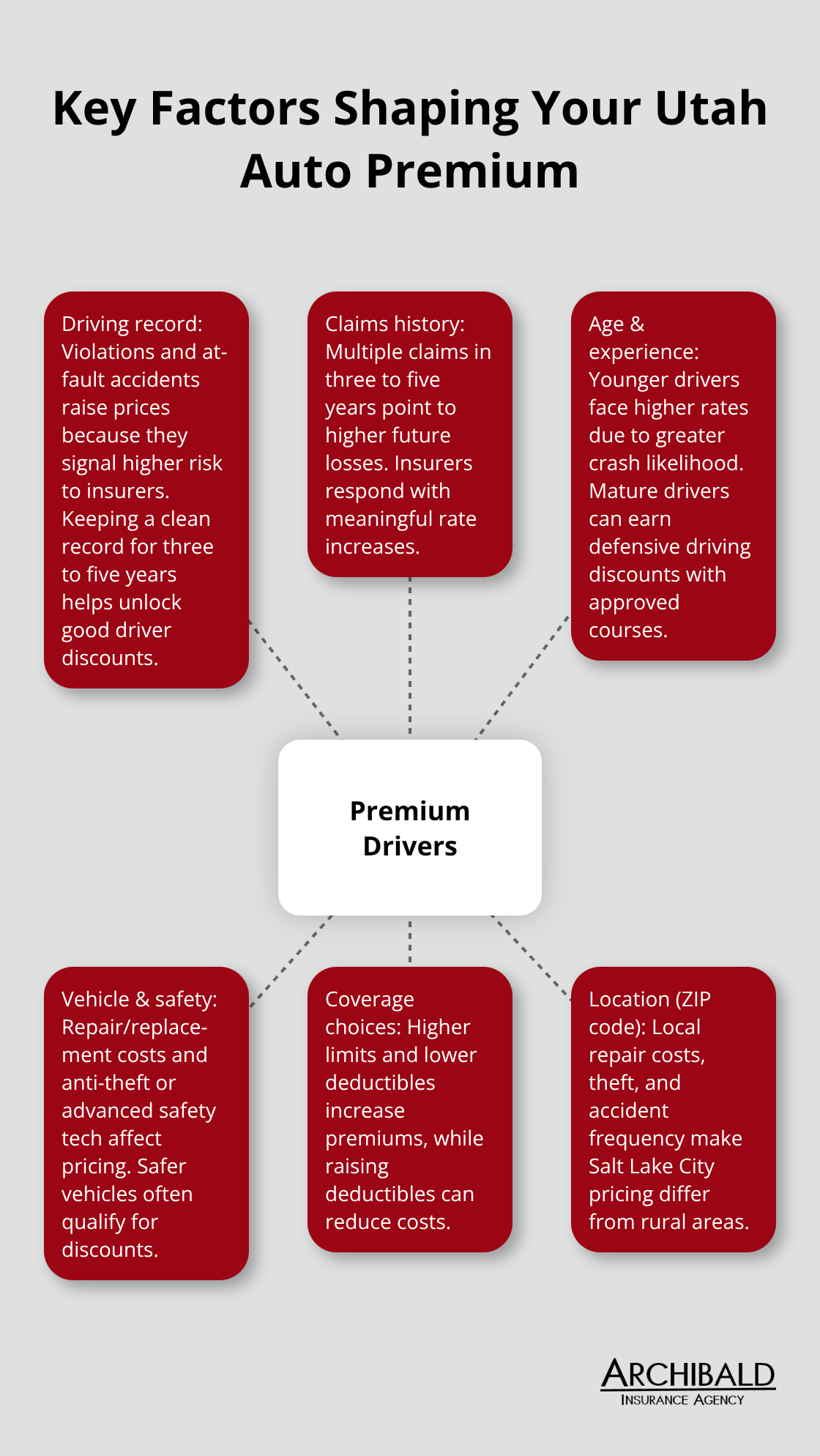
If your household includes a teen driver under 21, expect your premiums to increase significantly, which makes every coverage decision more expensive and therefore more important to get right. This reality forces families to think strategically about which coverages matter most and where they can adjust deductibles to manage costs without sacrificing protection.

Compare Deductibles Across Coverage Types

Comparing deductibles across coverage types is where most families leave money on the table. A $500 collision deductible costs roughly 30 percent more annually than a $1,000 deductible, but you only benefit from that lower deductible if you file a claim-and most drivers go years without filing one. If you have three months of expenses in savings, a $1,000 deductible is financially sensible and cuts your annual premium substantially.

Percentage figures from the article that influence Utah auto insurance costs - Family car insurance Utah

However, if your vehicle is financed or leased, your lender mandates specific deductible limits, typically $500 or $1,000 maximum.

Verify Credit-Based Scoring and Stack Your Discounts

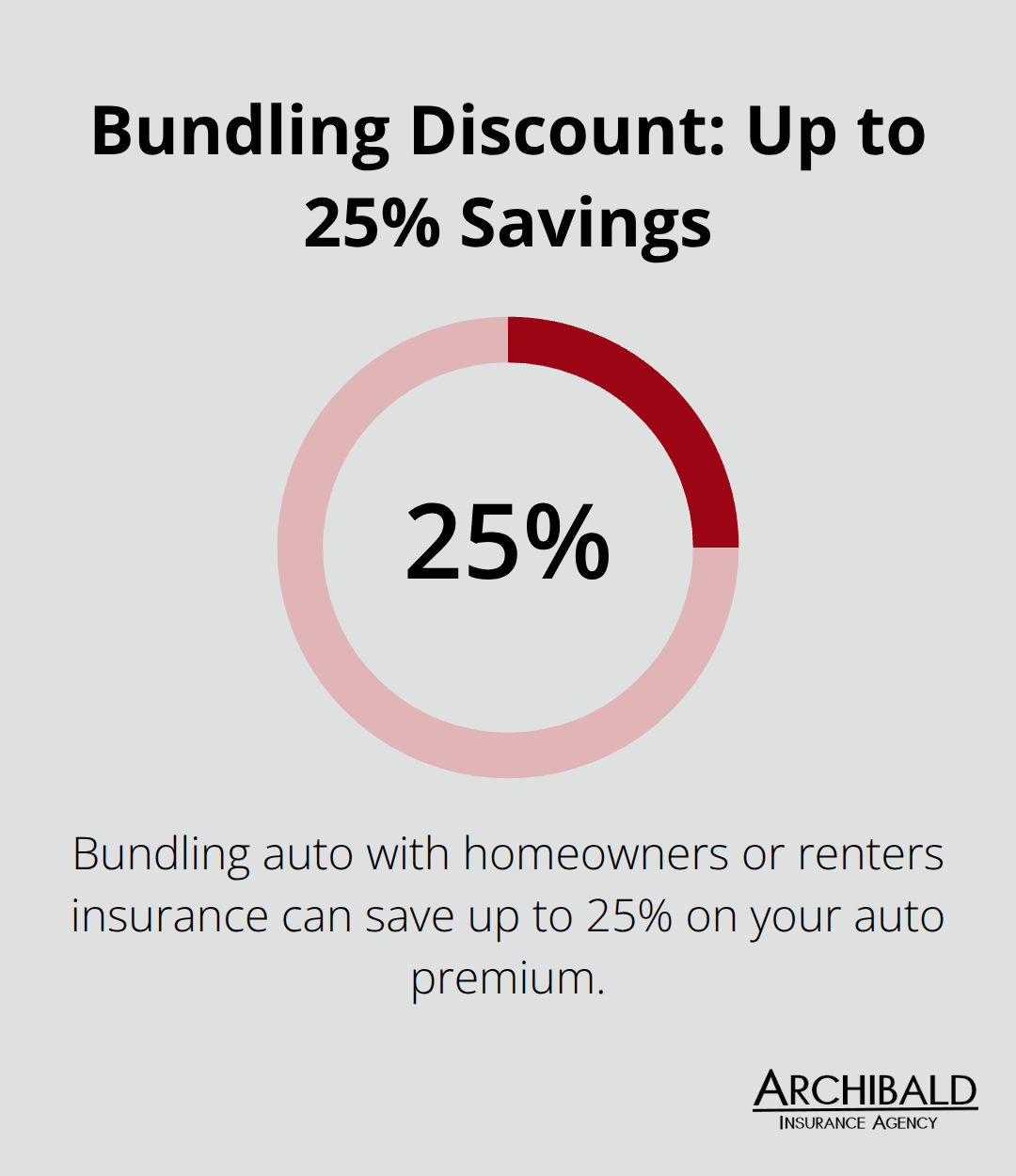
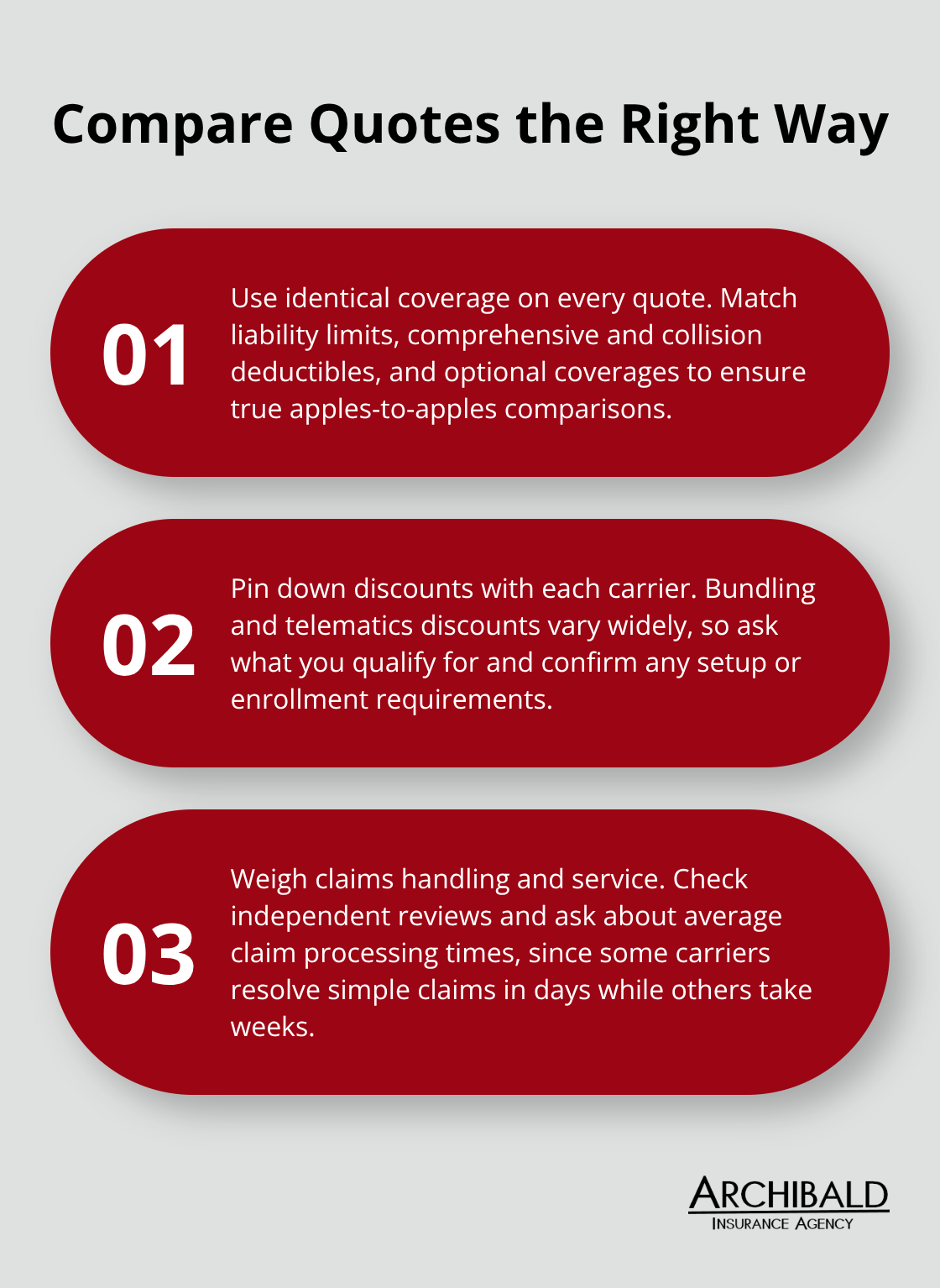
Utah families should verify whether their chosen insurer applies credit-based scoring to pricing, since some carriers weight credit history heavily in their rate calculations. Discount stacking matters more than any single coverage choice-bundling auto with homeowners or renters insurance, enrolling in telematics programs like Drive Safe & Save that can reduce premiums up to 30 percent for safe drivers, maintaining a clean driving record, and qualifying for good student discounts if your teen maintains a 3.0 GPA or higher can collectively save your family hundreds annually. Request quotes from at least three different carriers and ask each agent specifically which discounts apply to your household; many families miss savings simply because they don’t ask. These conversations with agents reveal which carriers offer the best combination of rates and discounts for your specific situation-and that’s where the real work of selecting the right plan begins.

Where Utah Families Waste the Most Money on Auto Insurance

Minimum Liability Coverage Leaves Your Assets Exposed

Utah families routinely make three expensive mistakes when selecting auto insurance, and each one costs hundreds or thousands of dollars over time. The first mistake is selecting minimum liability coverage strictly to lower premiums without understanding that Utah’s state minimums provide almost no asset protection. Utah requires only 25/65/15 liability coverage (meaning $25,000 per person, $65,000 per accident for bodily injury, and $15,000 for property damage), which sounds adequate until a serious accident happens. If your teenage driver causes an accident that injures multiple people or damages expensive property, the injured parties will pursue claims against your family’s assets when your insurance limits run out. A single at-fault accident involving serious injuries can generate medical bills exceeding $200,000 to $500,000, and when your policy covers only $25,000 per person, a lawsuit targeting your home and savings becomes inevitable.

Three major mistakes that increase family auto insurance costs

Carrying at least 100/300/100 coverage costs roughly $20 to $40 more monthly than minimum coverage but protects your family’s financial future. That $30 monthly difference amounts to $360 annually, a trivial cost compared to defending a lawsuit or losing your home.

Annual Policy Reviews Catch Coverage Gaps and New Discounts

The second mistake is failing to review policies annually, which means families miss changing life circumstances and new discount opportunities. A family that bundled auto and homeowners insurance five years ago might have switched homes, changed jobs, or added a teen driver without updating their agent, missing potential discounts or leaving dangerous coverage gaps. Utah families should review policies each year in January or when major life changes occur-adding a teen driver, purchasing a second vehicle, moving to a different neighborhood, or paying off a vehicle loan. Life changes shift your risk profile, and your coverage should shift with it. An agent who understands your household can identify discounts you never knew existed and adjust deductibles to match your current financial situation.

Discount Stacking Delivers Savings Most Families Never Claim

The third mistake is not stacking discounts aggressively, since most Utah families qualify for multiple discounts they never claim. A family with a teen driver who maintains a 3.0 GPA qualifies for good student discounts up to 25 percent, yet many parents never mention their child’s grades to their agent. Bundling auto with homeowners or renters insurance typically saves 15 to 25 percent on both policies combined. Enrolling in telematics programs like Drive Safe & Save can reduce premiums up to 30 percent for drivers with safe habits, but requires intentional enrollment and setup. A household with two vehicles, a good student driver, bundled home insurance, and a telematics program active could save $1,500 to $2,500 annually compared to a family carrying minimum coverage with no discounts applied (yet most families never calculate or pursue this combination strategically). The gap between what families actually pay and what they could pay through smart discount stacking represents the largest waste in Utah auto insurance.

Final Thoughts

Protecting your family on Utah roads requires three concrete actions: carry liability coverage well above state minimums, stack every discount your household qualifies for, and review your policy annually when life changes occur. Family car insurance in Utah isn’t about meeting legal requirements-it’s about ensuring that an accident doesn’t destroy your family’s financial security. The families who sleep soundly at night aren’t those with minimum coverage; they’re the ones who took time to assess their actual driving patterns, compared deductibles honestly against their savings, and built a coverage plan that matches their real situation.

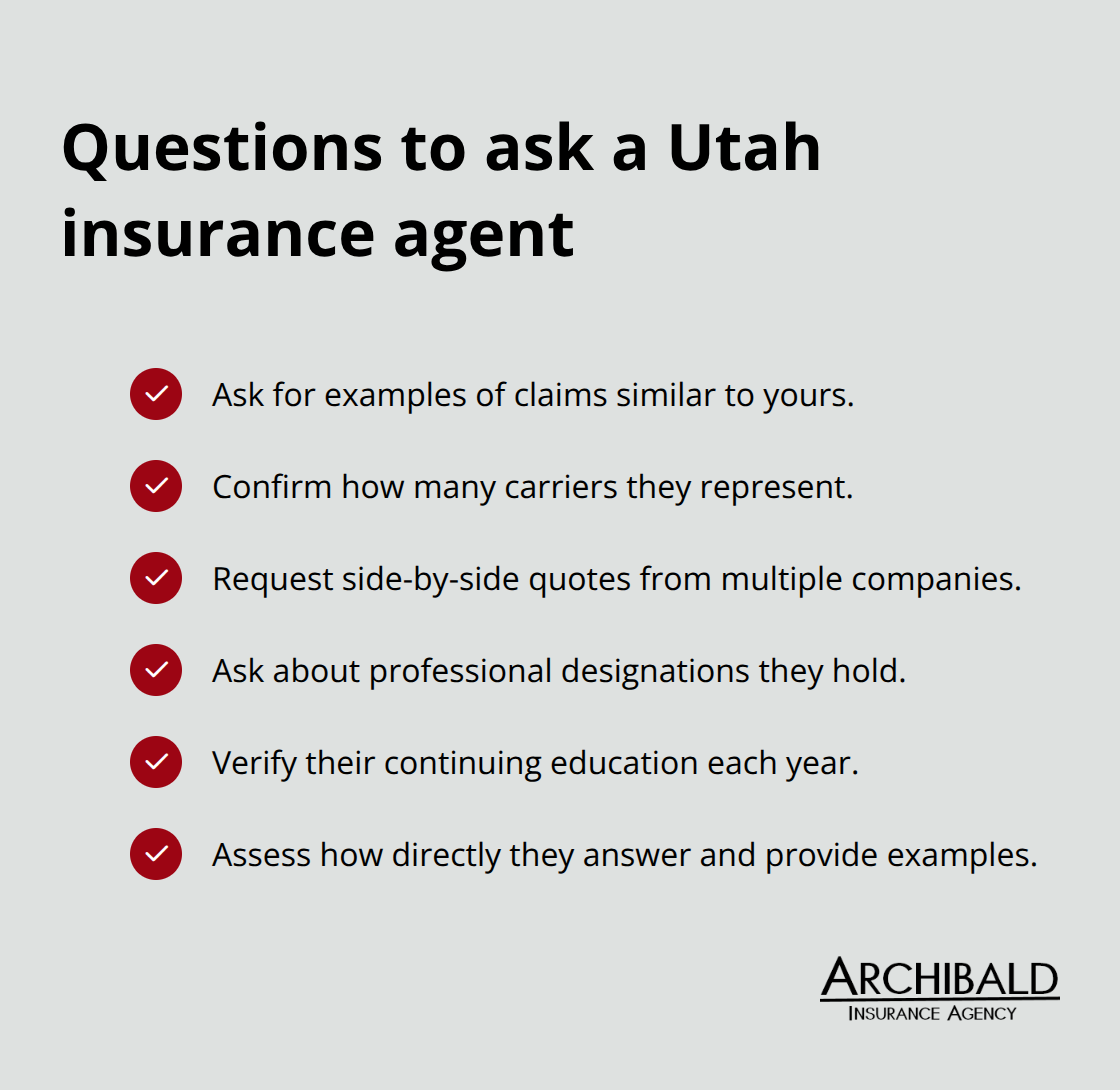
A local agent makes this process dramatically simpler because they understand Utah’s specific risks-winter driving conditions, rural road hazards, and the prevalence of uninsured motorists in your area. An agent who knows your household identifies discount combinations you’d never find alone and adjusts your coverage when you add a teen driver, purchase a second vehicle, or move to a different neighborhood. We at Archibald Insurance Agency specialize in this work as an independent agency representing numerous carriers, which means we compare options across multiple insurers rather than locking you into a single company’s limited choices.

Your next step is straightforward: gather your household’s driving information, document your vehicles and drivers, and contact an agent to compare quotes from at least three carriers. Ask specifically which discounts apply to your situation-good student discounts, bundling savings, telematics programs, and multi-vehicle discounts add up quickly. Contact Archibald Insurance Agency to ensure your current coverage matches your family’s needs and budget.

Disclaimer: The information provided in this blog is for general informational purposes only and does not constitute legal, financial, or insurance advice. Coverage options, terms, and availability may vary. Please consult with a licensed professional for advice specific to your situation

Why Independent Utah Agents Matter for Local Coverage

When you need insurance in Utah, the agent you choose makes all the difference. Independent Utah agents understand your state’s unique risks, from winter weather to local regulations that big national companies often miss.

At Archibald Insurance Agency, we’ve seen firsthand how personalized service and local expertise protect families and businesses better than one-size-fits-all policies. This post explains why working with an independent agent in your community matters.

Why Utah Agents Know Risks You Face

Utah’s insurance landscape differs dramatically from national averages, and local agents understand these differences in ways distant corporate representatives never will. Wind and microbursts along the Wasatch Front create claim severity even for homes that appear undamaged, while northern Utah’s frequent hailstorms and winter freeze-related failures like burst pipes and ice dams drive some of the state’s most expensive homeowners claims. Water damage and freezing account for disproportionate claim costs across Utah. These aren’t theoretical risks-they’re the events that drain your finances when winter hits or a microburst sweeps through your neighborhood. An independent agent in your community has handled dozens of these claims and knows exactly which coverage gaps leave families vulnerable.

Weather and Environmental Pressures Reshape Your Costs

Utah’s rapid growth has driven body-shop labor costs higher and made replacement parts for newer vehicles harder to source, pushing claim payouts upward. Wildfire risk in foothills and rural areas raises homeowners claim costs in ways that agents in Colorado or Nevada may not fully understand. Construction boom activity boosts contractor demand, increasing home repair costs after claims. A local agent factors these realities into recommendations rather than applying a generic Utah rate. Population growth also means more cars and drivers on Utah roads, contributing to higher-than-average crash rates and distracted-driving incidents that increase auto claims statewide.

Key Utah-specific cost drivers affecting insurance premiums and claims - Independent Utah agents

When an agent understands that your neighborhood sits in a high-wind zone or that your commute crosses accident-prone corridors, they recommend appropriate deductible levels and coverage limits instead of suggesting minimums that leave you exposed.

Local Regulations Shape What You Need

Utah’s regulatory environment includes specific title insurance and public adjuster requirements that independent agents navigate daily. Fidelity bond requirements for title insurance producers require at least $500,000 in protection, and escrow funds must sit in Utah-based federally insured trust accounts.

Percentage limits for Utah public adjuster compensation on claims - Independent Utah agents

Public adjusters face a 10% compensation cap on catastrophic claims and 15% on non-catastrophic claims, protecting you from excessive fees. An agent rooted in your community stays current on these rules and ensures your policies comply without leaving coverage gaps that regulators or claims adjusters later exploit. National call centers don’t track these state-specific changes with the same precision.

Why Your Next Decision Matters

These local insights-about weather patterns, repair costs, and regulatory compliance-directly shape whether your coverage protects you or leaves you exposed when claims happen. Independent agents like those at Archibald Insurance Agency combine this knowledge with access to multiple carriers, allowing them to match you with solutions that fit Utah’s specific environment rather than forcing you into policies designed for national markets.

How Independent Agents Match You With Better Coverage

Access to Multiple Carriers Means Real Choices

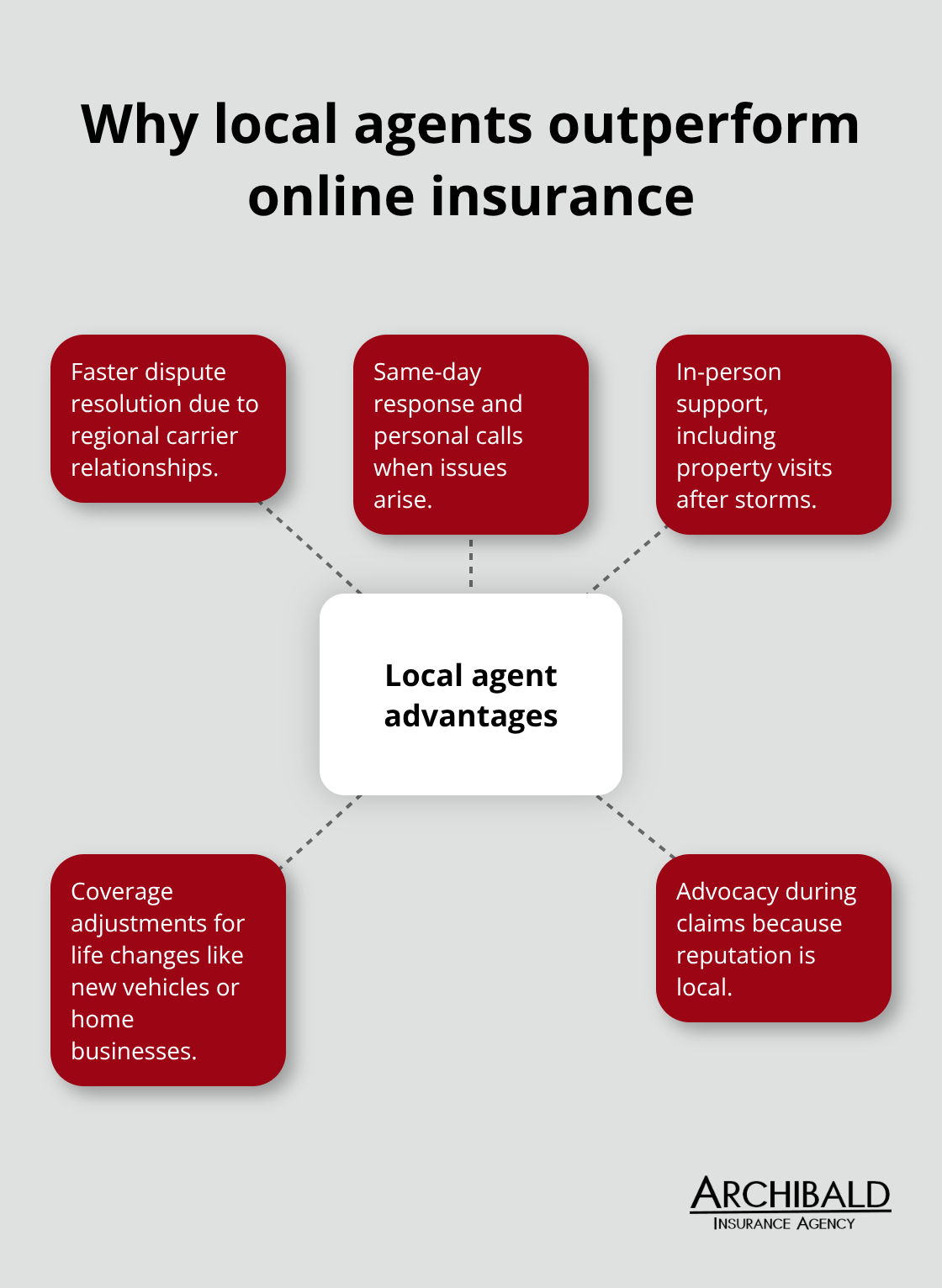
When you call a captive agent tied to a single insurance company, you receive access to that company’s policies and prices only. When you work with an independent agent, you gain access to multiple carriers, which means you compare real options instead of accepting whatever one insurer offers. This difference matters enormously in Utah’s market. An independent agent can show you that one carrier charges significantly more for your auto policy while another offers the same coverage at a lower rate, or that homeowners premiums vary depending on the insurer’s appetite for Utah’s weather risks. You see the actual spread and choose based on value, not marketing.

Independent agents also understand which carriers offer the best rates for specific situations. If you maintain a clean driving record, some insurers reward that more generously than others. If you bundle home and auto coverage, certain carriers provide deeper discounts than competitors. An agent representing multiple insurers knows these nuances and matches you accordingly instead of forcing you into a one-size-fits-all product.

Customization Reflects Your Actual Situation

Customization reflects your actual situation, and this is where independent agents separate themselves from national companies. Rather than applying generic Utah rates, an independent agent asks detailed questions about your driving habits, vehicle types, home construction, and business operations. If you work from home and drive only ten thousand miles annually, an agent customizes your auto coverage and explores telematics programs that reward low mileage and safe driving with measurable premium reductions. If your home sits on a hillside vulnerable to wildfire or wind damage, an agent recommends appropriate deductible levels and coverage limits instead of minimums that leave you exposed when claims happen.

For business owners, an independent agent assesses your specific exposures and sources policies that fit rather than guessing. This customization reflects reality: your situation differs from your neighbor’s, and your coverage should too.

Proactive Adjustments as Your Life Changes

Independent agents also guide you through coverage decisions as life changes occur. When you move to a new neighborhood, get married, start a business, or add a rental property, an agent proactively reviews your policies and adjusts coverage to match your new circumstances rather than waiting for you to remember during renewal season. This ongoing attention means your protection stays current with your actual needs, not locked into decisions you made years ago when your situation looked completely different.

Hub-and-spoke showing independent agent advantages: carriers, customization, proactive reviews

As your circumstances shift, the right independent agent shifts with you-and that’s exactly when claims support and local assistance become invaluable.

The Advantage of Working with Utah-Based Insurance Professionals

Local Agents Respond Fast When Claims Strike

When a hailstorm damages your roof or a winter freeze bursts pipes in your walls, you need answers immediately, not explanations to a distant claims representative who has never seen Utah weather or your neighborhood. Local agents respond with speed and clarity that national call centers cannot match. A local agent knows your policy details without requiring you to repeat information, walks you through next steps immediately, and advocates directly with carriers on your behalf when disputes arise. This responsiveness matters most when you’re stressed and need answers fast.

If you file a claim on Friday afternoon, a local agent can often connect you with adjusters by Monday morning rather than waiting days for a national company to route your case through multiple departments. When complications emerge during claims (missing documentation, coverage questions, or carrier disputes), a local agent picks up the phone and resolves issues directly instead of routing you through automated systems or requiring you to call back repeatedly.

Accessibility Builds Real Accountability

Beyond claims, local agents remain accessible for routine questions and coverage adjustments throughout the year. When you move, add a vehicle, or start a business, you contact your agent directly instead of navigating a website or waiting on hold. This accessibility builds accountability: a local agent’s reputation depends on your satisfaction and referrals within your community, so they prioritize responsiveness in ways that distant corporate representatives do not.

Over years of working together, a local agent learns your situation deeply and anticipates coverage needs before you recognize them yourself. Your agent becomes someone you trust enough to call with questions or concerns, not someone you contact only at renewal time. This relationship transforms insurance from a transaction into a partnership that protects your family or business through different life stages and changing circumstances.

Community Roots Create Lasting Commitment

Independent Utah agents stay invested in their communities because they live and work there. They understand what matters most to Utah families and drivers, and they build their practices on long-term relationships rather than quick sales. When you work with a local agent, you’re not a file number in a national database-you’re a neighbor whose protection and satisfaction directly affect their reputation and livelihood. This commitment shows up in how agents handle your account, respond to emergencies, and advocate for you when problems arise.

Final Thoughts

Independent Utah agents deliver protection that national companies simply cannot match. You access multiple carriers, receive customized coverage that reflects your actual situation, and work with professionals who understand weather patterns, repair costs, and regulations specific to Utah. When claims strike, you reach someone who knows your policy, understands Utah’s challenges, and responds with speed instead of routing you through automated systems.

The real advantage comes from working with professionals rooted in your community (independent Utah agents build their practices on long-term relationships and local reputation). Your satisfaction and protection matter directly to their success, so they anticipate coverage gaps before problems arise, adjust your policies as your life changes, and advocate on your behalf when disputes emerge. This commitment transforms insurance from a transaction into a partnership that protects your family or business through different life stages.

We at Archibald Insurance Agency specialize in personalized insurance solutions across auto, home, business, and life coverage. As an independent agency in Salt Lake City, we represent numerous carriers and build lasting relationships based on trust and reliability within our community. Contact us to discuss how local expertise and multiple carrier options protect what matters most to you.

Disclaimer: The information provided in this blog is for general informational purposes only and does not constitute legal, financial, or insurance advice. Coverage options, terms, and availability may vary. Please consult with a licensed professional for advice specific to your situation

Young Driver Auto Insurance: Tips for Safer, More Affordable Coverage

Young drivers face significantly higher insurance premiums than their older counterparts, often paying two to three times more for the same coverage. At Archibald Insurance Agency, we’ve helped countless young drivers in Utah find ways to reduce these costs without sacrificing protection.

The good news is that your age and driving record don’t have to define your insurance expenses forever. This guide walks you through proven strategies to lower your young driver auto insurance rates while building safer driving habits.

Why Young Drivers Cost More to Insure

Insurance companies view drivers under 25 as statistically riskier, and the numbers back up this position. According to the American Academy of Pediatrics, motor-vehicle accidents account for a significant portion of deaths among people aged 16 to 20. The CDC reports that in 2022, 17% of teen drivers aged 15 to 20 who died in crashes had a blood alcohol content of 0.08% or higher. These statistics directly influence how insurers price your policy.

Experience Gaps Create Real Risk

Young drivers lack the experience to anticipate hazards, react quickly to sudden changes, and make split-second decisions that prevent collisions. A 16-year-old simply hasn’t logged enough hours behind the wheel to develop the instinctive responses that older drivers take for granted. Post-pandemic trends show that teen driving risks have intensified, with increases in speeding, seatbelt non-use, and smartphone distractions creating an even riskier environment than before.

How Insurers Calculate Your Premium

Insurance companies use actuarial data to assign risk. They factor in your age, driving history, the type of vehicle you drive, where you live in Utah, and the coverage limits you select. A 16-year-old adding themselves to a parent’s policy typically increases the annual premium by around $5,327 in the first year, according to Bankrate. This figure reflects the genuine cost of insuring higher-risk drivers.

Utah’s Legal Requirements

When you obtain your license, Utah law requires you to notify your insurer immediately. Failure to do so can result in denied claims if you cause an accident, leaving you personally liable for damages and medical bills. The calculation isn’t punitive; it’s actuarial reality. Insurers know that young drivers will file more claims, so they price accordingly.

Understanding this framework explains why your premium feels steep-and why the cost-reduction strategies ahead can meaningfully lower what you pay each month.

How to Cut Your Young Driver Insurance Costs

Good Student Discounts Pay Real Money

A strong GPA directly translates to savings. Insurers like GEICO and State Farm offer good student discounts for teens maintaining a 3.0 GPA or ranking in the top 20% of their class. This discount doesn’t disappear after high school either. If you’re homeschooled, you can qualify by providing evidence of strong performance on national standardized tests. Keeping your grades up ranks as one of the easiest ways to reduce what you pay each month.

Defensive Driving Courses Deliver Measurable Results

Completing an approved driver education program qualifies you for discounts with most major carriers. If all drivers under 21 in your household complete the course, some insurers apply additional reductions. These courses teach hazard recognition and emergency braking techniques that actually prevent accidents, so the discount reflects real risk reduction rather than marketing gimmick.

Usage-Based Insurance Rewards Safe Driving Habits

Usage-based insurance programs flip the traditional model on its head by rewarding actual driving behavior rather than penalizing age. Programs like Steer Clear from State Farm and Drive Safe & Save from Progressive use a small device or smartphone app to monitor your acceleration, braking, cornering, and nighttime driving. Safe drivers see premium reductions of 10% to 30% depending on the program and your state. This approach matters especially for young drivers because it proves your competence through data rather than assumptions about your age.

Typical premium reductions from telematics programs for young drivers - Young driver auto insurance

Bundling and Family Policies Cut Costs Significantly

Bundling your auto policy with your parent’s homeowners or renters policy generates immediate savings that compound monthly. Most insurers offer 10% to 25% multi-policy discounts simply for consolidating coverage under one carrier. If your family adds you to an existing policy rather than purchasing separate coverage, you’ll pay considerably less than striking out independently. A 16-year-old on a parent’s policy costs roughly $5,327 more annually according to Bankrate, but that’s still substantially cheaper than a standalone policy for a young driver.

Vehicle Selection and Shopping Strategy Matter

Shop multiple quotes before committing because rates vary dramatically between insurers even for identical coverage. A vehicle’s make, model, and year dramatically influence your premium, so selecting an economical car with strong safety ratings and lower theft risk reduces your insurable risk profile. Newer vehicles with forward collision warning and lane departure warning systems appeal to insurers because those features prevent collisions. The specific details you provide when requesting quotes-including the exact make, model, and year-directly affect the premium you receive, so accuracy matters when comparing options across carriers.

These cost-reduction strategies work best when combined, but they only address half the equation. Your actual driving behavior determines whether you’ll keep these discounts or watch your rates climb after your first accident.

How to Actually Prevent Accidents as a Young Driver

Your insurance discounts mean nothing if you wrap your car around a telephone pole in the first month. The hard truth is that young drivers cause accidents at rates that justify those premium increases, and no discount reverses the damage of a collision. The CDC reports that motor vehicle crashes are the leading cause of death for U.S. teens, accounting for more than one in three deaths in this age group. Post-pandemic trends show the problem has worsened, with increases in speeding, seatbelt non-use, and smartphone distractions creating deadlier conditions than before the pandemic.

Eliminate Phone Distractions Before They Kill You

Smartphones represent the most destructive force in your vehicle. NHTSA’s Put the Phone Away or Pay campaign exists because distracted driving kills. When your phone buzzes, the instinct to check it overrides judgment, and young drivers lack the experience to recognize how quickly a distraction becomes fatal. Place your phone in the trunk, glove compartment, or passenger seat where you cannot reach it while driving. This single action eliminates the temptation that causes most crashes among your age group.

Control Your Speed in All Conditions

Speed kills with mathematical certainty. Driving 10 mph faster than conditions allow eliminates your reaction time and increases stopping distance exponentially. Rain, snow, and darkness amplify these dangers, yet young drivers consistently underestimate how much they need to slow down. Reduce your speed by 25% when weather deteriorates or visibility drops. This adjustment costs you minutes on your commute but saves your life.

Develop Hazard Recognition Skills

Defensive driving courses teach hazard recognition and emergency braking, but the real skill comes from constant practice recognizing threats before they develop. Scan the road three to five seconds ahead of your vehicle, watch for brake lights signaling sudden stops, and assume every driver around you will make a dangerous decision. This habit transforms you from a reactive driver into a proactive one who anticipates collisions before they happen.

Use Telematics Feedback to Improve Your Habits

Usage-based insurance programs like State Farm’s Steer Clear provide real-time feedback on your driving, showing acceleration patterns, braking force, and nighttime driving frequency. This data reveals habits you would not otherwise notice. If the app shows harsh braking events, you are following too closely or failing to anticipate stops. If nighttime driving triggers warnings, you are developing fatigue or overconfidence in darkness. Young drivers who engage with this feedback actively improve their crash avoidance skills.

Choose a Vehicle That Protects You

Newer cars with forward collision warning systems and automatic emergency braking reduce collision risk substantially because they compensate for human error. IIHS crash-test ratings reveal which vehicles protect occupants in actual collisions, and selecting a car with good ratings directly reduces injury severity if an accident occurs. Try a modest, economical vehicle without excessive power that could tempt aggressive acceleration. Your parent’s or guardian’s example shapes your behavior more than any lecture. If they drive distracted, speed in residential areas, or text behind the wheel, you will internalize those behaviors. Safe, sober, distraction-free driving from adults in your household creates the environment where young drivers develop competence rather than confidence masquerading as skill.

Final Thoughts

Lowering your young driver auto insurance costs requires action on two fronts: you must reduce your risk profile through discounts while simultaneously preventing accidents through safer driving habits. Good student discounts, defensive driving courses, usage-based insurance programs, and bundling all signal to insurers that you represent lower risk than the statistical average for your age group. Vehicle selection and shopping multiple quotes amplify these savings further, but discounts vanish the moment you file a collision claim.

Young drivers cause accidents at rates that justify higher premiums, and no discount survives a crash. Eliminating phone distractions, controlling your speed in poor conditions, developing hazard recognition skills, and choosing a safer vehicle directly prevent the crashes that would erase your savings and spike your rates. Your parents or guardians set the tone through their own driving behavior, so safe, sober, distraction-free driving from adults in your household creates the foundation for your competence.

Utah law requires you to notify your insurer when you obtain your license, and failing to do so leaves you personally liable for accident damages. Contact an independent insurance agent who represents multiple carriers and can compare quotes across different insurers to find young driver auto insurance that fits both your budget and your risk profile. Archibald Insurance Agency specializes in helping young drivers in Utah find personalized coverage that matches your specific situation.

Disclaimer: The information provided in this blog is for general informational purposes only and does not constitute legal, financial, or insurance advice. Coverage options, terms, and availability may vary. Please consult with a licensed professional for advice specific to your situation

Independent Agents Salt Lake: Your Local Insurance Advantage

Insurance decisions in Salt Lake City shouldn’t feel overwhelming. Whether you’re protecting your family’s home, your business, or your vehicles, independent agents in Salt Lake offer something direct insurers simply can’t match: genuine local expertise combined with access to multiple carriers.

At Archibald Insurance Agency, we’ve built our reputation on understanding Utah’s unique insurance landscape and matching families and businesses with coverage that actually fits their lives.

What Makes Independent Agents Stand Out in Salt Lake

Access to Multiple Carriers and Better Rates

Independent agents work with multiple insurance carriers, which gives us access to rates and coverage options that captive agents cannot match. When you work with an agent tied to a single insurer, you’re limited to what that one company provides. We shop across carriers like Chubb, Travelers, and Safeco, comparing quotes to find the best combination of price and protection for your situation.

Independent agents monitor rate changes year-round, and when your rate jumps, we shop your policy with other carriers before your renewal arrives. A family paying $1,200 annually for auto insurance might save $200 to $400 per year through competitive shopping alone-that adds up to thousands over a decade.

Money-saving advantages of independent insurance agents in Salt Lake City

Understanding Local Risks and Weather Patterns

Salt Lake’s winter snow, wildfire risks, and flash flooding create specific insurance needs that national call centers don’t understand. These weather patterns raise claim rates and affect how insurers price coverage. We assess whether your homeowners policy adequately covers these local risks or if you need additional protection.

For businesses, this local insight proves even more valuable. A contractor working in Utah’s varied elevations faces different liability exposures than one in a flat region. We tailor commercial policies to match what you actually do, not generic templates that miss critical details.

Continuity and Advocacy When Claims Happen

Independent agents build relationships with clients over years, not transactions. When claims occur, you contact someone who knows your situation, not a claims center number. That continuity means faster resolution and someone actively advocating for fair treatment from the insurer. This local connection transforms how you experience insurance-from a distant transaction into a partnership with someone invested in your protection.

How Direct Insurers Fall Short for Utah Residents

The Coverage Gap When You Shop Alone

Direct insurers operate on a simple model: they sell you their policies through websites, phone lines, and apps. No agent involved. No local expertise. No one to call when something goes wrong. For Utah residents facing complex insurance decisions, this approach creates real gaps in coverage and protection. When you buy directly from an insurer, you make coverage decisions alone. Most people don’t know what homeowners insurance actually covers or what liability limits they need for their specific situation. Direct insurers won’t tell you that Utah’s wildfire risk has increased significantly in recent years, affecting how much coverage you truly need. They won’t identify that your business liability exposure differs based on your industry and customer base. You receive generic recommendations designed to fit everyone and protect no one specifically.

Customization That Direct Insurers Cannot Provide

An independent agent asks detailed questions about your life, your business, and your risks. We then match you with carriers that specialize in your specific situation. A contractor in Utah needs different commercial auto coverage than a retail business owner. A family with teenage drivers needs different auto insurance strategies than empty nesters. Direct insurers can’t customize this way because they only sell one company’s products. When your circumstances change, direct insurers don’t proactively shop your coverage. Your rate increases at renewal, and you either accept it or switch companies entirely, losing continuity and your claims history.

Year-Round Rate Monitoring and Shopping

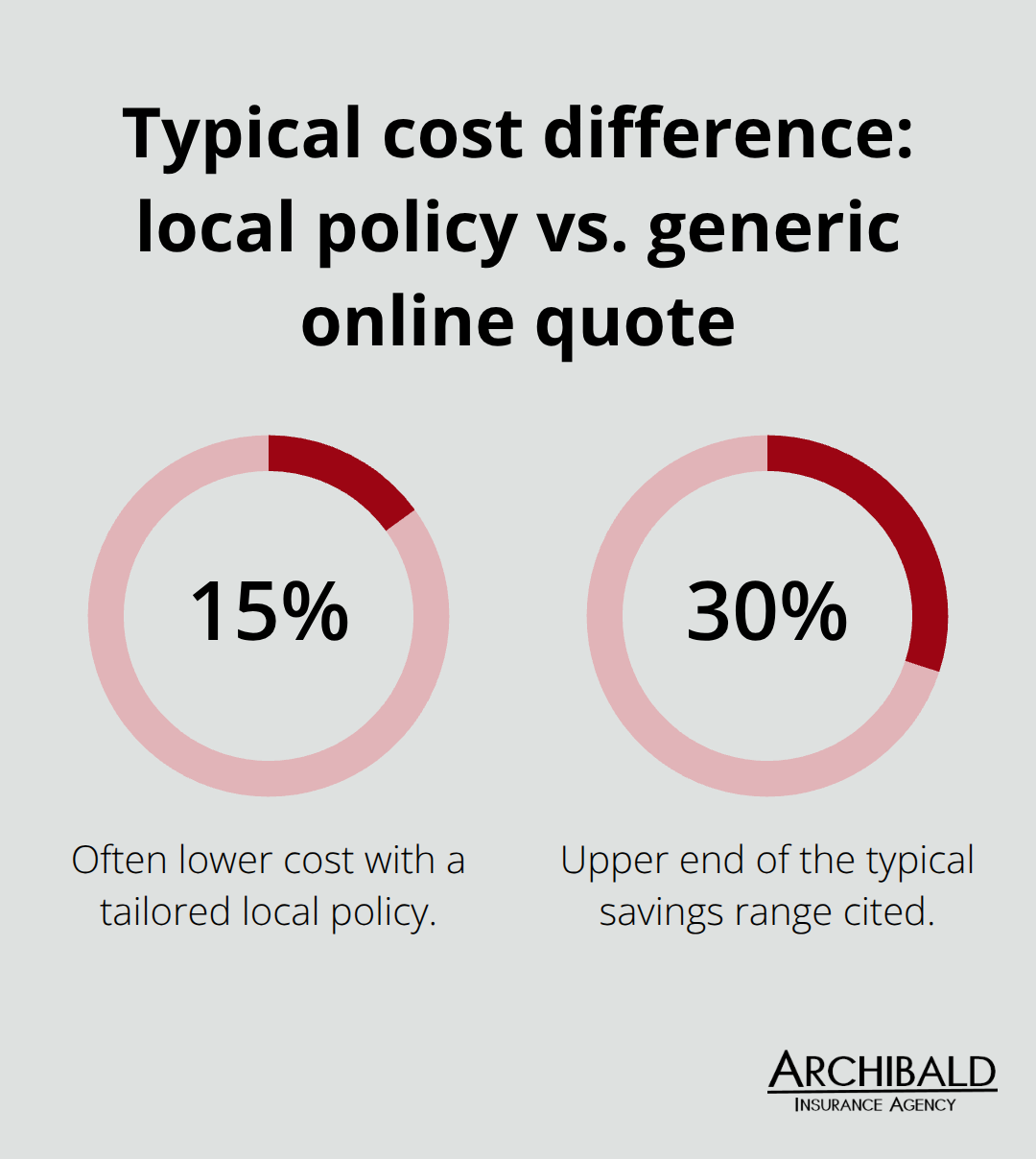
Independent agents monitor rate changes continuously and shop your policy with competitors before renewal arrives. This year-round attention typically saves clients 10 to 20 percent compared to staying with a direct insurer that raised rates. A family paying $1,200 annually for auto insurance might save $200 to $400 per year through competitive shopping alone-that adds up to thousands over a decade. Direct insurers have no incentive to shop your business elsewhere; they profit when you stay and accept higher premiums.

Visualization of 10% to 20% savings compared to direct insurers - Independent agents Salt Lake

Claims Handling: Where the Real Difference Emerges

Direct insurers employ claims adjusters who process thousands of cases. You’re a claim number, not a person. If the insurer denies your claim or offers a low settlement, you negotiate with a faceless system. Independent agents advocate directly with insurers on your behalf. We know the adjusters, understand their processes, and can push back when settlements seem unfair. This personal connection accelerates claim resolution and often results in better outcomes for clients. When a water damage claim or liability dispute arises, having someone in your corner who speaks the insurer’s language makes all the difference.

Local Expertise Meets Carrier Access

Utah’s weather patterns, wildfire risks, and flash flooding create specific insurance needs that national call centers don’t understand. These conditions raise claim rates and affect how insurers price coverage. An independent agent assesses whether your homeowners policy adequately covers these local risks or if you need additional protection. For businesses, this local insight proves even more valuable. A contractor working in Utah’s varied elevations faces different liability exposures than one in a flat region. Independent agents tailor commercial policies to match what you actually do, not generic templates that miss critical details. This combination of local knowledge and access to multiple carriers positions independent agents to serve Utah residents far better than direct insurers can-and it’s why the next step involves understanding exactly which coverage types matter most for your specific situation.

What Coverage Matters Most for Utah Families and Businesses

Utah’s climate and geography demand insurance choices that go beyond standard templates. Winter storms bring heavy snow that stresses roofs and gutters, while summers expose vehicles to extreme heat that degrades tires and battery performance. Wildfires in nearby areas threaten homes even in suburban neighborhoods, and flash flooding during spring runoff creates water damage risks that many homeowners think their policies cover when they actually don’t.

Hub-and-spoke diagram of key Utah-specific risks for families and businesses - Independent agents Salt Lake

Auto Insurance for Utah Winter Driving

Auto insurance in Utah must account for winter driving conditions that significantly increase accident risk. The National Highway Traffic Safety Administration reports that winter weather contributes to crash fatalities annually across the United States, with snow and ice accounting for a substantial portion. Utah drivers face icy mountain passes, sudden whiteout conditions, and roads that freeze before appearing wet.

Your liability limits matter here because a serious winter accident involving multiple vehicles or pedestrians can generate medical bills exceeding $100,000 quickly. Collision and comprehensive coverage protect your vehicle when weather causes damage, but many Utah drivers carry minimums that don’t reflect replacement costs for newer vehicles. A 2023 vehicle costs $35,000 to $45,000 on average, yet drivers often carry $500 or $1,000 deductibles that made sense when cars cost half that amount.

Homeowners Coverage for Wildfire and Water Damage

Homeowners insurance in Utah requires understanding local wildfire exposure and water damage separately. The state experienced significant wildfire activity in recent years, with some areas seeing insurance premiums jump over 40 percent. Standard homeowners policies exclude wildfire damage in high-risk zones or require separate endorsements that cost extra.

Most homeowners don’t realize that water damage from snow melt, ice dams, or heavy rain requires specific coverage that basic policies may not include. Utah’s spring runoff and winter precipitation patterns create water damage exposure that national insurers often underestimate. Your policy needs to address these local threats rather than hypothetical scenarios that don’t apply to your region.

Commercial Coverage for Utah Contractors and Service Businesses

A contractor or service business operating across Utah faces exposure that varies dramatically by location and industry type. A landscaping company working in the Wasatch Mountains encounters different liability risks than one in the Salt Lake Valley. Commercial auto policies for contractors must cover both owned vehicles and hired or non-owned vehicles used for business purposes, a distinction that direct insurers often oversimplify.

Workers compensation requirements vary based on how many employees you have and what work they perform, and missteps here create serious penalties. Utah law requires employers with employees to carry coverage, and violations result in substantial fines plus potential criminal liability. The right commercial policy addresses your specific operations rather than applying generic templates that miss critical details about your business.

Final Thoughts

Utah’s insurance landscape demands more than generic policies and distant customer service. Independent agents in Salt Lake understand state-specific requirements like the Insure-Rite verification system, local wildfire exposure, and winter driving risks that national insurers overlook. When you work with us, you gain access to professionals who know how to keep you compliant while protecting what matters most without overpaying for unnecessary coverage.

Local independent agents invest in their communities in ways national insurers cannot. We build relationships with families and business owners across Utah, understanding how wildfire exposure affects your home, how winter conditions impact your auto insurance needs, and how your specific business operations require tailored commercial coverage. This community investment means your agent has real accountability-your success and protection directly affect our reputation and our business.

When you’re ready to experience the difference that local expertise and carrier access make, contact Archibald Insurance Agency to discuss your coverage needs. We’ll shop your situation across multiple carriers, identify gaps in your current protection, and build a plan that reflects your life in Utah.

Disclaimer: The information provided in this blog is for general informational purposes only and does not constitute legal, financial, or insurance advice. Coverage options, terms, and availability may vary. Please consult with a licensed professional for advice specific to your situation

How to Choose Universal and Variable Life Insurance

Universal and variable life insurance offer very different approaches to permanent coverage. One emphasizes flexibility and control over your premiums, while the other ties your cash value to market performance.

At Archibald Insurance Agency, we help Utah residents understand which option matches their financial situation and risk tolerance. The right choice depends on your income stability, investment comfort, and long-term goals.

Understanding Universal Life Insurance

Universal life insurance strips away the rigid structure of traditional whole life policies and replaces it with genuine flexibility. You control how much you pay each month and when you pay it, within policy guidelines. The death benefit stays in place as long as you fund the policy adequately, but the amount can be adjusted upward or downward depending on your changing circumstances. This flexibility appeals to people whose income fluctuates or whose life situation shifts unexpectedly. The cash value grows at a guaranteed minimum interest rate set by the insurer, typically at least 2% annually. Unlike variable life insurance, which ties cash value to market performance, universal life offers predictable growth. You can borrow against the accumulated cash value tax-free up to your cost basis, or make partial withdrawals to cover expenses. Loans accrue interest and reduce your death benefit if not repaid, so they require careful planning. The National Association of Insurance Commissioners notes that premiums for universal life have become increasingly competitive over the past decade, making this option more accessible for Utah families seeking permanent coverage without the commitment of fixed payments.

How Cash Value Accumulates Over Time

The cash value in a universal life policy grows through credited interest rates, but internal costs chip away at that growth. Policy charges for insurance, administrative fees, and cost-of-insurance deductions reduce your cash value each month. If you underfund the policy-paying less than what the insurer’s calculations suggest you need-the cash value shrinks faster than it grows, potentially causing the policy to lapse. A well-funded policy with consistent premiums will see cash value compound steadily over 10, 20, or 30 years.

Three key points explaining cash value growth, underfunding risk, and long-term compounding in universal life insurance. - universal and variable life insurance

Some policies allow you to lock in higher credited rates during favorable interest-rate environments, though this varies by carrier. The key is understanding your year-by-year illustration before you commit, so you know exactly how quickly cash value builds and whether the guarantees meet your expectations.

Premium Flexibility and Death Benefit Control

Universal life lets you skip a payment if your cash value is sufficient to cover that month’s charges, a feature that term and whole life policies do not offer. You can also increase or decrease your death benefit, subject to underwriting approval for increases. This adaptability makes universal life attractive for people managing variable income, such as self-employed professionals or business owners. However, flexibility can become a liability if you treat it casually. Missing payments when cash value is low can cause unexpected policy lapse. We recommend reviewing your illustration annually and adjusting premiums when income changes, rather than relying on the option to skip payments. This disciplined approach protects your coverage and ensures your policy remains active when you need it most.

Why Variable Life Insurance Demands Your Attention

Universal life’s predictable growth appeals to many, but it may not satisfy those seeking higher returns or greater control over investments. Variable life insurance introduces market-linked growth potential that universal life cannot match. The next section explores how variable life works and whether its investment flexibility aligns with your financial goals and risk tolerance.

Variable Life Insurance and Market-Linked Growth

Variable life insurance invests your cash value directly into subaccounts you select, much like choosing mutual funds within your policy. The S&P 500 stock fund, international equity funds, bond portfolios, and balanced options are typical choices available through most carriers. Your cash value rises and falls with the performance of those investments, which means upside potential far exceeds what universal life delivers in strong market years. A 20% gain in your chosen stock subaccount translates directly to a 20% gain in your cash value that year, whereas universal life’s credited rate typically caps around 2–3% annually.

Hub and spoke diagram showing the key elements that influence variable life insurance outcomes. - universal and variable life insurance

Direct Market Exposure and Growth Potential

This direct market exposure appeals to investors comfortable with volatility and seeking growth that outpaces inflation over decades. However, the tradeoff is real: when markets decline, your cash value declines too. The 2022 stock market downturn reduced many VUL policies’ cash values by 15–25%, forcing some policyholders to increase premiums to prevent lapse. Variable life requires you to monitor your subaccount allocation, rebalance periodically, and understand that poor market timing or concentration in declining sectors can slow your progress significantly.

The Cost Structure of Variable Life

Internal costs matter more in variable life than universal life because fees compound on a larger, market-exposed base. Typical VUL policies charge 0.75–1.5% annually in mortality and expense fees, plus underlying fund expenses ranging from 0.25–0.75% per subaccount, meaning your total drag can reach 2% or higher each year. That 2% annual cost compounds, reducing your 20-year return substantially compared to a policy with lower fees.

Who Controls Investment Risk

The core difference between variable and universal life comes down to who controls investment direction and who bears market risk. In universal life, the insurance company credits a guaranteed minimum rate and absorbs market risk through its own investment portfolio. In variable life, you direct the investments and bear the market risk directly through your subaccount choices. This distinction reshapes how you approach premium funding and cash value projections.

A universal life illustration shows stable, predictable numbers year after year. A variable life illustration shows multiple scenarios based on historical market performance. Those scenarios reveal that VUL cash value could grow to $500,000 in a favorable market but stall at $200,000 in a poor one over the same 20-year period. This uncertainty demands disciplined premium contributions regardless of market performance; skipping payments when markets are down can trigger policy lapse precisely when you need coverage most.

Matching Variable Life to Your Financial Profile

Variable life suits people with 20+ year time horizons, stable income to support consistent premiums, and genuine comfort with market volatility. If you check your investment portfolio daily and lose sleep during market corrections, variable life’s emotional demands may outweigh its growth potential. Conversely, if you view market downturns as buying opportunities and maintain a long-term perspective, variable life’s uncapped upside can build substantial cash value for retirement income, education funding, or legacy planning. The decision hinges not on which product is objectively better, but on whether your financial discipline and risk tolerance align with market-linked growth.

Understanding your own investment temperament matters as much as understanding the mechanics of either product. The next section compares universal and variable life side by side, helping you weigh cost, flexibility, and risk in concrete terms.

Comparing Universal and Variable Life Insurance

Cost Structures That Shape Long-Term Outcomes

Universal life and variable life operate on fundamentally different cost structures, and understanding those differences prevents costly mistakes down the road. Universal life policies typically charge 0.5–1% annually in mortality and expense fees, with cost-of-insurance deductions that increase as you age. Variable life adds a second layer: underlying mutual fund expenses ranging from 0.25–0.75% per subaccount, meaning your total annual drag often reaches 1.5–2% or higher. Over 20 years, that extra 1% compounds significantly. A policy with $300,000 in cash value losing 2% annually to fees versus 1% annually leaves you roughly $60,000 behind, assuming identical investment performance.

However, this comparison assumes variable life outperforms universal life’s credited rates, which is not guaranteed. The National Association of Insurance Commissioners found that credited rates on universal life policies averaged 2–3% annually over the past decade, while variable life subaccounts tied to the S&P 500 returned 10% annually on average. The math favors variable life in strong markets, but that average masks volatility. In 2022, the S&P 500 fell 18%, meaning variable life policyholders saw their cash value decline while universal life continued crediting positive returns.

Percentage chart comparing VUL average returns, 2022 S&P decline, and a typical UL minimum rate.

Premium Flexibility and Discipline Requirements

Premium flexibility differs sharply between the two. Universal life lets you adjust your payment amount month to month and even skip payments if cash value covers charges, a feature that appeals to self-employed workers or anyone with irregular income. Variable life demands more discipline because market downturns erode cash value precisely when you might be tempted to reduce premiums. Skipping or reducing premiums during a market correction forces the policy to consume cash value faster, increasing lapse risk when markets recover slowly.

Treat variable life premiums as non-negotiable, regardless of market conditions. Universal life offers greater flexibility, but that flexibility becomes dangerous without self-control. Many policyholders skip payments during good income years, then face lapse when income drops and cash value has been depleted.

Investment Control and Behavioral Risk

Variable life gives you direct control over investment allocation and rebalancing, allowing you to shift between stock, bond, and balanced subaccounts as your goals change. You can concentrate in growth-focused equity funds during your 40s and shift toward bonds as you approach retirement, all within the same policy. Universal life removes this granular control; the insurer manages your cash value through its own investment portfolio and credits a rate based on broader market conditions and the company’s investment performance.

This difference matters more than many realize. A variable life policyholder who rebalanced aggressively in early 2020 before markets crashed, then reinvested in stocks as they recovered, captured significantly more upside than someone who remained static. Conversely, a variable life policyholder who panicked and moved everything to money market funds during the 2008 financial crisis locked in losses and missed the subsequent 400% S&P 500 gain. Universal life eliminates this behavioral risk because you cannot make poor timing decisions with money you do not directly control.

Matching Cost and Control to Your Financial Profile

Your risk tolerance and financial goals should drive the decision, not abstract notions of which product is objectively superior. Universal life suits people who value simplicity, guaranteed minimums, and protection against their own investment mistakes. Variable life suits people with genuine long-term discipline, investment experience, and willingness to monitor their subaccount performance quarterly or annually (or who work with a financial professional to handle this task). Neither approach is wrong; both can build substantial cash value over time if properly funded and aligned with your actual behavior, not your aspirational self.

Final Thoughts

Universal and variable life insurance represent two distinct paths to permanent coverage, each with clear tradeoffs that align with different financial situations and temperaments. Universal life prioritizes stability and simplicity, offering guaranteed minimum interest rates and protection from market volatility at the cost of lower growth potential. Variable life prioritizes growth and control, allowing you to direct investments into subaccounts and capture market upside, but demanding discipline and comfort with fluctuating cash values.

The choice between universal and variable life insurance hinges on three concrete factors: your income stability, your investment temperament, and your time horizon. If your earnings fluctuate significantly, universal life’s premium flexibility may prevent lapse during lean years, while steady income makes variable life’s consistent premium requirement manageable. Variable life suits people who understand market cycles and maintain conviction during downturns; universal life suits people who prefer to avoid investment decisions entirely and accept lower returns for predictability.

We at Archibald Insurance Agency help Utah residents navigate this decision by reviewing your specific circumstances, income stability, and risk tolerance. Contact us for a personalized quote and illustration comparing both options side by side, and our independent agency represents multiple carriers to ensure you see options tailored to your actual needs.

Disclaimer: The information provided in this blog is for general informational purposes only and does not constitute legal, financial, or insurance advice. Coverage options, terms, and availability may vary. Please consult with a licensed professional for advice specific to your situation