Spring Cleaning: Refresh Your Home with Ease

Spring Cleaning BlogSpring is the perfect time to dive into a deep cleaning session for your home. Instead of overwhelming yourself with an extensive checklist, let’s focus on five key things to keep in mind when tackling your spring cleaning tasks.

Keep it, Store It, or Donate It

Cleaning out your house becomes simpler when you apply the “Keep it, Store it, or Donate it” principle. This can be applied to any room, starting with your wardrobe. Ask yourself if you’ve worn a clothing item within the last year. If not, consider donating it to charities that support your community. Not only will you declutter your home, but you’ll also help those in need.

Break It Up into Sections

The mere thought of spring cleaning can be overwhelming for some. Instead, break it down into manageable sections or rooms. For instance, dedicate one day to deep cleaning your kitchen. Wipe down cabinets, organize cupboards and drawers, and give your refrigerator a thorough scrub. Focusing on one area at a time makes the task feel much more achievable, compared to staring at a lengthy list and wondering where to start.

Create a List & Check It Twice

For many people, the act of creating a to-do list brings a sense of productivity. There’s immense satisfaction in checking off completed tasks. Following the section-by-section approach, make a list of what you aim to accomplish in each room. This will keep you organized and motivated as you progress through your spring cleaning journey.

Make it Fun

Involve your family or household members in the cleaning process. Assign specific tasks to each person, turn on some energizing music, and celebrate your accomplishments with a fun outing together. Remember, you don’t have to clean all day long to feel productive. Crossing several items off your list can bring a sense of satisfaction and accomplishment.

Looking for a Basic Spring Cleaning Checklist? Start Here.

To ensure thorough cleaning, here are some top areas to focus on in each room:

  1. Dust all furniture, picture frames, televisions, and wall décor.
  2. Clean areas that are often overlooked, such as ceiling fans and the tops of cabinets.
  3. Wipe down windows and mirrors.
  4. Dust or wipe baseboards, blinds, window sills, and vents.
  5. Sweep and mop floors.
  6. Vacuum carpets and rugs.
  7. Change smoke detector batteries.
  8. Launder curtains.
  9. Vacuum furniture cushions.
  10. Disinfect frequently touched items like TV remotes, doorknobs, computer mice, and kitchen drawer handles.
  11. Organize each room and donate or discard items you no longer need.
  12. Disinfect bathroom fixtures, including the tub, shower, and toilet. Don’t forget to wash the shower curtains.

By keeping your home clean, you not only maintain its value but also eliminate allergens, bacteria, and mold that can accumulate over time. With a little effort, your spring cleaning will be completed in no time, leaving your home fresh and revitalized.

Best Life Insurance Providers for Your Family’s Future

Life insurance is one of the most important financial decisions you’ll make for your family. At Archibald Insurance Agency, we help Utah families find the best life insurance providers that match their specific needs and budget.

Whether you’re just starting to explore your options or comparing coverage types, this guide walks you through everything you need to know. We’ll cover the different policy types, how to choose the right provider, and what happens during the application process.

Which Life Insurance Type Fits Your Family’s Situation

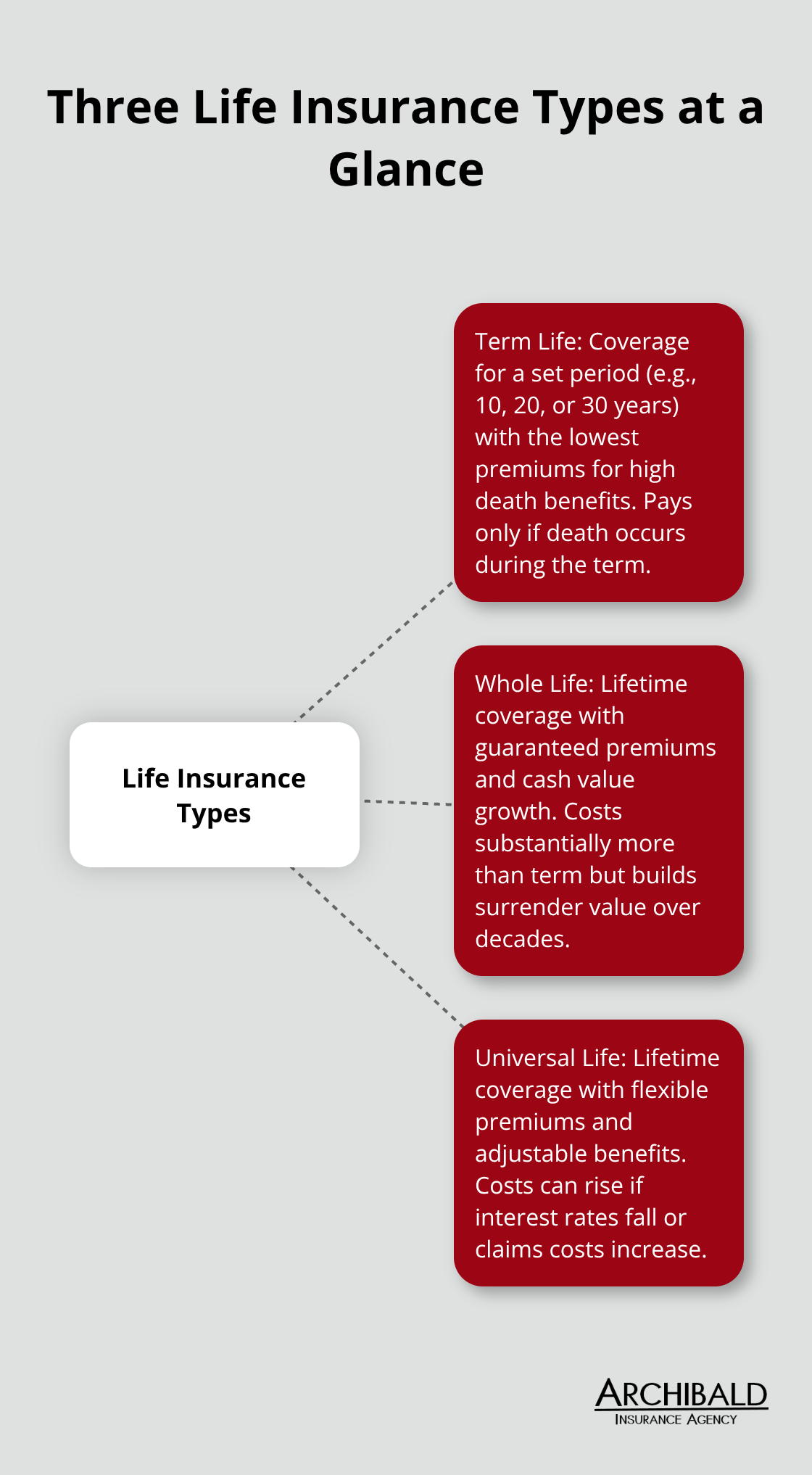
The three main life insurance types serve fundamentally different purposes, and picking the wrong one wastes money or leaves your family exposed. Term life insurance is the most straightforward option and typically costs 5 to 15 times less than whole life for the same coverage amount. Term policies lock in a fixed premium for a set period-commonly 10, 20, or 30 years-then expire. This structure makes term ideal if you have specific obligations ending at a known date, such as a mortgage, car loans, or college expenses. Once those debts are paid off or your children finish school, the coverage stops and you stop paying. The downside is straightforward: if you’re still alive when the term ends, you have no death benefit and no cash value to show for your premiums.

Visualization of term, whole, and universal life insurance and when each fits best. - best life insurance providers

Permanent Coverage When You Need Lifelong Protection

Whole life insurance and universal life insurance both provide lifetime or extended coverage with a cash value component that grows over time. Whole life premiums stay fixed forever, and a portion of each payment accumulates as cash value that you can borrow against or withdraw. Whole life insurance and estate taxes appeal to people who plan for estate taxes, want to leave an inheritance, or seek permanent coverage for final expenses. Universal life offers more flexibility-you can adjust your premiums and death benefit within limits, and your cash value grows based on interest rates or market performance. However, permanent policies cost significantly more upfront. Universal life sits between term and whole life in cost but requires active monitoring because if cash value dips too low, your policy lapses and you lose coverage entirely.

Why Most Families Choose Term Life

Most families with straightforward needs should lean toward term life because the affordability lets you purchase sufficient coverage without financial strain. Term policies align well with major financial obligations that have defined endpoints. Your mortgage typically lasts 15 to 30 years, your children need support through their early twenties, and your working years have a natural conclusion around retirement age. Term life matches these timelines perfectly. You protect your family during the years when they depend on your income, then the policy expires when that need ends. This approach maximizes your protection dollars and prevents you from overpaying for coverage you no longer need.

When Permanent Life Makes Sense

Permanent life insurance becomes attractive in specific situations. If you have substantial assets and face potential estate taxes, permanent coverage provides a tax-free death benefit that your heirs can use to pay those taxes without selling family property or business interests. If you want to leave a guaranteed inheritance or fund a charitable legacy, permanent coverage delivers that promise. If you have dependents with special needs who will require lifelong support, permanent life ensures money is available regardless of when you pass away. These scenarios justify the higher cost because the coverage serves a purpose that extends beyond a fixed time period.

Evaluating Your Coverage Needs and Timeline

Start by listing your family’s financial obligations and when they end. Your mortgage payoff date, your youngest child’s college graduation, and your planned retirement age all matter. If most obligations end within 30 years, term life handles your needs efficiently. If you have ongoing obligations or estate planning goals that extend indefinitely, permanent life warrants consideration. The right choice depends on your specific situation, not on what sounds impressive or what a neighbor purchased. Once you understand which policy type aligns with your family’s timeline and goals, you can evaluate which providers offer the best rates, features, and service for that specific type of coverage.

Choosing the Right Life Insurance Provider

Calculate Your Coverage Need First

Selecting a life insurance provider requires matching three concrete factors: your actual coverage need in dollars, the rates that carrier charges for your age and health, and how quickly they approve applications. Start with coverage amount by calculating what your family would need if you died today. Add your outstanding debts (mortgage, car loans, credit cards), multiply your annual income by how many years you want to provide financial support for your survivors, and factor in final expenses. A 35-year-old with a $300,000 mortgage, two children, and $60,000 annual income typically needs $500,000 to $750,000 in coverage.

Compare Rates Across Multiple Carriers

Once you know your target amount, pricing becomes the primary differentiator. Comparing rates across multiple carriers reveals significant differences in pricing. These rates vary significantly by carrier. Banner Life, which operates as Legal & General America, consistently ranks among the lowest-cost options in Utah with 20-year term quotes around $23 monthly for women and $27 for men in good health. Symetra offers similarly competitive pricing with multiple underwriting paths including no-exam options up to $1 million.

Compact list of standout features from major life insurers and the value of comparing multiple quotes. - best life insurance providers

Penn Mutual extends coverage up to $10 million with no-exam underwriting and a conversion credit feature that helps applicants transition to permanent coverage later. Pacific Life covers an unusually broad range from $50,000 to $65 million and offers a 25-year term option alongside accelerated underwriting. Request illustrations from at least three carriers because rates for identical coverage can differ by $50 to $100 monthly depending on the company’s underwriting standards and risk assessment.

Evaluate Speed and Application Process

Beyond price, evaluate how each carrier handles the application process and claims. Banner Life and Symetra excel at speed, offering instant decisions for qualified applicants through streamlined underwriting that bypasses traditional medical exams. Pacific Life allows conversion to permanent coverage until age 70, giving you flexibility if your circumstances change. Nationwide distinguishes itself by including chronic, critical, and terminal illness riders on term policies, meaning you can access part of your death benefit while living if you face a serious diagnosis (providing liquidity without tapping other assets).

Assess Financial Strength and Claims Performance

Lincoln Financial stands apart for applicants with pre-existing conditions like heart disease or depression, offering favorable underwriting where other carriers impose heavy ratings or decline coverage. All major carriers carry A+ ratings from AM Best, indicating financial strength, but complaint frequency matters too. Lower NAIC complaint indices signal better customer experiences during claims. Utah law requires insurers to settle death claims within approximately 15 days after receiving proof of death, so verify each carrier’s actual track record on this timeline.

Get Side-by-Side Comparisons

Requesting quotes from multiple carriers simultaneously saves hours of individual applications and lets you see side-by-side comparisons of rates, features, and underwriting speed before committing to any provider. This approach reveals which carriers align with your timeline and budget. Once you’ve narrowed your choice to a specific provider and policy type, understanding what happens during the application process removes uncertainty from the next steps.

What Happens During the Application Process

The application process moves faster than most people expect, especially if you qualify for accelerated underwriting or no-exam options. When you submit an application, the carrier immediately reviews your age, gender, occupation, and stated health history. If you fall within their standard risk parameters, approval can happen within days rather than weeks. Banner Life and Symetra process qualified applications in as little as 48 hours, while carriers using traditional medical underwriting typically take 2 to 4 weeks.

No-Exam and Accelerated Underwriting Paths

The timeline depends entirely on whether you need a medical exam. No-exam policies up to $1 million through carriers like Symetra and Pacific Life skip the doctor visit entirely, relying instead on your medical records and prescription history. Accelerated underwriting uses data and technology to assess risk and may allow eligible applicants to skip a medical exam, though you may still need to answer detailed health questions or provide lab results if anything unusual is flagged.

Traditional Medical Underwriting

Traditional underwriting requires a paramedic to visit your home or workplace for blood pressure, blood samples, and urine tests. This adds 1 to 2 weeks to the timeline. Medical exams are thorough but straightforward: expect 30 to 45 minutes with basic vital signs, bloodwork, and a brief conversation about your health history. The exam itself costs nothing; the carrier pays the paramedic’s fee.

Health Questions and Honest Disclosure

Health questions during the application cut deeper than casual conversation. Carriers request a comprehensive health history detailing any pre-existing medical conditions, current prescription medications, past medical events, family history of early death or serious illness, smoking status, alcohol consumption, and occupational hazards. Complete honesty matters because misrepresenting your health voids the policy later. If you claim you don’t smoke but your medical records show otherwise, the insurer can deny death claims years into the policy. Lincoln Financial’s more lenient underwriting for pre-existing conditions like heart disease or depression doesn’t mean they ignore these facts; it means they’re willing to approve coverage at a standard or slightly higher rate rather than declining you outright.

Marijuana use receives different treatment across carriers. Lincoln Financial does not automatically classify daily marijuana use the same as tobacco, potentially saving you hundreds monthly in premiums compared to carriers treating it as a tobacco product. Document your medications, dosages, and the conditions they treat before your application. This speeds up the underwriting process significantly.

Timeline from Submission to Coverage

From application submission to policy approval and the first premium payment, expect 3 to 6 weeks for accelerated underwriting or 4 to 8 weeks for traditional medical underwriting. Utah law requires a 10-day free-look period after your policy arrives, giving you time to review the documents and cancel without penalty if something doesn’t match your expectations. Once approved, your policy becomes effective on the date you pay your first premium, and your family’s protection begins immediately.

Three-point overview of approval timelines, Utah’s free-look period, and when coverage begins.

Final Thoughts

Selecting the best life insurance providers for your family requires three concrete decisions: matching your coverage need to your family’s financial obligations, comparing rates across multiple carriers, and choosing a company that processes applications quickly. If you need affordable coverage for a defined period, Banner Life and Symetra offer competitive rates with streamlined underwriting, while Lincoln Financial’s favorable approach to pre-existing conditions makes them worth requesting a quote from if your health history includes complications. Pacific Life and Penn Mutual provide broader choices in coverage amounts and conversion options than many competitors.

Start by calculating your actual coverage need in dollars rather than guessing based on what sounds reasonable-add your debts, factor in income replacement for your family, and include final expenses. Request illustrations from at least three carriers simultaneously so you can compare rates side by side without spending weeks on individual applications. Utah law protects you with a 10-day free-look period after your policy arrives, so you have time to review everything before your coverage becomes final.

The application process moves faster than you might expect, especially with accelerated underwriting or no-exam options available through most major carriers (from submission to approval typically takes 3 to 8 weeks depending on whether you need a medical exam). Be honest about your health history and medications because misrepresenting facts voids your policy later. We at Archibald Insurance Agency help Utah families navigate these decisions and find coverage that protects their financial future without overpaying-contact us today to request quotes and speak with someone who understands your family’s specific needs.

Disclaimer: The information provided in this blog is for general informational purposes only and does not constitute legal, financial, or insurance advice. Coverage options, terms, and availability may vary. Please consult with a licensed professional for advice specific to your situation
How to Get Life Insurance Policy No Medical Exam

Getting a life insurance policy without a medical exam is possible, and it’s faster than you might think. We at Archibald Insurance Agency help Utah residents find coverage that fits their needs, even when they want to skip the traditional medical evaluation.

This guide walks you through your options, what qualifies you, and what trade-offs to expect.

Your Three Main No Medical Exam Options

Guaranteed Issue: The Fastest Approval for Health Challenges

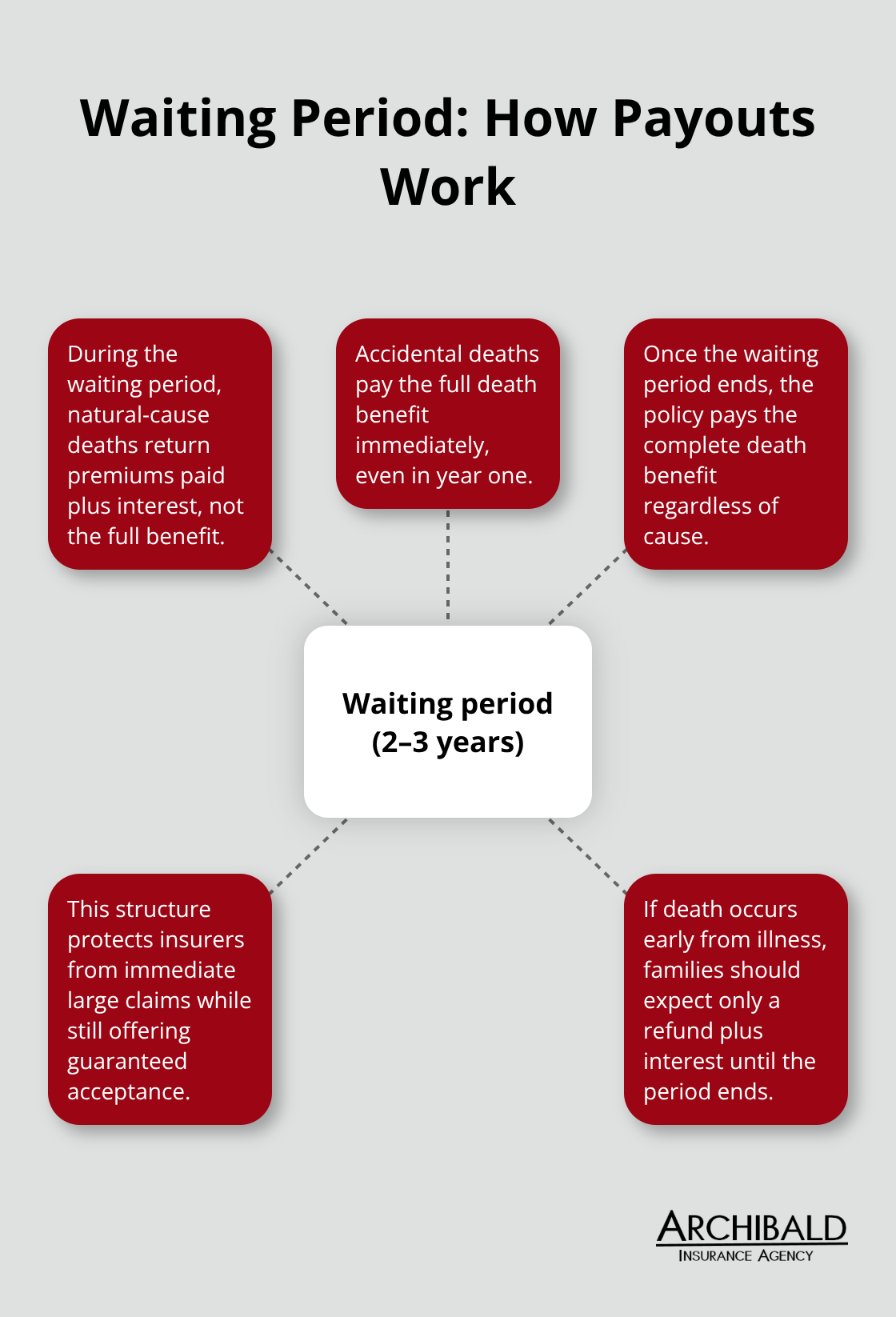
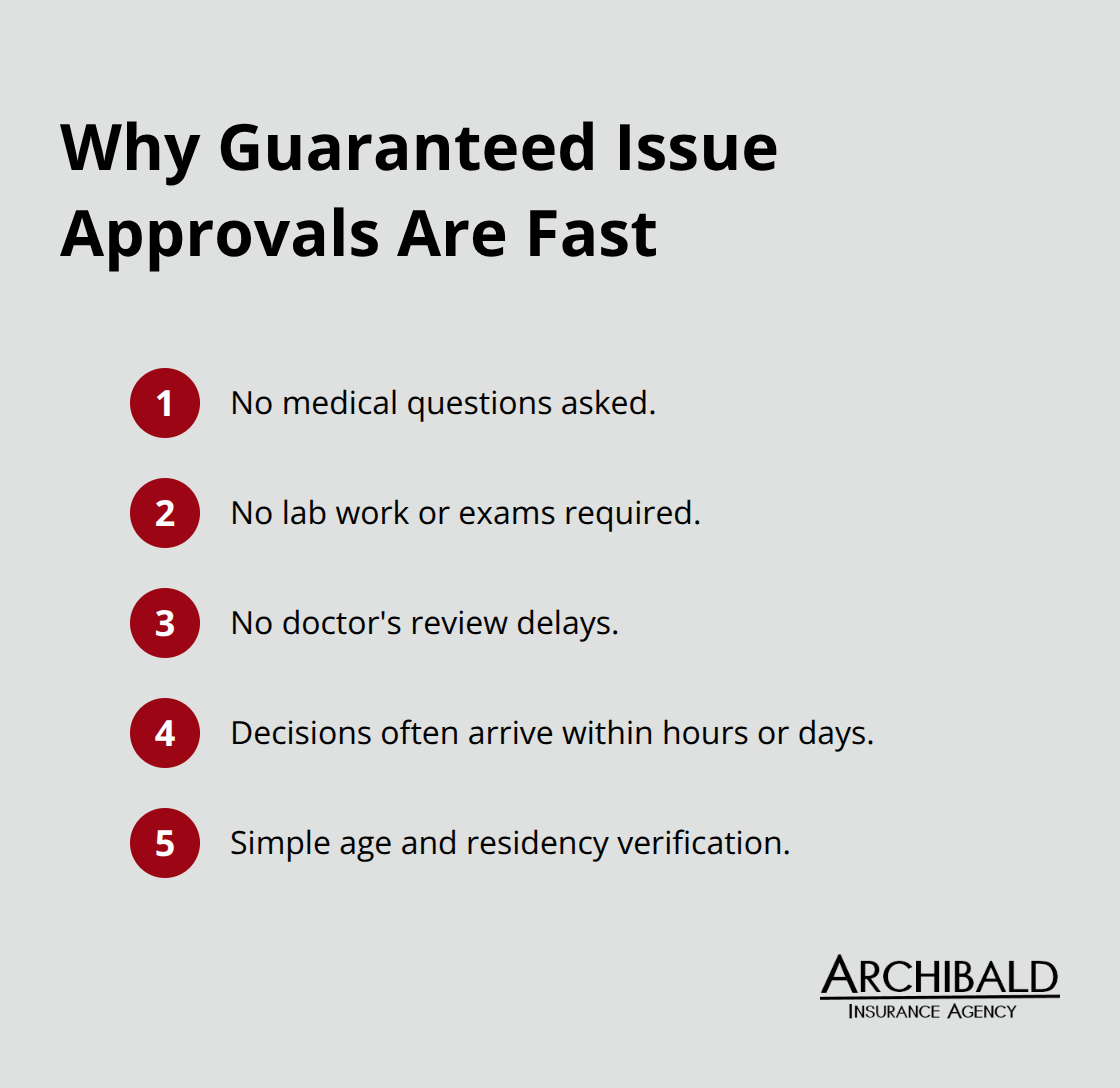
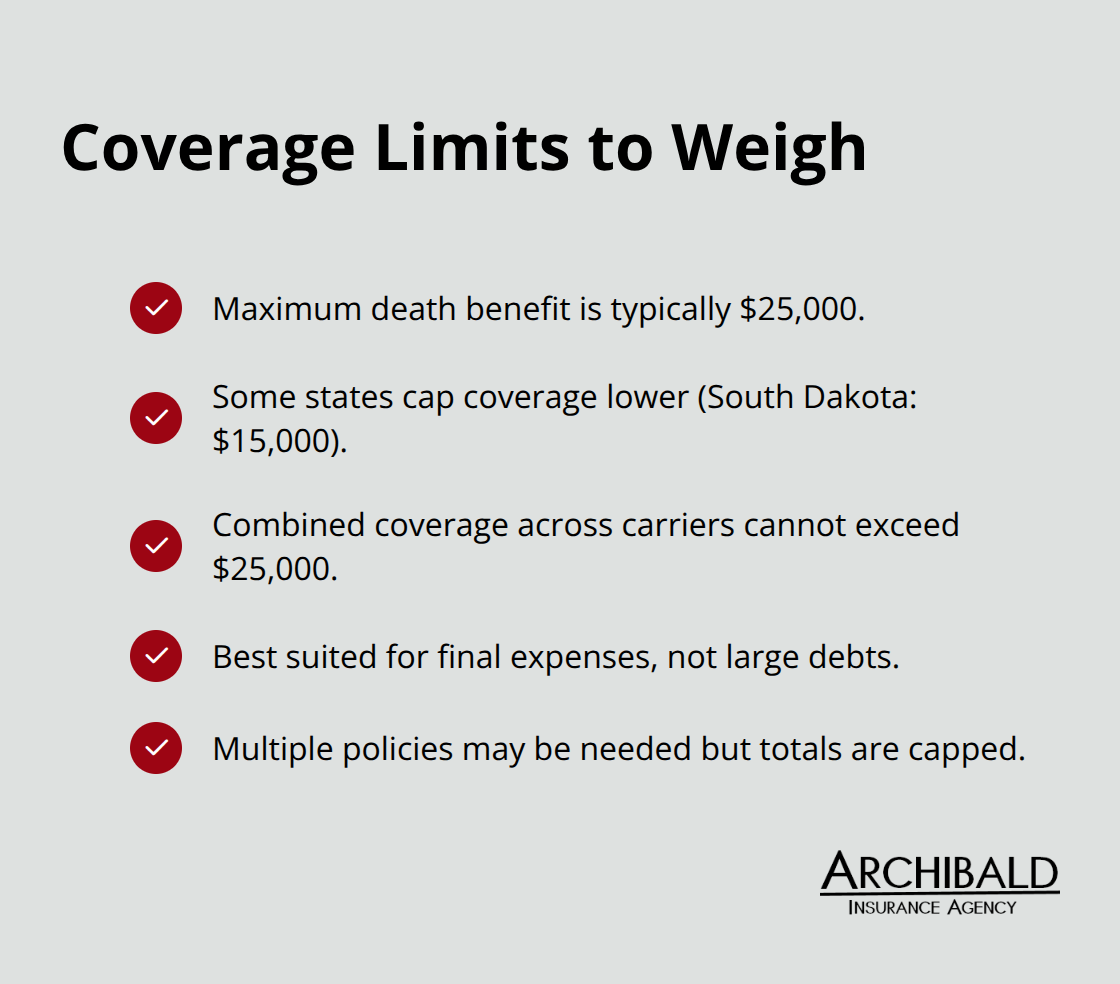
Guaranteed issue life insurance approves nearly everyone without asking health questions, making it the fastest path if you have serious health problems or need coverage immediately. This option comes with a steep price-you’ll pay roughly 40–60% more in premiums than traditional underwriting offers, and death benefits max out around $25,000 according to Experian. Many policies include a waiting period of two to three years, during which your beneficiaries receive only a refund of premiums if you die from natural causes. Use guaranteed issue only if serious health conditions disqualify you from other options or if you need burial expense coverage fast. The higher cost makes it unsuitable as your primary income replacement strategy.

Simplified Issue: The Middle Ground

Simplified issue underwriting removes the medical exam but keeps health questions in place. Insurers review your answers plus prescription records and driving history to assess risk, though they won’t require you to visit a doctor. Coverage limits typically stay under $500,000, and premiums run higher than accelerated underwriting but lower than guaranteed issue. This middle-ground option works well if you’re reasonably healthy but want faster approval than traditional underwriting offers.

Accelerated Underwriting: Best for Young, Healthy Applicants

Accelerated underwriting uses data and technology to assess risk and may allow eligible applicants to skip a medical exam. This approach evaluates health questionnaires, prescription databases, driving records, credit reports, and public records-often delivering approval decisions within days rather than weeks. Younger applicants in good health frequently qualify for coverage limits matching traditional policies while avoiding the medical exam entirely. If you’re under 50 with no major health issues, start here first.

Comparison of guaranteed issue, simplified issue, and accelerated underwriting for no-exam life insurance - life insurance policy no medical exam

Your choice among these three options depends on your health status, timeline, and budget. Understanding which path fits your situation sets you up to move forward with the right application strategy.

Who Qualifies for No Medical Exam Life Insurance

Age Opens or Closes Your Doors

Age matters more than you’d expect with no-exam policies. Accelerated underwriting works best if you’re under 50 and in decent health-applicants in this range qualify for higher coverage limits and better rates. Once you hit 55 or 60, your options narrow significantly, and guaranteed issue becomes more realistic since traditional carriers tighten their underwriting. If you’re over 65, guaranteed issue policies become your primary choice, though you’ll face the $25,000 benefit cap and 40–60% premium markup that comes with that product type. Starting your application before age 50 gives you substantially better pricing and more flexibility across all three no-exam pathways.

Health History Determines Your Path

Health history directly controls which no-exam track you can take. Accelerated underwriting screens your prescription data, driving records, and public health information-algorithms flag serious conditions like cancer, heart disease, or diabetes, which disqualify you from this fastest path. Simplified issue accepts some health conditions but requires honest answers on the application; lying about your health voids coverage and creates legal exposure. Lincoln Financial specializes in underwriting applicants with pre-existing conditions for no-exam policies, so if you have managed diabetes, controlled hypertension, or similar issues, simplified issue often works. Guaranteed issue asks no health questions at all, making it the only viable option if you’ve been denied traditional coverage.

Coverage Limits and Income Requirements

Coverage limits tie directly to health: a 35-year-old healthy applicant might qualify for $500,000 with accelerated underwriting, but someone with serious health problems maxes out at $25,000 with guaranteed issue. Income requirements vary by carrier and policy type-most no-exam policies don’t require proof of income for coverage under $100,000, but higher limits demand tax returns or recent pay stubs to verify you can afford the premiums and demonstrate insurability.

What the Application Process Actually Involves

The application process itself takes days for accelerated underwriting versus weeks for traditional policies, but you’ll still answer health questions and authorize prescription checks. Simplified and guaranteed issue applications move faster since they skip the exam, though guaranteed issue may require a phone interview to confirm basic information. Documentation needs stay minimal: government ID, proof of residence, and possibly banking details for premium payments.

Checklist of data sources and documents used for no-exam life insurance underwriting

Carriers pull data from multiple sources to assess your actual risk, so skipping the medical exam doesn’t mean skipping scrutiny altogether. Understanding these qualification standards helps you identify which no-exam option matches your situation before you apply.

The Real Trade-Offs of Skipping the Medical Exam

Speed Versus Timeline Reality

Speed represents the primary advantage of no-exam life insurance, but the actual time savings depend heavily on your age and health status. Accelerated underwriting delivers decisions in days instead of weeks by automating risk assessment through prescription databases, driving records, and public data. A healthy 35-year-old completes the entire process and receives approval within 48 to 72 hours, compared to two to four weeks for traditional underwriting that includes a medical exam. This speed advantage shrinks considerably if you’re over 55 or have health complications-simplified issue and guaranteed issue still move faster than traditional policies, but the gap narrows significantly.

Hub-and-spoke diagram showing the main trade-offs of no-exam life insurance - life insurance policy no medical exam

The real benefit surfaces when you need coverage urgently, such as after a major life event or when employer-provided insurance ends unexpectedly.

The Premium Penalty for Convenience

Speed creates a hidden cost that most people underestimate: you’ll pay substantially higher premiums for the convenience. Premiums for no-exam policies run 15 to 40 percent higher than traditional term life for the same death benefit. A healthy 35-year-old male pays $30.79 monthly for a $500,000 traditional term policy over 20 years, but accelerated underwriting typically costs 20 to 30 percent more for identical coverage. Guaranteed issue premiums spike even higher-expect to pay 40 to 60 percent more than traditional rates while receiving only $25,000 in benefits. This premium penalty exists because carriers assume higher risk when they skip the medical exam and rely instead on incomplete health information.

Coverage Limits Create Real Restrictions

Limited coverage amounts compound the premium problem significantly. Accelerated underwriting caps most policies at $500,000 to $1 million, while guaranteed issue maxes out around $25,000. If you need $1.5 million in coverage to replace your income, no-exam options simply won’t work, forcing you back to traditional underwriting despite the longer timeline. The combination of higher premiums and lower limits means no-exam policies work best for modest coverage needs rather than comprehensive income replacement strategies.

Weighing Your Priorities

The choice ultimately depends on whether you value speed enough to accept higher ongoing costs and coverage restrictions, or whether traditional underwriting’s lower premiums and unlimited benefits make more financial sense for your situation. Younger applicants with modest coverage needs often find accelerated underwriting worthwhile, while those requiring substantial death benefits should consider traditional underwriting despite the longer approval window. Your specific circumstances-age, health status, coverage amount needed, and timeline-determine which trade-off makes sense for you.

Final Thoughts

No medical exam life insurance offers three distinct pathways: guaranteed issue for those with serious health challenges, simplified issue as a middle ground, and accelerated underwriting for younger, healthier applicants. Each option trades speed and accessibility against higher premiums and lower coverage limits. Your decision hinges on three factors: your age, your health status, and how much coverage you actually need.

Calculate your real coverage requirement before you apply. If you need $1.5 million to replace your income, no-exam options won’t work, and traditional underwriting becomes necessary despite the longer timeline. If you need $100,000 for burial expenses or modest income replacement, a life insurance policy no medical exam makes financial sense. Age matters significantly too-applicants under 50 in good health should explore accelerated underwriting first, since approval comes within days and premiums stay reasonable.

The premium penalty deserves honest consideration, as you’ll pay 15 to 60 percent more depending on which no-exam option you select. That extra cost compounds over decades, so calculate the total premium difference over your policy’s lifetime before deciding that speed justifies the expense. Contact Archibald Insurance Agency today to discuss your options and receive personalized guidance on finding the right coverage for your situation.

Disclaimer: The information provided in this blog is for general informational purposes only and does not constitute legal, financial, or insurance advice. Coverage options, terms, and availability may vary. Please consult with a licensed professional for advice specific to your situation
How to Get Life Insurance Without Medical Tests

Life insurance doesn’t have to mean sitting through medical tests and waiting weeks for results. No medical test life insurance offers a faster path to coverage, making it an attractive option for many Utah residents who want protection without the hassle.

At Archibald Insurance Agency, we help clients understand whether a no-exam policy fits their needs. This guide walks you through how these policies work, who qualifies, and how they compare to traditional coverage.

How No-Exam Life Insurance Actually Works

No-exam life insurance skips the medical exam, but it doesn’t skip underwriting entirely. Instead of sending you to a lab for blood work and tests, insurers use accelerated underwriting to assess your risk. They pull data from prescription records, medical histories, and past insurance applications to make a quick decision. This speed matters when you need coverage fast, whether you’re protecting a new mortgage or addressing a gap in your family’s finances. The trade-off is real though: no-exam policies typically cost more than fully underwritten term life because insurers accept higher risk without direct medical evidence. For a healthy 35-year-old in Utah seeking $250,000 in coverage, traditional underwriting might cost $25 to $35 per month, while a no-exam option could run $40 to $60 monthly.

Three Types of No-Exam Policies

Accelerated underwriting policies offer the best value among no-exam options. These use algorithms and third-party data to approve coverage up to $1.5 million for qualified applicants, typically those under 55 with no major red flags in their records. Simplified issue policies ask fewer health questions than traditional underwriting but still require some basic health information. They cost more than accelerated underwriting but less than guaranteed issue, with coverage usually capped around $500,000. Guaranteed issue policies require zero health questions and guarantee acceptance regardless of health status, but premiums are steep and death benefits are minimal. This option exists mainly for final expense coverage, not income replacement. If you’re under 50 with decent health, accelerated underwriting delivers the best combination of speed and affordability. If you have health conditions or need coverage in days, simplified or guaranteed issue makes sense despite higher costs.

Speed Advantage for Utah Applicants

Traditional life insurance takes 4 to 8 weeks in Utah because insurers order exams, verify medical records, and conduct thorough underwriting. No-exam policies compress this dramatically. Accelerated underwriting can issue a policy in 24 to 72 hours once you submit your application. Simplified issue typically takes 5 to 10 business days. Guaranteed issue offers instant coverage with just a quote and application. The speed advantage matters most when you’re facing a health change or need protection quickly, but don’t assume no-exam means no waiting. Even accelerated underwriting policies require your approval before coverage activates, and some carriers still pull prescription records that take a few days to retrieve.

Age and Eligibility Restrictions

Age affects eligibility significantly. Applicants under 45 qualify for accelerated underwriting more easily, while those over 55 may find only simplified or guaranteed issue options available without a medical exam. Utah’s regulatory environment supports this faster process through streamlined approval timelines, though the Utah Insurance Department still requires carriers to maintain underwriting standards. Your age determines not just whether you qualify for no-exam coverage, but also which type of policy makes financial sense for your situation. Younger applicants should explore accelerated underwriting first, while older applicants need to understand that guaranteed issue, though expensive, may be their only rapid option.

Who Actually Qualifies for No-Exam Coverage

Age Determines Your Access to No-Exam Policies

Your age acts as the primary gatekeeper for no-exam life insurance eligibility. Applicants under 45 qualify easily for accelerated underwriting policies, which can be approved in just a few days or weeks. Those between 45 and 55 still access accelerated underwriting but face tighter scrutiny and potentially higher premiums. Once you hit 55, your options narrow significantly. Simplified issue becomes your primary choice, with guaranteed issue reserved for those who can’t qualify elsewhere. This age-based structure reflects how insurers price risk without medical exams-they rely heavily on actuarial data showing that younger applicants have fewer hidden health issues, making them safer bets for rapid approval.

Utah residents over 60 should focus instead on simplified or guaranteed issue policies, which prioritize speed over premium savings. The trade-off is clear: you sacrifice affordability for accessibility.

How Your Health History Affects Eligibility

Your health history matters even without an exam. Insurers pull your prescription records, pharmacy data, and past insurance applications to assess risk. If you take medications for diabetes, heart disease, or cancer, you’ll likely qualify only for simplified or guaranteed issue policies, not accelerated underwriting. Minor conditions like high blood pressure or high cholesterol managed with common medications typically don’t disqualify you from accelerated underwriting, though your premiums will reflect this information.

Pre-existing conditions don’t automatically exclude you from coverage, but they do determine which policy type you access and how much you’ll pay monthly. The key difference: accelerated underwriting requires clean records, while simplified and guaranteed issue policies accept applicants with significant health histories.

Coverage Limits Vary by Policy Type and Health Profile

Coverage limits depend directly on what insurers learn during underwriting without exams. Accelerated underwriting policies max out around $1.5 million for the healthiest applicants, but most Utah residents qualify for $250,000 to $500,000 without extensive documentation. Simplified issue policies typically cap at $500,000, sometimes lower depending on your age and health profile. Guaranteed issue policies offer the least coverage, usually $10,000 to $25,000, designed specifically for funeral expenses rather than income replacement.

The National Funeral Directors Association reported in 2024 that median funeral costs with viewing and burial reached $8,300, making guaranteed issue adequate only for final expenses. Insurers make individual decisions based on data they uncover, meaning two 50-year-olds applying for the same policy might receive different coverage limits.

Important Restrictions and Exclusions

Suicide exclusions apply to most no-exam policies during the first two years, meaning beneficiaries receive only premiums paid plus interest if death results from suicide within this window. After two years, the full death benefit pays. Some carriers in Utah also include contestability periods of two years, allowing them to deny claims if you misrepresented health information on your application.

This protection exists because no-exam underwriting accepts higher risk, making insurers more cautious about fraudulent applications. Understanding these restrictions helps you make informed decisions about which policy type fits your situation and timeline.

Your eligibility and coverage amount ultimately depend on how insurers evaluate your age, health records, and application details. The next section compares how no-exam policies stack up against traditional life insurance in terms of cost, coverage, and real-world value for Utah residents.

No-Exam vs. Traditional Life Insurance

Premium Costs Reveal the Speed Tax

The cost difference between no-exam and traditional life insurance hits hard once you run actual numbers. A healthy 35-year-old Utah resident seeking $500,000 in term coverage pays roughly $25 to $40 monthly with traditional underwriting, while the same person pays $40 to $60 monthly for accelerated underwriting without exams. That $15 to $25 monthly gap compounds to $180 to $300 annually, or $2,160 to $3,600 over a decade. The premium penalty exists because insurers accept greater risk without direct medical evidence.

However, this cost premium vanishes if you need coverage in days rather than weeks. Traditional underwriting takes 4 to 8 weeks in Utah due to medical exam scheduling, record verification, and underwriting review. If you face a health change, job transition requiring proof of insurance, or mortgage closing within 30 days, the no-exam premium becomes irrelevant because traditional policies simply won’t close in time. Simplified issue policies run even higher, often $60 to $100 monthly for identical coverage.

Coverage Amounts and Policy Limits

Coverage amounts tell a different story than premiums. Accelerated underwriting policies cap around $1.5 million for the healthiest applicants, though most Utah residents qualify for $250,000 to $500,000 without extensive documentation. Simplified issue typically maxes at $500,000. Guaranteed issue policies offer only $10,000 to $25,000, adequate for funeral expenses but useless for income replacement.

Traditional underwriting imposes no such limits for healthy applicants, allowing coverage up to $1 million or beyond based on income and insurability. This matters enormously if you need substantial protection. A single parent earning $75,000 annually needs roughly 10 to 12 times annual income plus mortgage and education costs, totaling perhaps $1.2 million in coverage. No-exam policies may cap your options at $500,000, forcing you to supplement with traditional coverage or accept insufficient protection.

When No-Exam Policies Make Sense for Utah Residents

No-exam policies work for Utah residents in specific situations. Try accelerated underwriting if you are under 50, relatively healthy, need coverage within two weeks, and can afford the monthly premium increase. This option balances speed and affordability. Select simplified issue if you have minor health conditions, are between 50 and 60, and still need relatively quick approval without the medical exam burden. Reserve guaranteed issue only for final expense coverage when you cannot qualify elsewhere and speed matters more than death benefit size.

Avoid no-exam policies if you need substantial coverage amounts or plan to keep the policy for 20 or 30 years, since the premium penalty compounds significantly over time. A $15 monthly increase on a 30-year policy costs $5,400 in extra premiums-money that could fund traditional underwriting instead.

Regulatory Protections Apply Equally

Utah’s regulatory protections apply equally to both policy types. The Utah Insurance Department oversees both no-exam and traditional carriers, and the Utah Life & Health Insurance Guaranty Association protects policyholders up to $200,000 cash value and $500,000 death benefits if an insurer fails. Two-year contestability periods and suicide exclusions apply to both, meaning beneficiaries receive only premiums plus interest if death occurs within two years by suicide. These protections level the playing field regarding insurer reliability.

Hub-and-spoke overview of Utah policyholder protections and limits - no medical test life insurance

The real decision hinges on your timeline and coverage needs. If you need quick protection and can afford higher premiums, no-exam works. If you have substantial income to replace or want the lowest possible monthly cost, traditional underwriting delivers better value despite the wait.

Final Thoughts

No medical test life insurance solves a real problem for Utah residents who need coverage fast, but speed always costs money. Younger applicants under 45 with clean health records benefit most from accelerated underwriting, which balances affordability with speed, while those over 55 or with significant health conditions should focus on simplified or guaranteed issue policies, accepting higher costs in exchange for accessibility. Never sacrifice coverage amount just to avoid a medical exam, since traditional underwriting often delivers better long-term value despite the longer timeline if you need substantial protection to replace income or cover a mortgage.

We at Archibald Insurance Agency help Utah residents navigate these decisions every day by representing multiple carriers and comparing no-exam options from different insurers to find the policy that actually fits your situation. Our team understands Utah’s regulatory environment and how local protections through the Utah Life & Health Insurance Guaranty Association apply to your coverage, and we walk you through the trade-offs between speed and cost while explaining which policy type matches your age and health profile. We answer questions about exclusions and contestability periods without pressure or hidden fees, providing straightforward advice about whether no medical test life insurance makes sense for you.

Start by getting a quote online or calling for a free consultation to assess your coverage needs and review available options from top carriers. Visit Archibald Insurance Agency to begin exploring your options today.

Disclaimer: The information provided in this blog is for general informational purposes only and does not constitute legal, financial, or insurance advice. Coverage options, terms, and availability may vary. Please consult with a licensed professional for advice specific to your situation

How to Choose Term Life Insurance Policy for Seniors

Choosing a term life insurance policy for seniors requires understanding what coverage actually protects your family and how to avoid overpaying for protection you don’t need.

At Archibald Insurance Agency, we help Utah seniors navigate this decision by focusing on the factors that matter most: your health, your financial obligations, and realistic premium costs based on your age.

What Term Life Insurance Actually Covers

Term life insurance provides a straightforward death benefit paid to your beneficiaries if you pass away during the policy term. Unlike whole life policies that build cash value over time, term insurance focuses solely on protection at an affordable price. When you die during the coverage period-whether that’s 10, 15, or 20 years-your beneficiaries receive the full death benefit tax-free, with no waiting period or medical exam delays. This is why term life appeals to seniors who want to cover specific financial obligations without paying for features they won’t use. The death benefit can be used to pay off a mortgage, cover funeral expenses, settle outstanding medical bills, or leave a small inheritance. Term insurance does not include a savings component, investment options, or cash surrender value, which keeps premiums significantly lower than permanent policies.

Why term life costs less than whole life

Seniors over 60 who choose term life over whole life make a financially sound decision in most cases. Term life represents the most affordable senior option, with premiums increasing notably from age 60 to 70. A 65-year-old male in good health pays $40 to $60 monthly for a 20-year term policy with $250,000 in coverage, whereas the same person pays $300 to $500 monthly for equivalent whole life coverage. Whole life policies charge higher premiums because they include lifetime coverage and build cash value that takes a decade or more to accumulate, especially at older ages.

Monthly premium ranges for term vs. whole life at age 65 and why term costs less. - term life insurance policy for seniors

If you live on a fixed retirement income, this premium difference matters substantially over time. Term policies become non-renewable or prohibitively expensive after a certain age, so most seniors select terms that align with their actual coverage needs rather than commit to lifetime protection they may not require.

How policy length impacts what you’ll pay

The term length you select directly determines your monthly premium. A 10-year term costs less per month than a 20-year term because the insurance company accepts less risk. If you’re 70 years old and need coverage to pay off a remaining mortgage balance, a 10-year term makes sense financially and practically. However, if you’re 65 with a 15-year mortgage still outstanding, a 20-year term provides better protection without forcing you to reapply at age 85, when coverage becomes difficult or impossible to obtain. Premiums lock in at your current age when you purchase, so delaying your application increases your baseline cost permanently. A 62-year-old who waits two years to apply will pay higher premiums at age 64 than they would have at 62, even for the same coverage amount and term length. Many seniors fail to account for this age-based cost escalation, which makes early shopping critical.

What happens when your term ends

Your term policy expires after the selected period ends, and you lose coverage unless you take action. Some policies offer a conversion option that allows you to switch to a permanent policy without a medical exam, though premiums will increase significantly. Other policies include a renewal option, which means you can extend coverage for another term, but the new premium reflects your current age and health status. If you’re 80 years old when your 20-year term expires, you may find that renewal costs triple or that insurers decline to renew altogether. This reality makes it essential to select a term length that covers your actual financial obligations, not one that extends indefinitely into your later years. Understanding these options before you purchase helps you avoid coverage gaps or unexpected expenses down the road.

Key Factors to Consider When Selecting a Policy

How Your Health Status Shapes Your Options

Your health status determines which policies you qualify for and what you’ll actually pay each month. Seniors with controlled diabetes, hypertension, or past heart surgery can still qualify for standard or preferred rates depending on how well-managed their conditions are. If you have a terminal diagnosis or severe untreated health issues, guaranteed issue policies become your only option, though they cost significantly more and cover far less. You must disclose your complete medical history during the application process, including medications, surgeries, and lifestyle habits like smoking. Insurers verify this information through medical records, so omitting details only delays approval or leads to claim denials later. NerdWallet data from November 2025 shows that a healthy 65-year-old male pays roughly 40 percent less monthly than someone with significant health complications for identical coverage. This makes accurate quotes impossible without honesty about your actual health.

Percentage difference showing that a healthy 65-year-old male pays about 40% less per month than someone with significant health issues for the same coverage.

If one insurer declines you, other carriers may still approve you at different rates, which is why shopping across multiple companies matters.

Calculating the Coverage Amount You Actually Need

Your financial obligations should drive the coverage amount, not an arbitrary number someone suggests. Calculate what your family would face if you died tomorrow: remaining mortgage balance, final expenses, unpaid medical bills, credit card debt, and property taxes. Most Utah seniors try $10,000 to $20,000 in coverage to handle these obligations without overextending their budget. If your home is paid off and your children are financially independent, you genuinely need less coverage than someone still carrying a mortgage. The Utah Insurance Department’s Life Insurance Buyer’s Guide recommends matching your coverage amount to these specific debts rather than purchasing more than you need. Overbuying creates unnecessary monthly expenses that drain your fixed retirement income.

Comparing Quotes Across Multiple Carriers

Comparing quotes from different carriers is non-negotiable because premium variation is substantial. A 70-year-old male in good health might pay $45 monthly with one insurer and $75 monthly with another for the same 20-year, $250,000 term policy. That $30 monthly difference equals $7,200 over twenty years on a single policy, and most seniors carry multiple financial obligations requiring coverage. You should obtain quotes from at least three different carriers before deciding, and ensure each quote reflects your actual health history and the exact coverage amount you need. Online quote tools provide estimates, but speaking directly with an agent who understands Utah’s local market produces more accurate pricing. An independent agent can access multiple carriers simultaneously, saving you hours of individual applications while identifying which company offers the best rate for your specific health profile. Avoid choosing based solely on the lowest premium, as financial strength matters equally. You can check your chosen insurer’s ratings through AM Best or the National Association of Insurance Commissioners to confirm they’ll be solvent when your beneficiaries file a claim decades from now. Utah’s guaranty association, ULHIGA, protects death benefits up to $500,000 if an insurer fails, but relying on this safety net should never be your strategy. Premium cost, health approval odds, and company reliability must all factor into your final decision. With these three elements aligned, you’re ready to identify the mistakes that derail most seniors during the purchasing process.

Three Costly Mistakes Seniors Make When Buying Term Life Insurance

Underestimating Coverage Needs Leaves Families Short

Seniors routinely underestimate how much coverage they actually need, and this mistake costs their families dearly. Most people add up their mortgage balance, funeral costs, and a small buffer, then stop calculating. What they miss are property taxes owed at death, probate fees, outstanding medical bills from their final illness, credit card balances, and any support their spouse or dependents still require. A 68-year-old in Utah with a $150,000 mortgage remaining, $10,000 in funeral costs, $8,000 in property taxes, and $6,000 in medical debt actually needs $174,000 in coverage, not the $160,000 they initially thought. They purchase the lower amount to save on premiums, then leave their family $14,000 short when they pass.

The Utah Insurance Department’s Life Insurance Buyer’s Guide recommends listing every financial obligation line by line rather than guessing at a round number. If you’re uncertain, purchasing slightly more coverage costs far less than the financial strain your family faces when coverage falls short.

Delaying Your Application Locks in Higher Premiums Permanently

The second mistake seniors make involves waiting to apply based on the false belief that a few more years won’t significantly impact their premiums. This thinking is backwards. A 62-year-old who applies today for a 20-year term policy locks in rates based on their current age and health. That same person waiting three years to apply at age 65 pays permanently higher premiums for identical coverage because the baseline age has shifted upward.

Premiums increase notably from age 60 to 70, with some increases exceeding 15 percent annually in that range. Waiting doesn’t save money; it costs thousands over the life of your policy. Health can also change unexpectedly, meaning a manageable health profile today might become a pre-existing condition that increases costs or limits your options tomorrow.

Ignoring Renewal and Conversion Terms Creates Coverage Gaps

The third mistake is purchasing a policy without carefully reviewing the renewal and conversion terms buried in the fine print. Many seniors buy a 20-year term at age 70, believing they’ll be covered until age 90, then discover the policy becomes non-renewable after age 85 or that renewal premiums triple. Some policies include a conversion option allowing you to switch to permanent coverage without a medical exam if your term expires, while others don’t.

Understanding these provisions before you buy prevents the shock of learning your coverage ends precisely when you might need it most. Read the actual policy document, not just the marketing summary, and ask your agent to explain what happens when your term expires. These three errors-underestimating coverage, delaying application, and ignoring policy terms-account for the majority of senior regrets when discussing their protection needs.

Hub-and-spoke diagram highlighting three common mistakes seniors make when buying term life insurance. - term life insurance policy for seniors

Final Thoughts

Selecting a term life insurance policy for seniors requires matching your coverage amount to actual financial obligations, locking in rates while you qualify at reasonable costs, and understanding what happens when your term expires. We at Archibald Insurance Agency have seen countless Utah seniors regret waiting too long to apply or purchasing coverage that falls short of their family’s real needs. The good news is that term life remains the most affordable protection available to you.

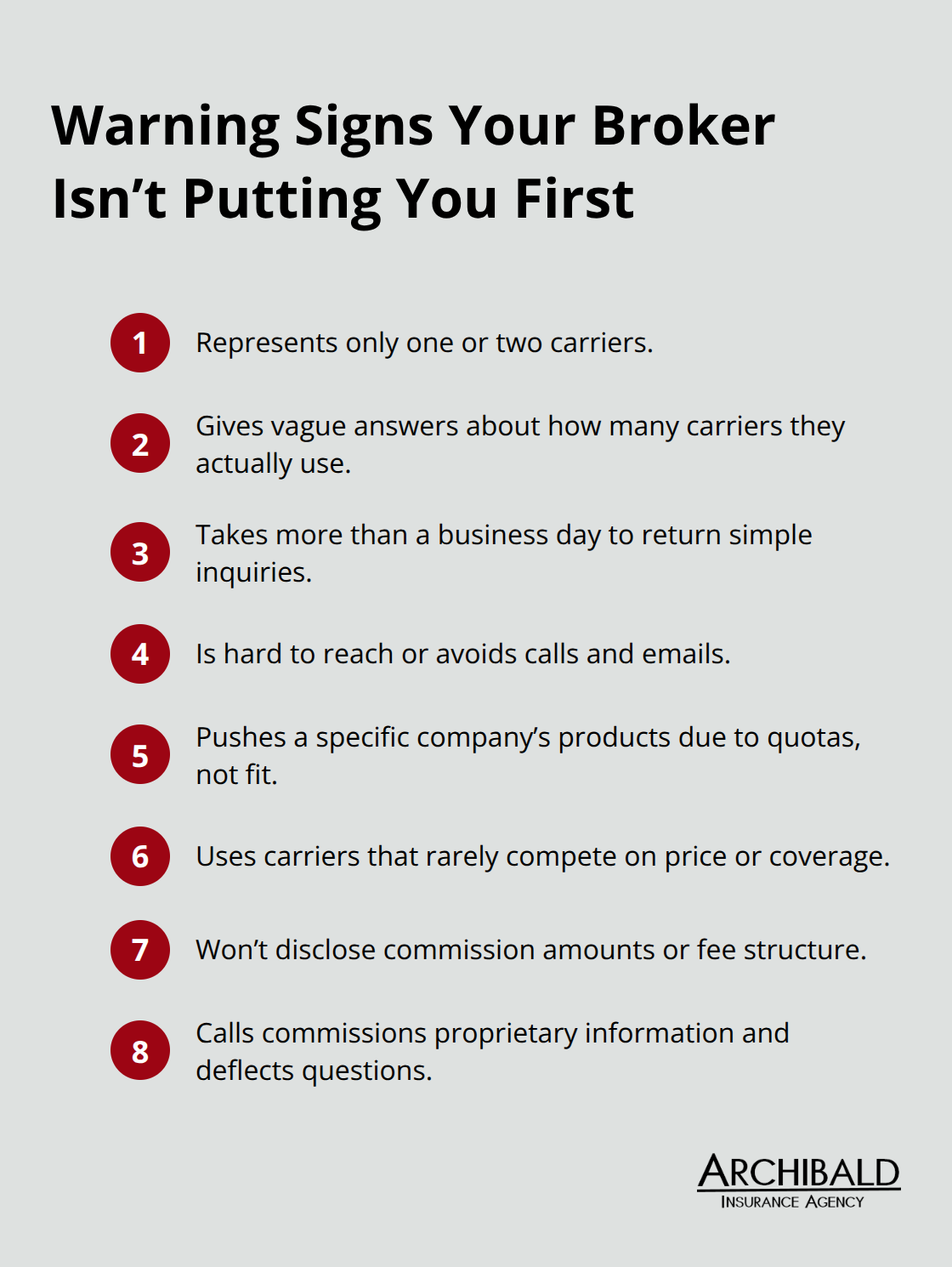
An independent insurance agent makes this process substantially easier because we represent multiple carriers rather than pushing a single company’s products. We can compare quotes across different insurers simultaneously, identify which company approves your specific health profile at the best rate, and explain the fine print that most seniors overlook. We understand Utah’s local market and know which carriers work best for seniors with various health conditions.

Contact Archibald Insurance Agency to request quotes for a term life insurance policy that matches your actual needs. Bring a list of your financial obligations, your current medications and health conditions, and your preferred term length. We’ll gather quotes from multiple carriers, explain the differences in coverage and cost, and help you select a policy that protects your family without draining your retirement budget.

Disclaimer: The information provided in this blog is for general informational purposes only and does not constitute legal, financial, or insurance advice. Coverage options, terms, and availability may vary. Please consult with a licensed professional for advice specific to your situation