Master These 5 Habits Every Time You Enter Your Vehicle for to be a Safer Driver

Distracted driving has become a major concern, with thousands of injuries and fatalities reported each year. Not only does it pose a significant risk to ourselves and others on the road, but it has also led to skyrocketing insurance premiums and an increase in traffic accidents.

It’s crucial to understand that distracted driving goes beyond just texting or talking on the phone – it includes any activity that diverts your attention from the road, such as reading articles, eating, or grooming. To promote safe driving behavior, here are five habits you should master every time you get behind the wheel:

  1. Keep Your Phone Out of Reach: Make a conscious effort to put your phone out of reach when you enter your vehicle. Consider placing it in the back seat, your bag, or even the trunk. If you find it difficult to do so, constantly remind yourself, “Can it wait?” Most likely, the answer is yes. You can also put your phone on mute to avoid the temptation of reaching for it when it notifies you of incoming calls or messages. If you feel the need to be readily available, pull over and park your car before answering any calls.
  2. Set Up Your GPS Before Driving: Take the time to program your GPS or identify your destination before you start driving. Activate voice commands so that you can keep your eyes focused on the road at all times. This will help prevent distractions caused by trying to input directions while driving.
  3. Groom Before or After, Not While Driving: If you often find yourself running late and grooming on the go, it’s essential to break this habit. Instead, make it a practice to groom yourself once you have reached your destination or before you start your vehicle. This way, you can concentrate solely on driving and reduce the risk of accidents.
  4. Eat While Parked: Avoid the temptation of eating while driving. Instead, take a few minutes to park your car and enjoy your meal safely. This simple step can significantly reduce distractions and ensure that your focus remains on the road.
  5. Be a Role Model for Others: Lead by example when it comes to safe driving habits. Show your children how to avoid distractions while driving and explain the dangers associated with it. If you notice a friend or family member using an electronic device while driving, speak up and offer to assist them. You can offer to deliver their text messages, act as the co-pilot, or make necessary phone calls.

By adopting these safe driving habits, we can all contribute to a safer road environment. Remember, it’s not only about our own well-being but also the safety of those around us. Let’s strive to make a positive impact and promote responsible and focused driving for everyone’s benefit.

How to Get Life Insurance on a Mortgage Loan

Your mortgage is likely your biggest financial obligation. If something happens to you, life insurance on a mortgage loan protects your family from losing their home.

At Archibald Insurance Agency, we help Utah homeowners understand their options for mortgage protection. The right coverage gives your loved ones financial security when they need it most.

Why Life Insurance Matters for Your Mortgage

Your mortgage balance likely represents the single largest debt your family will ever face. According to the Federal Reserve, mortgage balances totaled $13.17 trillion at the end of December 2025, with most borrowers carrying this obligation for 15 to 30 years. If you pass away unexpectedly, your family faces a difficult choice: sell the home to cover the remaining loan balance, or struggle to make monthly payments on a reduced household income. Life insurance on a mortgage loan eliminates this pressure by providing funds specifically designed to clear the debt when you need protection most.

What Happens Without Mortgage Protection

Lenders hold a lien on your home, meaning they have a legal claim to the property if the mortgage goes unpaid. Your surviving family members cannot simply keep the home without addressing this obligation. Even if your estate has other assets, liquidating them to pay off the mortgage can take months or years through probate. Meanwhile, property taxes, homeowners insurance, and maintenance costs continue accumulating. Many families lose their homes not because they lack resources, but because they face immediate financial pressure without a clear plan. This reality makes mortgage protection a practical necessity, not an optional add-on.

Understanding Your Protection Options

You have three primary paths to protect your mortgage: term life insurance, whole life insurance, or mortgage protection insurance from your lender. Term life insurance stands out as the most cost-effective choice for mortgage payoff.

Visual overview of three ways to protect a mortgage and who benefits - life insurance on a mortgage loan

A 40-year-old male with a $500,000 30-year mortgage pays approximately $59 to $66 monthly for mortgage protection insurance, according to Forbes Advisor data. That same individual could secure a 30-year term life policy covering $500,000 for substantially less-often in the $40 to $50 range monthly-while gaining flexibility to use the payout for any family need beyond the mortgage.

Why Flexibility Matters in Your Payout

With mortgage protection insurance, the lender receives the death benefit directly, meaning your family cannot redirect funds toward other debts, final expenses, or living costs. Term life insurance pays your named beneficiaries, who can allocate the funds strategically based on actual family needs. Your family might use the proceeds to pay off the mortgage first, then address credit card debt, medical bills, or everyday expenses. This flexibility transforms life insurance from a single-purpose product into a comprehensive financial safety net. Understanding these differences helps you select coverage that truly protects your family’s future, not just your lender’s interests.

Which Life Insurance Product Works Best for Your Mortgage

Term Life Insurance Delivers Maximum Value

Term life insurance for mortgage protection stands out as the clear winner for most homeowners protecting a mortgage. A 30-year term policy matches your loan timeline perfectly, providing level premiums and a consistent death benefit throughout the repayment period. The cost difference compounds significantly over 30 years.

Three reasons term life is the top choice for mortgage protection - life insurance on a mortgage loan

Your beneficiaries receive the full payout as a lump sum they control completely. They can pay off the mortgage immediately, address credit card debt at higher interest rates, cover funeral expenses, or preserve funds for living costs while adjusting to life without your income. Term life also offers conversion options; if your health declines later, you can typically convert remaining term coverage into whole life without new underwriting, protecting your ability to maintain insurance as you age.

Whole Life Insurance Costs Too Much for Mortgage Protection

Whole life insurance serves a different purpose and carries substantially higher costs that make it inefficient for mortgage protection alone. Whole life premiums run 5 to 15 times higher than term life for equivalent death benefits because you also fund a cash value component that grows tax-deferred. A whole life policy works better when you need lifetime coverage beyond mortgage payoff or want to access cash value while living. For most homeowners focused solely on protecting their mortgage, whole life represents unnecessary expense that drains resources without proportional benefit.

Mortgage Protection Insurance from Lenders Falls Short

Mortgage protection insurance from your lender presents the worst financial outcome for most borrowers. The lender becomes the beneficiary, receiving the death benefit directly to satisfy the loan. Your family receives nothing. Mortgage protection insurance decreases as you pay down principal, yet premiums often remain level, meaning you pay full price for declining protection. If you pay off your mortgage early, the policy becomes worthless. These policies also lack flexibility for riders or customization.

The only scenario where mortgage protection insurance makes sense is if you cannot qualify for traditional coverage due to serious health conditions. Even then, comparison shopping with a broker remains essential since some insurers accept higher-risk applicants at reasonable rates. Once you understand which product fits your situation, the next step involves calculating exactly how much coverage your family actually needs.

How Much Life Insurance Do You Actually Need

Start With Your True Financial Obligations

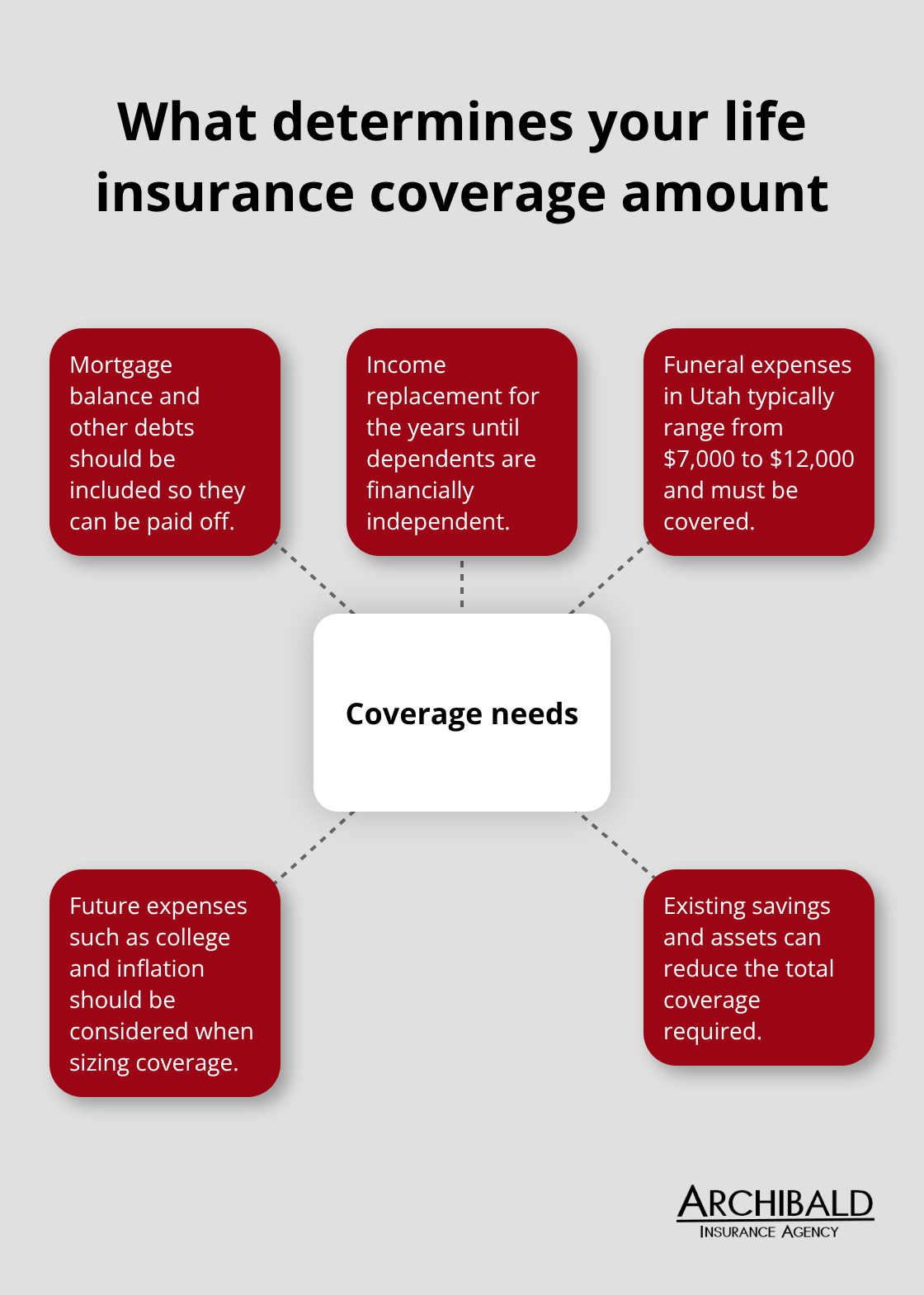
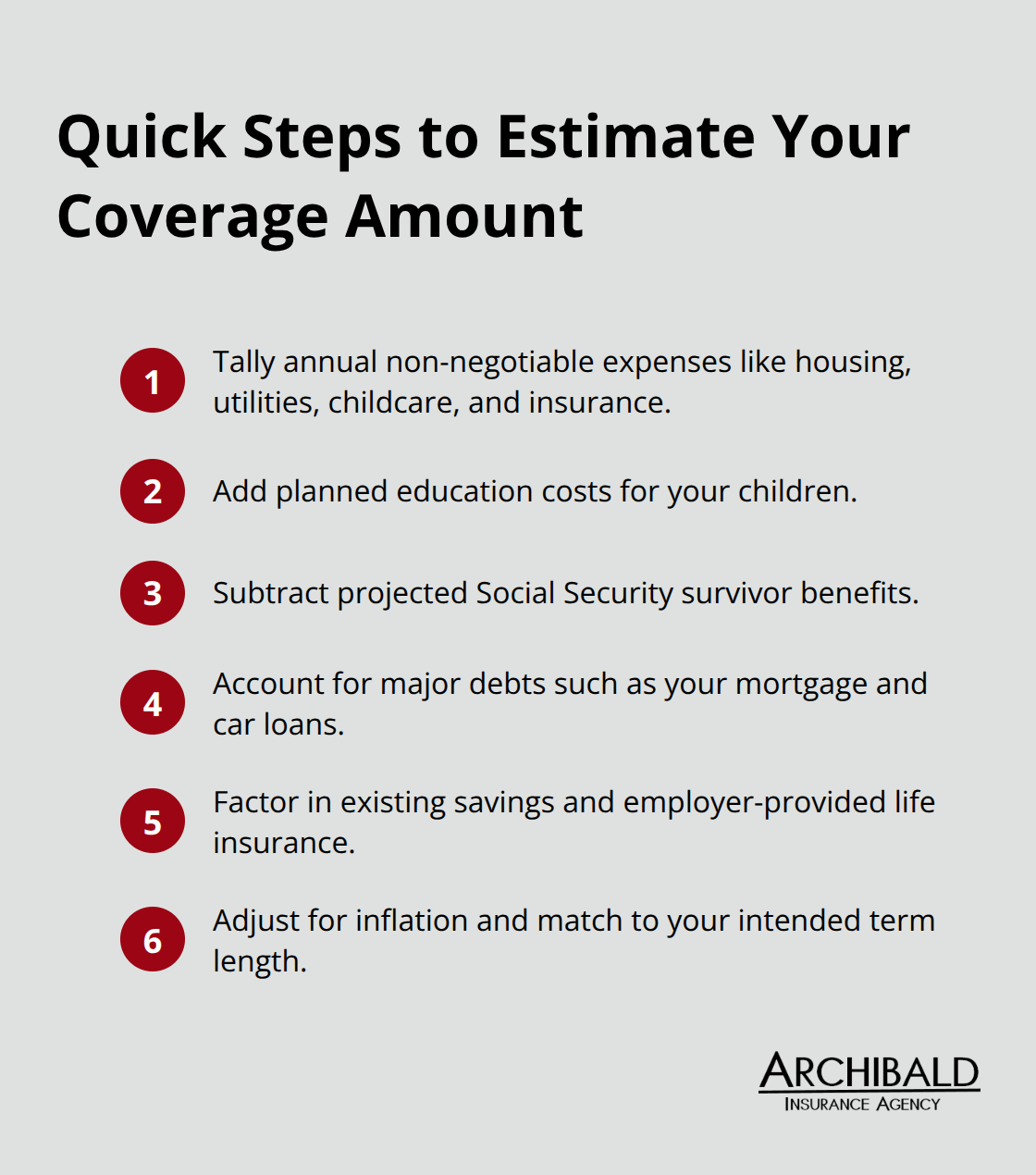
Your mortgage balance alone does not tell the complete story of what your family actually needs. Your remaining mortgage balance from your latest statement forms the foundation, but you must add closing costs (typically 2 to 5 percent of the loan amount), property taxes for one year, and homeowners insurance premiums. The National Funeral Directors Association reports that funeral expenses average $7,000 to $12,000, and your family will face these costs immediately after your death. If your family carries other debts-credit cards, auto loans, student loans-those obligations demand coverage as well.

Checklist of cost components to build a complete life insurance amount for mortgage protection

Most homeowners underestimate their needs by focusing only on the mortgage principal without accounting for these real expenses that will arrive at the worst possible time. A practical approach involves adding 10 to 15 percent to your mortgage balance as a safety buffer for these additional costs.

Account for Inflation Over Your Loan Term

Inflation poses a serious threat to coverage adequacy over a 30-year term. A dollar in 2026 will not purchase the same goods and services in 2056. Historical inflation rates average approximately 2.5 to 3 percent annually, meaning your coverage needs grow each year. If you purchase a $500,000 policy today, that amount covers your current mortgage and expenses, but in 10 years the same $500,000 will protect significantly less real purchasing power. Try purchasing coverage at 110 to 120 percent of your current mortgage balance to account for this inflation effect, giving your family a genuine safety margin rather than a false sense of security.

Consider Your Family’s Income Replacement Needs

Your family’s income replacement needs matter equally to the mortgage payoff itself. If your spouse or co-borrower relies on your income to maintain the household, life insurance should cover not just the mortgage but also several years of living expenses. Financial professionals typically suggest coverage equal to 5 to 10 times your annual income, with the mortgage payoff representing only one component of that total need. This approach recognizes that your family faces months or years of adjustment while your spouse potentially returns to work or restructures household finances. The conversation about coverage amount ultimately requires honest assessment of your family’s actual financial vulnerabilities, not generic rules of thumb that ignore your specific circumstances.

Final Thoughts

Term life insurance delivers the coverage, affordability, and flexibility that most Utah homeowners require for protecting a mortgage loan. It costs substantially less than whole life, provides far greater payout control than mortgage protection insurance, and matches your loan timeline perfectly. Your family receives funds they can direct toward the mortgage, other debts, final expenses, or living costs based on their actual situation.

Calculating your coverage amount requires honesty about your complete financial picture-start with your mortgage balance, add closing costs and funeral expenses, account for inflation over your loan term, and consider your family’s income replacement needs. This comprehensive approach prevents the dangerous mistake of purchasing coverage that looks adequate today but falls short when your family actually needs it. The next step involves getting quotes from multiple insurers to compare rates and terms.

Contact Archibald Insurance Agency today to discuss your mortgage protection needs. We’ll help you find life insurance on a mortgage loan that genuinely protects your family’s future.

Disclaimer: The information provided in this blog is for general informational purposes only and does not constitute legal, financial, or insurance advice. Coverage options, terms, and availability may vary. Please consult with a licensed professional for advice specific to your situation
Does Homeowners Insurance Cover Water Damage?

Water damage is one of the most common claims homeowners file, yet many don’t understand what their policy actually covers. At Archibald Insurance Agency, we’ve seen Utah homeowners face unexpected bills because they didn’t know whether homeowners insurance covers water damage.

The answer isn’t simple-some water damage is covered, while other types aren’t. This guide breaks down exactly what your policy protects and where gaps might exist.

What Water Damage Does Your Homeowners Policy Actually Cover

Your homeowners insurance covers water damage that happens suddenly and accidentally, but only when it originates from inside your home or results from a covered weather event. Most approved water damage claims fall into sudden and accidental categories such as burst pipes and appliance failures, and roof leaks caused by storms. If a pipe freezes and bursts during a Utah winter, your policy protects you. If your water heater fails unexpectedly and floods your basement, coverage applies. If heavy rain damages your roof and water pours through the ceiling, you’re protected. The key word is sudden. Damage that develops slowly over weeks or months typically isn’t covered, even if it eventually causes significant harm.

Burst Pipes and Appliance Failures

Burst pipes rank among the most common water damage claims Utah homeowners file, and your policy protects you when the rupture happens without warning. A pipe that freezes solid and cracks during winter qualifies for coverage if you took reasonable preventive steps, such as maintaining heat in your home or insulating exposed pipes. However, if your thermostat drops below 55°F or your home sits vacant without winterization, insurers often deny these claims. Appliance leaks work similarly. A dishwasher, washing machine, or refrigerator that suddenly malfunctions and floods your kitchen floor receives coverage under your personal property and dwelling protections. Water damage claims average $13,954, which makes coverage knowledge vital for protecting your home. Act fast when you discover the damage. Insurers typically expect you to report a claim within 24 to 48 hours and take immediate steps to stop the water flow and prevent further damage.

Storm Damage and Ice Dams

Water damage from storms and heavy rainfall receives coverage when water enters through damaged roof structures, broken windows, or compromised exterior walls caused by wind, hail, or falling debris. If a severe thunderstorm tears shingles from your roof and rain saturates your attic and upper floors, your policy covers that loss. Ice dams form along roof edges during freeze-thaw cycles and can trap water, forcing it under shingles and into your home. Ice dams can cause hidden damage that worsens over time, and coverage depends on whether the water intrusion was sudden or stemmed from maintenance neglect like clogged gutters. The distinction matters significantly. If you failed to clean gutters and an ice dam formed as a result, an insurer might deny your claim based on negligence. If you maintained your gutters properly and an unusually severe ice dam still caused sudden water entry, coverage typically applies. The weight of accumulated snow can also damage roof structures, and that structural collapse receives coverage. Document everything with photographs or video immediately after you discover damage, and don’t remove or repair anything until an adjuster inspects the property.

What Happens Next With Your Coverage

Once you understand what your policy covers, the next critical step involves identifying the gaps. Many Utah homeowners assume their standard policy protects them completely, only to face denial when they file a claim for damage that falls outside standard coverage. Flood damage, sewer backups, and gradual seepage represent common exclusions that leave homeowners vulnerable. Knowing these gaps now allows you to add the right endorsements and separate policies before water damage strikes your home.

Diagram mapping key homeowners insurance water-damage exclusions and the add-ons that fix them. - does homeowners insurance cover water damage

What Your Homeowners Insurance Won’t Cover for Water Damage

Flood Damage: The Biggest Coverage Gap

Flood damage represents the largest coverage gap in standard homeowners policies, and it’s the reason most Utah homeowners end up uninsured for the water damage that actually strikes their homes. When heavy rain overwhelms local drainage systems, rivers overflow their banks, or storm surge pushes water inland, your homeowners insurance provides no protection. The National Flood Insurance Program reports that flood insurance through NFIP costs roughly $700 per year, yet NFIP claim payments average around $52,000-a stark contrast that shows how devastating floods become when you lack protection. Since 1996, 99 percent of U.S. counties have experienced at least one flood event, and urban flooding now occurs roughly every two to three days across America.

Percentage of U.S. counties that have experienced at least one flood event since 1996.

If you live anywhere near a river, in a low-lying area, or in a region that experienced flooding in recent years, you need separate flood insurance. Your homeowners policy distinguishes sharply between wind-driven rain that enters through storm damage and rising water that floods your property. A broken window from hail that lets rain inside receives coverage. Water that rises from the ground or flows in from overwhelmed drainage systems does not.

Gradual Leaks and Maintenance Failures

Gradual leaks and maintenance failures create another massive exclusion that catches homeowners off guard. Homeowners insurance generally covers sudden and accidental water damage like burst pipes or ruptured appliances, but excludes damage from neglect and deferred maintenance. A slow bathroom sink leak that you notice but ignore for weeks falls squarely into this excluded category.

Your insurer expects you to maintain your home and address problems promptly. Damage that develops slowly over time-even if it eventually causes significant harm-receives no coverage. This exclusion protects insurers from covering preventable damage while placing responsibility on homeowners to act responsibly.

Sewer Backups and Groundwater Seepage

Sewer backups and groundwater seepage complete the coverage gap. When your home’s sewer line fails or groundwater seeps through basement walls, standard homeowners insurance provides zero protection unless you purchased a specific water backup endorsement. Most water backup endorsements carry limits around $5,000, which sounds reasonable until you face $20,000 to $100,000 in basement restoration costs.

Groundwater intrusion happens particularly in Utah’s older neighborhoods where foundation drainage systems have deteriorated over decades. Hydrostatic pressure from groundwater pushes water through foundation walls and cracks, and this damage remains excluded without an endorsement. If you’ve never added water backup coverage to your policy, contact your agent immediately.

Identifying Your Coverage Gaps

These gaps between what your policy covers and what actually happens during water events create financial exposure that most homeowners underestimate. The good news is that you can fill many of these gaps with targeted endorsements and separate policies. Understanding exactly which types of water damage your current policy excludes allows you to make informed decisions about additional protection before disaster strikes. Your next step involves taking concrete action to protect your home from the water damage that your standard policy won’t cover.

Stop Water Damage Before It Starts

The most effective water damage protection happens before water enters your home. Maintenance prevents costly water damage claims that most Utah homeowners face. Start with your plumbing system, which fails more often than any other water damage source. According to the Insurance Information Institute, water damage and freezing claims represent a significant portion of homeowners insurance claims each year. Inspect visible pipes under sinks, around your water heater, and in the basement for corrosion, mineral buildup, or pinhole leaks. Corroded copper pipes fail without warning, and replacing them requires professional plumbing work that typically costs $45 to $200 per hour.

Address Aging Pipes and Water Pressure

If your home was built before 1980, galvanized steel pipes are likely deteriorating right now. Test your water pressure with an inexpensive gauge from any hardware store. Pressure above 80 PSI stresses pipes and accelerates failure. A pressure regulator costs under $200 and prevents premature pipe rupture. Check your water heater’s age by looking at the manufacture date on the tank.

Compact checklist of preventive actions homeowners can take to avoid water damage. - does homeowners insurance cover water damage

Most water heaters last 10 to 12 years before failure becomes likely. If yours is older, schedule replacement before it ruptures and floods your home.

Install Early Detection Systems

Install water leak detectors near your water heater, washing machine, and dishwasher. These battery-powered devices cost $15 to $50 and alert you immediately when moisture appears, catching leaks within hours instead of weeks. Early detection stops small problems from becoming expensive disasters.

Maintain Your Roof and Gutters

Your roof requires equal attention because storm damage creates a major category of water intrusion claims. Walk your roof twice yearly, in spring and fall, looking for missing shingles, deteriorated flashing, and gaps where water can enter. Clean gutters four times per year in Utah, where spring snowmelt and fall leaves create blockages that force water under roof edges and into fascia boards. Clogged gutters transform into ice dams during winter freeze-thaw cycles, trapping water and forcing it through shingles. Installing gutter guards reduces cleaning frequency to twice yearly and costs $1,000 to $2,000 for most homes. Trim tree branches hanging over your roof to prevent limb damage during winter storms and reduce debris accumulation.

Protect Your Foundation and Basement

If your home sits in a flood-prone area or near groundwater seepage risk, install a sump pump in your basement now, not after water damage occurs. Sump pumps cost $500 to $2,000 installed and remove water automatically before it damages foundations or finishes. Check that your pump runs properly by pouring water into the sump pit to trigger activation. A battery backup system costs an additional $400 to $600 and keeps the pump running during power outages that often accompany storms. Grade your property so water slopes away from your foundation. Standing water against foundation walls creates hydrostatic pressure that forces groundwater through cracks and seepage points. Proper grading costs under $500 and prevents thousands in basement damage.

Add Targeted Insurance Coverage

After addressing these maintenance fundamentals, add the specific insurance protections your home needs. Water backup endorsements cost $50 to $100 annually and cover sewer backups and sump pump failures up to typical limits of $5,000. If your home sits in a flood zone, NFIP flood insurance at roughly $700 per year provides building coverage up to $250,000 and contents coverage up to $100,000. Private flood insurers sometimes offer higher limits or broader coverage in specific situations. Your independent insurance agent can review your current policy and identify which endorsements and separate policies make sense for your Utah home’s specific risks.

Final Thoughts

Water damage protection requires three distinct actions working together. First, you must understand exactly what your homeowners insurance covers and what it doesn’t-does homeowners insurance cover water damage? Yes, but only sudden and accidental damage from inside your home or covered weather events. Flood damage, gradual leaks, sewer backups, and groundwater seepage remain excluded unless you purchase separate coverage. Knowing these boundaries prevents costly surprises when you file a claim.

Second, maintenance stops water damage before it starts. You should inspect your plumbing for corrosion and test water pressure regularly, replace aging pipes and water heaters before they fail, and clean gutters four times yearly to prevent ice dams and roof leaks. These steps cost far less than water damage restoration, which ranges from $1,381 to $6,350 for typical claims and can exceed $100,000 for basement flooding. Early detection systems catch leaks within hours instead of weeks, preventing the mold growth that begins within 24 to 48 hours of water exposure.

Third, you need to fill your coverage gaps with targeted endorsements and separate policies. Water backup coverage costs $50 to $100 annually and protects against sewer backups and sump pump failures, while flood insurance through NFIP costs roughly $700 per year and covers the rising water that standard policies exclude entirely. Contact Archibald Insurance Agency today to review your water damage coverage and add the protections that give you genuine peace of mind.

Disclaimer: The information provided in this blog is for general informational purposes only and does not constitute legal, financial, or insurance advice. Coverage options, terms, and availability may vary. Please consult with a licensed professional for advice specific to your situation
Essential Guide to Protecting Your Jewelry: Everything You Need to Know

Jewelry holds not only aesthetic value but also sentimental significance. Whether it symbolizes decades of marriage, has been passed down through generations, or commemorates a special occasion, its worth goes beyond monetary value. With this in mind, our local insurance agency aims to ensure that you have comprehensive protection for your precious pieces.

While the memories associated with your jewelry are irreplaceable, a robust insurance policy can offer financial security in the face of unforeseen events. Whether your jewelry is stolen, damaged, or lost during a leisurely swim in the ocean, insurance coverage can help ease the burden.

If you own jewelry valued at over $1,000, it’s advisable to consider obtaining an insurance policy endorsement specifically tailored to its worth. This endorsement can be seamlessly added to your existing home or renters insurance policy through what is known as a “floater,” an extension that provides coverage for valuables. A reliable policy will safeguard against theft and damage. The cost of coverage may vary but typically ranges from $1 to $2 per $100 in value annually. For instance, insuring a $5,000 ring could cost you approximately $50 to $100 per year. By contacting Hukari Insurance, we will diligently assist you in finding the optimal coverage for your jewelry and address any concerns you may have regarding hypothetical scenarios.

To ensure a thorough understanding of your insurance coverage, we encourage you to discuss the following questions with our agents:

  1. If your jewelry is stolen, will you be reimbursed for the full amount you initially paid? What if it is accidentally lost?
  2. If the value of your jewelry appreciates over time, will your insurance company honor its new value or only the purchase price?
  3. What happens if a small piece of your jewelry is lost? Will your insurance cover the cost of replacing the stone?
  4. Don’t forget to inquire about available discounts! Some insurance companies offer reduced premiums if you securely store your jewelry when not in use.

While we hope that you never encounter a situation requiring an insurance claim for your jewelry, it is crucial to be prepared. In the unfortunate event of loss or theft, gather the following items:

  1. Original receipt
  2. Appraisal document (if the original receipt is unavailable)
  3. Gemological Institute of America (GIA) certificate or a similarly reputable certification
  4. Photographs of all your jewelry items stored either on the cloud or a secure zip drive placed in your safe

Keep these essential items in a safety deposit box or a secure safe within your home. For more information on insuring your jewelry, do not hesitate to contact an agent at our office. We are dedicated to offering you the best insurance options for your precious pieces and addressing any further inquiries you may have.

What is Universal Life Insurance?

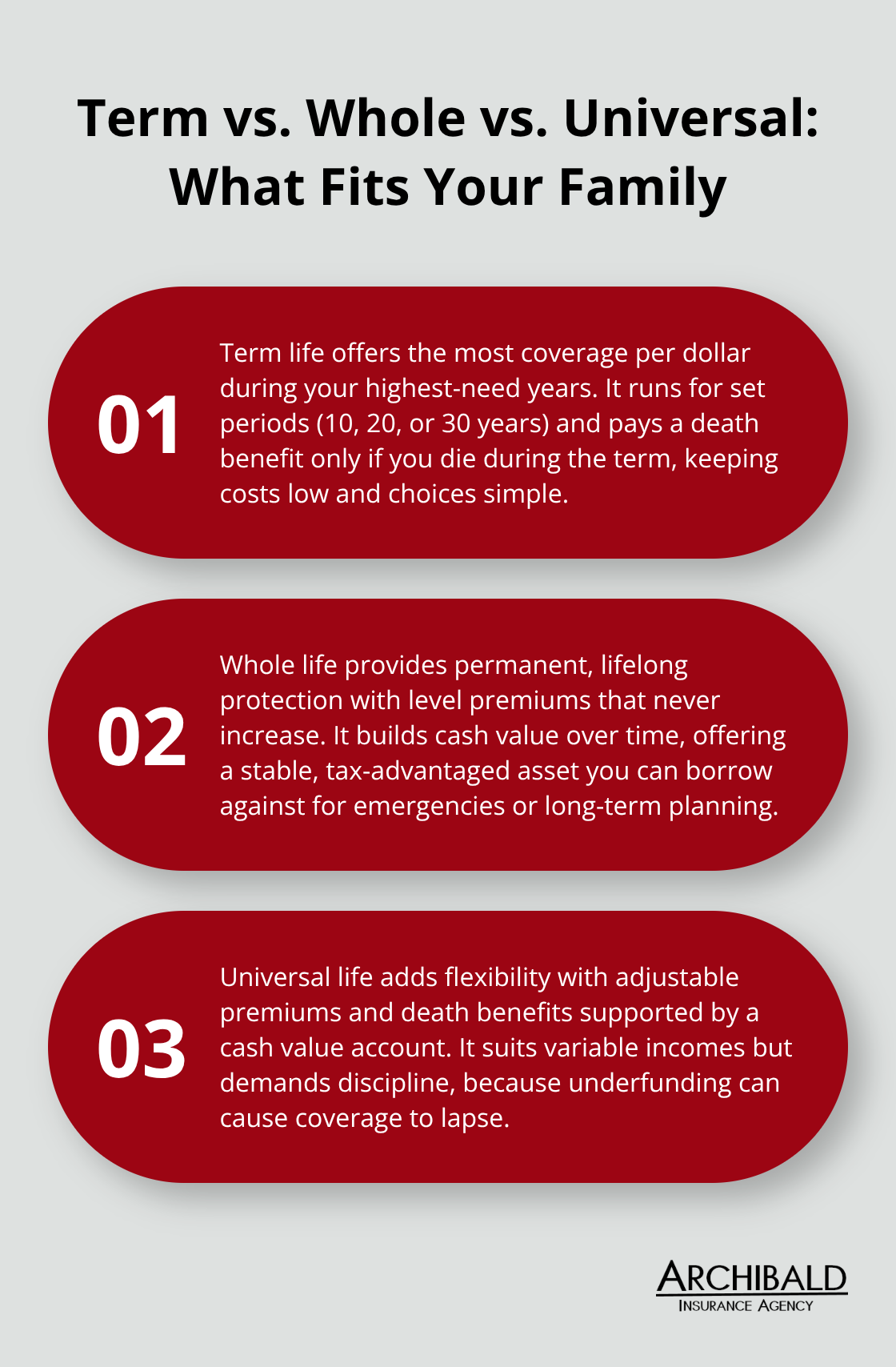
Universal life insurance offers flexibility that other life insurance policies simply don’t match. You can adjust your premiums and death benefit as your circumstances change, making it a practical choice for people whose financial situations aren’t static.

At Archibald Insurance Agency, we help Utah residents understand whether universal life insurance fits their needs. This guide breaks down how it works, compares it to other options, and shows you who benefits most from this coverage.

How Universal Life Insurance Actually Works

Universal life insurance functions differently from term coverage because your premiums don’t simply vanish after payment. When you pay a premium, that money splits into two parts: the cost of insurance (COI) and the remainder flows into a cash value account. The COI covers your death benefit and administrative fees, while everything else accumulates and earns interest.

Breakdown of premiums, cost of insurance, cash value, and living benefits - what is universal life insurance

According to the National Association of Insurance Commissioners, the cash value grows on a tax-deferred basis, meaning you won’t pay taxes on the growth until you access the money. This structure gives you something term insurance never provides: a living benefit you can tap into while you’re still alive. For a healthy 40-year-old male seeking $500,000 in coverage, expect minimum premiums around $3,100 annually, though your actual costs depend on age, health, and the specific policy terms.

Premium Flexibility That Adapts to Your Life

The appeal of universal life lies in its flexibility. You can increase or decrease your premiums within policy limits, and you can adjust your death benefit up or down as circumstances change. If your income drops, you lower payments temporarily. If you receive a promotion, you increase coverage without applying for a new policy. This flexibility makes universal life far superior to whole life for people whose finances fluctuate, like business owners or self-employed professionals. However, this freedom carries responsibility: underfunding your policy creates real problems. If your cash value plus credited interest falls below your ongoing charges, the account erodes and your coverage could lapse entirely. The cost of insurance rises with age, which means a 50-year-old pays more for the same death benefit than a 40-year-old. Front-load premiums in early years to build a stronger cash value cushion that protects you from future lapses when COI climbs.

How Cash Value Growth and Fees Shape Your Coverage

Your policy’s cash value determines how long you can maintain coverage without paying premiums. The guaranteed minimum interest rate sits at 2% annually, but current credited rates depend on company performance. Withdrawals from cash value work tax-free up to your cost basis, though anything beyond that triggers taxes and reduces your death benefit. Policy loans offer another option: you borrow against your cash value (typically available from year two onward), and these loans carry interest costs that reduce your death benefit if left unpaid. The real threat to universal life policies comes from fees that erode your cash value faster than it grows. Administrative charges, cost of insurance increases, and surrender charges in early years can slow growth significantly. This is why comparing guaranteed versus nonguaranteed features matters enormously when shopping policies. A policy with high fees might deliver less cash value than one with minimal charges. Before purchasing, obtain a year-by-year illustration showing projected cash value and death benefits (then verify the guaranteed minimum crediting rate and total fee structure with your agent).

What Happens When You Access Your Cash Value

You can withdraw funds from your cash value tax-free up to your cost basis, though withdrawals beyond that amount trigger tax consequences and reduce your death benefit. Policy loans provide an alternative that typically becomes available from year two onward, and you can access these funds without triggering immediate taxes as long as the policy remains in force. However, unpaid loans accumulate interest and reduce your death benefit if they’re not repaid. The key distinction between withdrawals and loans matters significantly for your long-term coverage. Withdrawals permanently reduce your cash value and death benefit, while loans preserve the death benefit structure but cost you interest. Overusing either option can eventually cause your policy to lapse if the remaining cash value can’t cover your cost of insurance charges.

Comparing Policies Before You Commit

Shopping for universal life insurance requires more than just comparing premiums. You need to examine the guaranteed minimum crediting rate, the current credited rate, total fees, surrender charges, and available riders. Request a year-by-year illustration from each carrier showing projected cash value and death benefits under different scenarios. Verify the guaranteed minimum crediting rate and total fee structure with your agent before making a decision. Understanding these details helps you avoid policies that look attractive initially but underperform over time due to hidden costs.

Now that you understand how universal life insurance works internally, comparing it to other life insurance types reveals which option truly fits your situation.

Universal Life Insurance vs. Other Life Insurance Types

Term Life Insurance: Affordable but Temporary

Term life insurance costs far less upfront because it provides pure death benefit coverage with no cash value component. A 40-year-old in good health pays roughly $30–$50 monthly for $500,000 in 20-year term coverage, compared to the $258+ monthly minimum for universal life with the same death benefit. Term makes sense if you need affordable coverage for a specific period-your mortgage years, your children’s education, or until retirement. However, term expires. Once your 20 or 30-year term ends, you face a choice: go without coverage or buy a new policy at an age when premiums skyrocket. Universal life solves this problem because it lasts your entire life as long as you fund it properly. The trade-off is clear: you pay significantly more annually, but you never outlive your coverage and you build cash value that term never provides.

Whole Life Insurance: Guaranteed but Expensive

Whole life insurance guarantees everything-your premiums never increase, your death benefit stays level, and your cash value grows predictably because the insurer credits a guaranteed rate plus dividends. This certainty appeals to people who dislike complexity, but whole life costs roughly 2–3 times more than universal life for identical death benefits. A $500,000 whole life policy for a 40-year-old costs approximately $600–$800 monthly versus $258+ for universal life. Universal life wins on cost flexibility because you adjust premiums and death benefits as circumstances change, while whole life locks you into fixed payments. However, universal life’s flexibility creates risk: if you underfund the policy or market returns underperform, your cash value erodes and coverage lapses. Whole life eliminates this risk entirely through guaranteed crediting.

Variable and Indexed Universal Life: Higher Growth, Different Risk Levels

Variable universal life (VUL) represents the aggressive alternative-your cash value invests directly in stocks, bonds, and mutual funds rather than earning a fixed interest rate. VUL offers higher growth potential than fixed universal life, but your cash value fluctuates with market performance and you absorb all investment losses. If the market crashes during your accumulation years, your policy’s cash value drops and your cost of insurance charges consume a larger percentage of remaining funds. Universal life with index participation (IUL) splits the difference: your cash value ties to stock market indices like the S&P 500 with typical caps around 10.5% annual returns and guaranteed floors preventing losses. IUL costs more than fixed universal life but delivers better growth potential than fixed rates while protecting you from market downturns-making it the sensible middle ground between fixed universal life’s safety and VUL’s volatility.

Key differences in growth potential and risk across universal life options - what is universal life insurance

Understanding these distinctions helps you recognize which policy structure aligns with your financial goals and risk tolerance. The next section examines who benefits most from universal life’s unique combination of flexibility and permanent protection.

Who Should Consider Universal Life Insurance

Universal life insurance appeals most to people whose financial situations shift regularly and who need coverage lasting decades. Business owners and self-employed professionals fit this profile perfectly because their income fluctuates month to month and year to year.

Profiles that align with universal life’s flexibility and permanent protection

Self-Employed Professionals and Income Fluctuation

A self-employed consultant earning $80,000 one year and $150,000 the next cannot predict whether they can afford fixed whole life premiums, but universal life’s adjustable payments solve this problem entirely. During lean months, you lower premiums; during profitable months, you increase them to build cash value faster. This flexibility prevents policy lapse that would occur if you couldn’t maintain whole life’s rigid payment schedule.

Self-employed individuals also benefit from universal life’s cash value as a secondary retirement resource. If business revenue dries up at age 58, you can access policy loans against accumulated cash value to supplement income without triggering taxes (as long as the policy stays in force). This safety net protects your family when business conditions deteriorate unexpectedly.

High-Income Earners and Tax Advantages

High-income earners face a different but equally compelling reason to choose universal life: their tax situations improve substantially with tax-deferred cash value growth. Someone earning $250,000 annually pays taxes on every investment dollar, but universal life’s cash value grows tax-free until withdrawal. Over 30 years, this tax deferral compounds meaningfully.

If your cash value reaches $400,000 and you access it through policy loans rather than withdrawals, you avoid immediate tax consequences entirely. High earners also appreciate that universal life death benefits bypass probate and transfer directly to beneficiaries, protecting wealth during estate settlement. This feature streamlines the transfer process and reduces administrative costs for your heirs.

Lifetime Coverage with Adjustment Capability

People seeking genuine lifetime coverage with adjustment capability represent the third critical group for universal life. A 35-year-old professional might purchase $1,000,000 in coverage to protect their family and mortgage, but at 50, they’ve paid off the house and accumulated retirement savings, so they reduce the death benefit to $500,000 and lower premiums accordingly. Whole life doesn’t permit this adjustment without complex policy exchanges.

Universal life also outperforms term insurance for anyone who recognizes they’ll need coverage beyond their working years. Term policies expire at 65 or 70, forcing seniors to either go uninsured or purchase expensive new coverage when health issues emerge. Universal life eliminates this problem entirely if properly funded throughout your career. Regular policy reviews help monitor whether premiums, cost of insurance charges, and cash value remain aligned with your death benefit goals as you age. This ongoing relationship matters more than the initial policy selection because universal life’s flexibility only benefits you if you actively adjust it when circumstances change.

Final Thoughts

Universal life insurance delivers permanent protection with flexibility that term and whole life policies cannot match. You control your premiums and death benefit, your cash value grows tax-deferred, and you access funds through loans or withdrawals when life demands it. The trade-off is straightforward: you pay more than term insurance but gain lifetime coverage and a living benefit that builds over decades.

We at Archibald Insurance Agency work with Utah residents to match them with coverage that fits their financial reality, not some theoretical ideal. Our team represents multiple insurance carriers, which means we compare policies across different companies rather than pushing one product. Whether you’re self-employed with fluctuating income, a high earner seeking tax advantages, or someone who simply wants lifetime protection with adjustment capability, we help you evaluate universal life alongside term and whole life options.

Contact Archibald Insurance Agency for a conversation about your life insurance needs. We’ll ask questions about your family situation, financial goals, and timeline for coverage, then present options with honest comparisons of costs, fees, and projected cash value growth. You’ll have the information needed to make a decision that protects your family and aligns with your budget.

Disclaimer: The information provided in this blog is for general informational purposes only and does not constitute legal, financial, or insurance advice. Coverage options, terms, and availability may vary. Please consult with a licensed professional for advice specific to your situation