Homeowners Insurance Loss of Use Coverage Benefits

Your home is your biggest investment, and homeowners insurance protects it. But standard coverage has gaps that many Utah homeowners overlook.

Loss of use coverage fills one of those critical gaps. When a disaster forces you out of your home, this protection covers your temporary living expenses while repairs happen. We at Archibald Insurance Agency see firsthand how this coverage saves families thousands of dollars during their most stressful moments.

What Loss of Use Coverage Actually Covers

Understanding Additional Living Expenses

Loss of use coverage, formally called Additional Living Expenses or Coverage D, reimburses the extra costs you pay when a covered disaster makes your home uninhabitable. This protection addresses the gap between what you normally spend to live and what you must spend while displaced. When a fire, severe hail damage, or other covered peril forces you out, this coverage pays for hotel rooms, temporary rentals, meals you cannot prepare at home, pet boarding, extra transportation costs, and laundry services.

Visual summary of common expenses covered while you are displaced from your home

How Much Coverage You Need

The typical limit runs 20 to 30 percent of your dwelling coverage, so a home insured for $300,000 might carry $60,000 to $90,000 in loss of use protection. Utah homeowners should understand that this coverage only applies to perils named in your policy-flood damage, for example, requires separate flood insurance to trigger loss of use benefits. Most policies cap loss of use reimbursements for 12 to 24 months, though some carriers offer longer periods depending on the claim circumstances.

Chart showing the common 20%–30% loss of use limit tied to dwelling coverage - homeowners insurance loss of use coverage

What Loss of Use Actually Reimburses

The coverage pays actual incremental expenses, not upgrades or luxuries. If you normally spend $200 weekly on groceries and temporarily spend $400 because you eat restaurant meals, you recover the $200 difference, not the full restaurant bill. Similarly, the coverage will not reimburse your mortgage, property taxes, or utilities you would owe regardless of displacement. This distinction matters because many homeowners mistakenly assume loss of use covers all temporary living costs without limits.

Documentation Makes the Difference

To file successfully, keep itemized receipts for every cost-hotels, meals, gas, parking, pet care-and document your baseline living expenses before the loss. The claims process moves faster when you report the incident promptly and provide clear documentation early. Utah’s rising construction costs and housing market volatility make adequate loss of use limits more important than ever, since temporary lodging and meal costs climb when repairs stretch longer than expected. Your insurance agent can help you understand what documentation the carrier requires and how to organize your records for a smooth claims experience.

When Disaster Strikes Your Home

Fire and Storm Damage Force Immediate Displacement

A structure fire in Salt Lake City forces your family to evacuate in the middle of the night. Within hours, your home is uninhabitable, and you stand in a hotel lobby at 11 PM trying to figure out how to afford a room for the next month while contractors assess the damage. Loss of use coverage transforms this nightmare into a manageable situation by paying your hotel costs, restaurant meals because your kitchen no longer exists, and even pet boarding if you had to leave your dog with a friend temporarily. The National Association of Home Builders estimates that tariffs and rising material costs could add nearly $11,000 to new home construction, meaning roof repairs and fire damage repairs stretch longer than they did five years ago. When repairs take weeks or months instead of days, loss of use coverage becomes the difference between financial stability and depleting your savings account.

A severe hail storm that damages your roof and makes your home unsafe for occupancy triggers the same protection. Your coverage pays for your temporary apartment rental, the difference between your normal grocery budget and restaurant meals while displaced, extra mileage to drive to work from a temporary location, and even laundry services since you lack access to your home’s washer and dryer. Theft or vandalism that forces you out while repairs happen also qualifies, though you must verify your specific policy includes coverage for these perils since some carriers exclude certain types of loss. The key distinction is that loss of use only activates when a covered peril makes your home genuinely uninhabitable, not when you choose to leave or when damage is minor.

Documentation Determines Your Full Recovery

Documentation determines whether you recover every dollar owed to you. You must keep receipts for hotel bills, restaurant charges, gas purchases for extra commuting, pet boarding invoices, and any other incremental costs you incur while displaced. Utah’s housing market volatility means temporary rentals in Salt Lake City or Park City can easily cost $2,500 to $4,500 monthly for a short-term lease, far exceeding what you would normally spend on housing if you were not displaced. A single month of displacement without adequate loss of use coverage could cost your family $5,000 to $8,000 in out-of-pocket expenses when you factor in lodging, meals, transportation, and other necessities.

Speed Up Your Claim with Prompt Reporting

You should report the loss to your insurance carrier immediately after evacuation or displacement occurs, because early reporting often triggers faster claim processing and sometimes allows the carrier to provide partial advance payments while you accumulate receipts. Utah’s rising construction costs and housing market volatility make adequate loss of use limits more important than ever, since temporary lodging and meal costs climb when repairs stretch longer than expected. The standard 20 to 30 percent of dwelling coverage may fall short if repairs extend beyond three months or if you live in a high-cost area where short-term rentals command premium prices. Your insurance agent can help you understand what documentation the carrier requires and how to organize your records for a smooth claims experience.

Setting Your Loss of Use Limit to Match Your Real Costs

Calculate Your True Monthly Displacement Costs

Most Utah homeowners accept the default 20 to 30 percent loss of use limit without calculating what they actually need, which often leaves them underinsured when displacement happens. Start with your baseline monthly expenses-not what you wish you spent, but what you actually spend on housing, food, transportation, and other necessities. Add up twelve months of bank and credit card statements to find your true average, then multiply by the number of months you estimate repairs might take. A roof replacement in Utah typically takes three to six months depending on weather and contractor availability, while major structural damage from fire or severe hail can stretch to nine or twelve months. If your normal monthly expenses run $5,000 and repairs take six months, you need at least $30,000 in loss of use coverage just to maintain your current lifestyle during displacement-yet many Utah homeowners carry only $20,000 or $25,000 because they never performed this calculation.

Account for Utah’s Temporary Housing Premium

Utah’s housing market creates a second problem: temporary rental costs far exceed your normal housing expense. Salt Lake City short-term rentals averaged $2,800 to $4,200 monthly in 2025, while Park City and ski resort areas command $3,500 to $5,500 for comparable units.

Compact list of typical temporary housing and displacement cost pressures in Utah - homeowners insurance loss of use coverage

If your mortgage or normal rent is $1,500 monthly but temporary housing costs $3,500, you face a $2,000 monthly gap that loss of use coverage must fill. Add restaurant meals because your displaced kitchen limits cooking, pet boarding if you cannot keep your dog in a temporary apartment, extra transportation costs to commute from a rental across town, and laundry service fees since your temporary housing lacks washer and dryer access. These incremental costs easily reach $500 to $1,200 monthly on top of the housing difference.

Determine Your Adequate Coverage Amount

A family with $5,000 monthly baseline expenses facing a six-month displacement in a high-cost Utah market should carry $45,000 to $50,000 in loss of use coverage, not the $30,000 that 20 percent of a typical $150,000 dwelling limit provides. Underestimating this coverage leaves you paying thousands out-of-pocket during the worst time. Your specific situation depends on your family’s actual displacement expenses and local Utah housing costs, which vary significantly between Salt Lake City, Park City, and rural areas. An independent insurance agent who understands your community’s market conditions can help you set limits that match your real needs rather than accepting a percentage-based default that may fall short when you need protection most.

Final Thoughts

Loss of use coverage protects your family when disaster forces you from your home, and without it, you face thousands in out-of-pocket expenses for temporary housing, meals, and transportation while repairs happen. Utah homeowners often underestimate what they need because they accept default coverage limits without calculating their actual displacement costs-a six-month repair period in a high-cost Utah market can easily cost $30,000 to $50,000 when you factor in temporary rental premiums, restaurant meals, and extra commuting expenses. The 20 to 30 percent default limit frequently falls short, leaving families vulnerable to significant financial strain.

Your homeowners insurance loss of use coverage only activates when a covered peril makes your home genuinely uninhabitable, and fire, severe hail damage, theft, and vandalism all trigger this protection (though flood damage requires separate flood insurance). Check your current homeowners insurance loss of use coverage limit against your actual monthly expenses and local Utah housing costs right now, before disaster strikes. If you carry only $20,000 or $25,000 in coverage but face potential displacement in Salt Lake City or Park City, you are almost certainly underinsured.

We at Archibald Insurance Agency help Utah families set loss of use limits that match their real needs rather than accepting percentage-based defaults, and our team understands Utah’s housing market volatility and can guide you through calculating adequate coverage for your specific situation. Contact us today to review your homeowners policy and ensure your family has the protection you need when displacement happens.

Disclaimer: The information provided in this blog is for general informational purposes only and does not constitute legal, financial, or insurance advice. Coverage options, terms, and availability may vary. Please consult with a licensed professional for advice specific to your situation
What is the Average Business Liability Insurance Cost?

Business liability insurance protects your company from costly lawsuits and claims. But understanding business liability insurance costs can feel overwhelming when you’re comparing quotes and coverage options.

We at Archibald Insurance Agency help Utah business owners navigate these decisions every day. The cost of your policy depends on several factors-and knowing what drives those prices helps you make smarter choices for your company.

What Actually Drives Your Business Liability Insurance Cost

Your industry determines far more about your premium than you might expect. Construction contractors pay roughly $337 per month for general liability coverage, while technology consultants average around $27 monthly-a massive gap that reflects actual risk exposure. Healthcare operations sit somewhere in between at $31 per month on average. The Hartford’s data shows restaurants face $1,352 annually for general liability, photographers pay $421, and accountants average $604.

Comparison of typical general liability insurance costs by industry in the U.S. - business liability insurance cost

Insurers calculate premiums based on claim frequency and severity within each industry. A contractor faces higher injury risks and property damage exposure than an accountant working from home, so the pricing reflects that reality.

How Company Size Multiplies Your Costs

Your company’s size matters just as much as your industry type. Solo operators average $65 monthly for general liability, while businesses with five to nine employees jump to over $200 monthly. Companies with twenty to forty-nine employees can pay up to 1,768% more than the average small business. More employees mean more exposure and higher payroll, which increases workers’ compensation obligations in most states. This acceleration happens because risk exposure grows with your workforce.

Location and Local Factors Shape Your Rate

Your location within Utah affects your rate significantly. States like California average $190 monthly-55% above the national average-while lower-cost states like West Virginia average $87 monthly. Utah tends toward the mid-range tier, but specific cities and local factors like medical costs and litigation patterns influence your actual quote.

Percent differences in business liability insurance due to location and payment method. - business liability insurance cost

Regional differences reflect how claim patterns and legal environments vary across the country.

Claims History and Coverage Choices Impact Future Premiums

A clean claims record matters more than most business owners realize. If you file multiple claims, insurers view you as higher risk, and your premiums reflect that perception. Conversely, businesses that demonstrate strong loss-control practices can negotiate better rates over time, typically seeing improvements within one to three renewal cycles. Claims history directly impacts pricing alongside your coverage limits. A $1 million per occurrence/$2 million aggregate policy costs roughly $69 monthly, while upgrading to $2 million per occurrence/$4 million aggregate increases your premium to around $46 monthly-a meaningful difference on annual budgets. Raising your deductible from $500 to $1,000 or higher lowers your monthly premium significantly since you accept more financial responsibility per claim.

Accuracy in Your Application Prevents Rate Surprises

Your annual revenue and operational details matter more than general industry classification. Provide accurate underwriting information about your actual revenue, employee count, and specific work descriptions to avoid rating class surprises at renewal. Incorrect information forces insurers to reclassify your business, sometimes resulting in unexpected rate increases. Your actual cost depends on how your particular operation compares to others in your field, which is why a personalized quote tailored to your specific situation beats relying on industry averages. Understanding these cost drivers positions you to make informed decisions about coverage levels and deductibles that protect your business without overpaying for unnecessary protection.

How Much Does Business Liability Insurance Cost Across Industries

Retail and E-Commerce Operations

Retail and e-commerce businesses face moderate liability exposure compared to high-risk trades. The Hartford data shows retail stores average $1,687 annually, while general liability for this sector typically falls in the $40–$55 monthly range. E-commerce operations often qualify for lower rates since they lack physical storefronts and customer foot traffic, though product liability becomes more relevant if you sell physical goods. The median monthly cost for general liability in retail hovers around $42–$60 depending on your specific operation, inventory value, and location within Utah.

Professional Services and Consulting Firms

Professional services and consulting firms enjoy some of the lowest rates in the insurance market. Accountants average $604 annually according to The Hartford, engineers average $500, and business consultants average $720. Technology consultants sit even lower at $27 monthly on average, reflecting minimal physical risk and claims history. Professional liability (errors and omissions) costs differently than general liability for these firms, running $50–$60 monthly or $600–$720 annually. If your consulting practice operates from home with minimal staff, you’ll land near the bottom of this range.

Contractors and Trades Face Higher Premiums

Contractors and trades face the steepest premiums because injury risk and property damage exposure are genuinely higher. Construction averages $337 monthly for general liability-roughly $4,044 annually-while restaurants hit $1,352 per year. Workers’ compensation for construction trades reflects payroll and injury frequency as key cost drivers. A contractor in Utah should expect general liability premiums well above the national average, especially if your work involves heights, heavy equipment, or subcontractors.

Why the Price Gap Reflects Real Risk

The gap between a consultant paying $27 monthly and a contractor paying $337 monthly isn’t unfair pricing-it reflects actual claim data showing contractors file more frequent and more expensive claims. When you shop for quotes, provide your exact revenue, employee count, and detailed work descriptions to avoid the surprise of reclassification into a higher-risk category at renewal. Vague descriptions tempt insurers to assume worst-case scenarios, which inflates your rate. Your specific operation details matter far more than general industry labels when insurers calculate your actual premium.

How to Lower Your Business Liability Insurance Costs

Implement Safety Programs That Reduce Claims

Safety investments and risk management lower your premiums across renewal cycles. Insurers reward businesses that demonstrate loss-control practices with better rates, typically within one to three renewal periods. Written safety procedures, regular training programs, incident reporting systems, and documented compliance reduce your claims likelihood-the metric insurers care about most.

Checklist of safety and risk management steps to help reduce insurance costs.

If you operate in construction or trades, require subcontractors to carry minimum coverage and provide certificates of insurance. This signals professional operations to underwriters. A contractor who implements these controls negotiates lower premiums than one with identical revenue and employee count but no formal safety program. The investment pays for itself through premium reductions over time.

Provide Accurate Information on Your Application

Accuracy in your application prevents costly rate surprises at renewal. Vague descriptions of your work tempt insurers to assume worst-case scenarios, which inflates your initial quote or causes reclassification at renewal. Provide exact revenue figures, precise employee counts, and detailed operational descriptions to your insurer. If your actual revenue differs significantly from your application, expect a rating adjustment-sometimes upward. This happens because your exposure directly correlates to revenue volume. Your specific operation details matter far more than general industry labels when insurers calculate your actual premium.

Bundle Policies and Adjust Deductibles Strategically

Bundling policies delivers measurable savings that most Utah business owners overlook. A Business Owner’s Policy bundles general liability with commercial property coverage, with savings available when you bundle multiple coverages together. Adding commercial auto, cyber, or umbrella coverage to your bundle generates additional discounts beyond the BOP savings. Increasing your deductible from $500 to $1,000 or higher lowers your monthly premium significantly since you accept more financial responsibility per claim-this works only if you can actually afford the higher deductible when a claim occurs.

Optimize Payment Methods and Coverage Limits

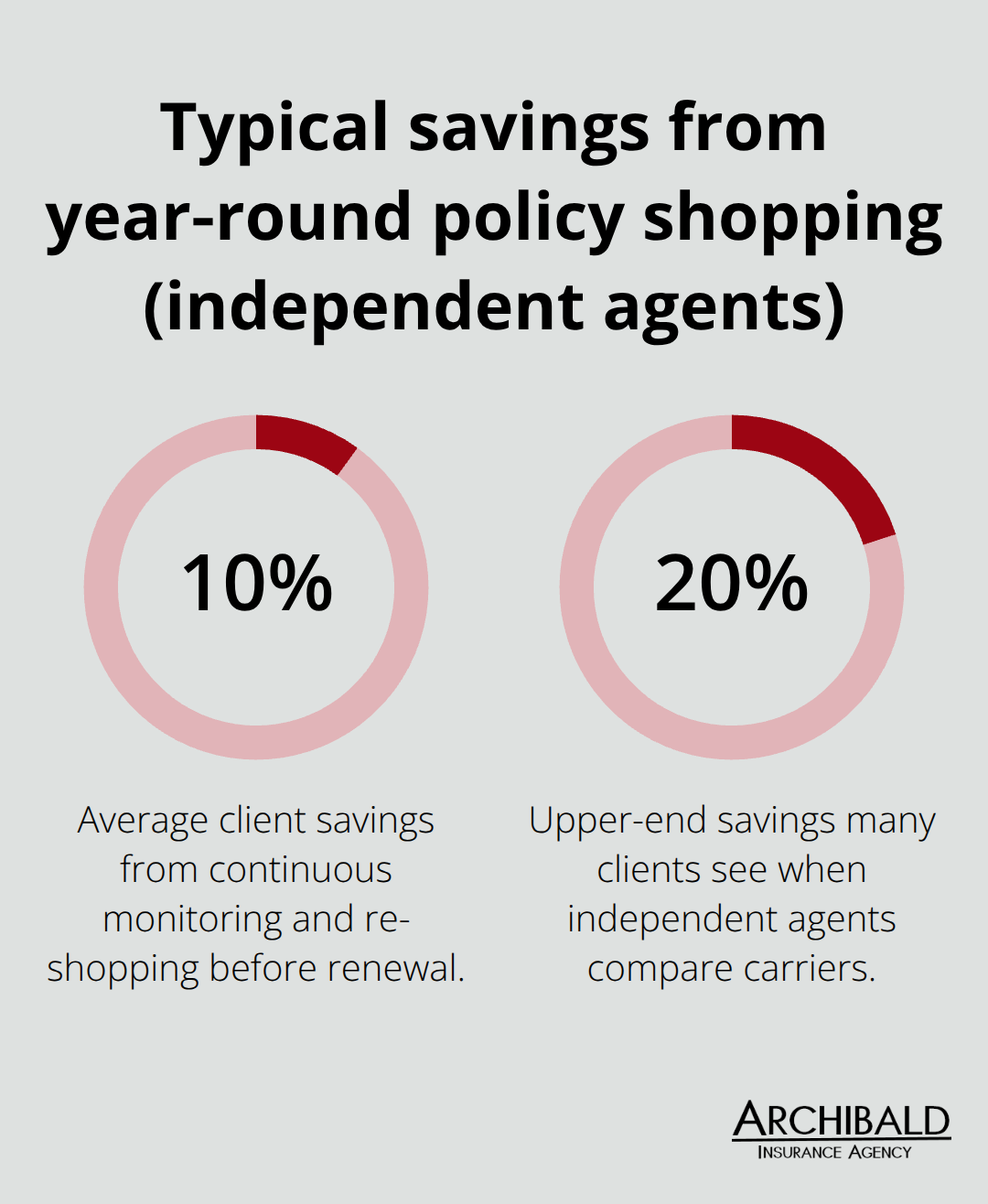
Paying your annual premium upfront instead of monthly installments saves five to ten percent on most policies. Shopping quotes across multiple carriers with identical coverage details reveals dramatic price differences for the same protection. Your coverage limits directly impact cost-a $1 million per occurrence/$2 million aggregate policy costs roughly $69 monthly, while a $2 million per occurrence/$4 million aggregate policy increases your premium meaningfully. If your contracts don’t require higher limits, lower limits reduce your premium without sacrificing necessary protection.

Review Coverage Annually as Your Business Evolves

Review these details annually because your business changes, your exposure shifts, and your coverage needs evolve. Each renewal presents an opportunity to reassess whether your current limits and deductibles still match your actual operations. Businesses that grow their employee count or expand into new service areas face different risk profiles than they did previously. Conversely, if you’ve reduced operations or implemented stronger safety measures, your premium may decrease at renewal. Annual reviews ensure you maintain adequate protection while capturing savings opportunities.

Final Thoughts

Your business liability insurance cost reflects your industry risk, company size, location, claims history, and coverage choices. A consultant might pay $27 monthly while a contractor pays $337 monthly, but both numbers represent actual exposure and claim patterns in their respective fields. The national average for general liability sits around $69 monthly, though Utah businesses typically fall within the mid-range tier for state pricing.

Adequate coverage protects your business from lawsuits that could otherwise devastate your finances. A single liability claim can exceed your annual revenue, making proper protection non-negotiable regardless of your industry. Your coverage limits should match your actual exposure and contractual requirements, not just the cheapest option available.

We at Archibald Insurance Agency help Utah business owners find coverage that matches their actual needs and budgets. Our team represents multiple carriers, which means we can compare quotes across different insurers to find the best protection at the right price for your situation. Contact Archibald Insurance Agency to discuss your business liability insurance needs and receive a quote tailored to your operation.

Disclaimer: The information provided in this blog is for general informational purposes only and does not constitute legal, financial, or insurance advice. Coverage options, terms, and availability may vary. Please consult with a licensed professional for advice specific to your situation
What Does Business Liability Insurance Cover?

Business liability insurance protects your company when customers or third parties suffer injuries or property damage because of your operations. Many Utah business owners assume their coverage is broader than it actually is, which can leave them exposed to serious financial risk.

At Archibald Insurance Agency, we’ve seen firsthand how misunderstandings about what business liability insurance covers lead to costly gaps in protection. This guide breaks down exactly what your policy includes and what it doesn’t.

What Your Business Liability Policy Actually Covers

Business liability insurance activates when a third party-a customer, client, or visitor-suffers injury or property damage because of your business operations. This core protection separates a defended business from a financially exposed one. When someone slips on your wet floor, gets injured during a service call, or you accidentally damage their equipment, your liability policy handles the medical bills, repair costs, and legal defense fees. Without this coverage, you pay these expenses directly from your business bank account, which can quickly drain thousands of dollars. Utah businesses face real exposure here, and while most workplace injuries involve employees, many business liability claims stem from similar accident scenarios involving customers.

Bodily Injury and Medical Expenses

When a customer suffers a physical injury at your business location or during your work, bodily injury coverage pays their medical expenses, rehabilitation costs, and legal judgments against you. This includes emergency room visits, ongoing treatment, and settlement amounts if they sue. Many policies include a separate medical payments component with a smaller limit (often $1,000 to $5,000 per person) that covers minor injuries quickly without requiring a lawsuit.

Compact list summarizing typical liability limits, medical payments amounts, and when umbrella insurance is needed. - what does business liability insurance cover

This approach lets you handle small incidents immediately and often prevents customers from escalating to legal action. A typical general liability policy offers $1 million per occurrence and $2 million aggregate, meaning each individual claim receives coverage up to $1 million, with a total annual limit of $2 million. Once you hit the per-occurrence limit on a claim, any amount above that remains uncovered unless you carry umbrella insurance.

Property Damage You Cause to Others

Property damage coverage pays when your business operations damage someone else’s property. If you operate as a contractor who accidentally breaks a client’s window, a landscaper whose equipment damages a neighbor’s fence, or a service provider who spills something on expensive equipment in a customer’s home, this coverage handles the repair or replacement costs. The same policy limits apply-typically $1 million per occurrence-so significant damages receive protection up to that threshold. This protection matters especially for businesses working on client sites, where accidents happen despite best efforts. Advertising injury coverage, another component of standard liability policies, protects against claims of libel, slander, or copyright infringement in your marketing materials, though this coverage triggers less often than bodily injury or property damage claims.

Understanding Your Policy Limits and Gaps

Your liability limits determine how much your insurer pays before you shoulder the remaining costs. Most Utah businesses carry standard limits, but your specific operations may require higher protection. Claims that exceed your per-occurrence limit leave you responsible for the difference, which is why many business owners add umbrella coverage to extend their protection. The aggregate limit also matters-once your policy pays out claims totaling your aggregate amount, no additional coverage applies for the rest of the policy year. Understanding these boundaries helps you identify whether your current limits match your actual risk exposure. As your business grows or changes its operations, your liability needs shift, making annual policy reviews essential to maintain adequate protection.

What Business Liability Insurance Does Not Cover

Business liability insurance has clear boundaries, and stepping outside those lines leaves you financially vulnerable. Many Utah business owners discover too late that their policy excludes entire categories of risk they assumed were protected. Understanding these gaps is not optional-it directly affects whether your business survives a serious claim or faces bankruptcy. Your liability policy explicitly excludes employee injuries, professional mistakes, and intentional wrongdoing, among other exposures. These exclusions exist because other insurance products handle these risks more effectively, but that only helps if you actually purchase those products.

Why Employee Injuries Stay Outside Your Liability Policy

When your employee gets hurt on the job, your general liability policy pays nothing. This separation is intentional and legally mandated in Utah. Workers’ compensation insurance handles all work-related injuries and illnesses for your employees, regardless of who caused the accident. If you operate with employees and lack workers’ compensation coverage, Utah law treats this as a serious violation. The state requires employers to carry this coverage, and the penalties for non-compliance include fines, criminal charges, and unlimited personal liability if an injured employee sues you directly. This is not a gray area-you must have workers’ compensation if you have employees, period.

Professional Mistakes and Liability Gaps

If you provide services like accounting, consulting, real estate, or IT support, your general liability insurance policy refuses to cover claims arising from your professional work. A client claims you missed a tax deadline, gave bad advice, or failed to deliver promised results-your liability policy walks away. This is where professional liability insurance becomes essential. It covers the cost of lawsuits related to the quality of your work, including legal fees and settlements. Without this coverage, your personal assets become targets when clients sue over mistakes, missed deadlines, or failed promises. Many service providers operate with this gaping hole in their coverage because they assume general liability handles everything.

Intentional Acts and Criminal Conduct

Your liability policy absolutely will not cover damages you cause intentionally or through criminal conduct. If you deliberately damage property, assault someone, or commit fraud, your insurer denies the claim completely. This exclusion extends to your employees as well-if an employee intentionally harms a customer or steals from them, your liability coverage does not apply. This boundary makes sense from an insurance standpoint; policies cannot reward intentional wrongdoing. However, many business owners misunderstand how courts interpret intent, especially in accidents that result from negligence or recklessness. The distinction matters enormously when claims get disputed.

Other Critical Exclusions You Need to Know

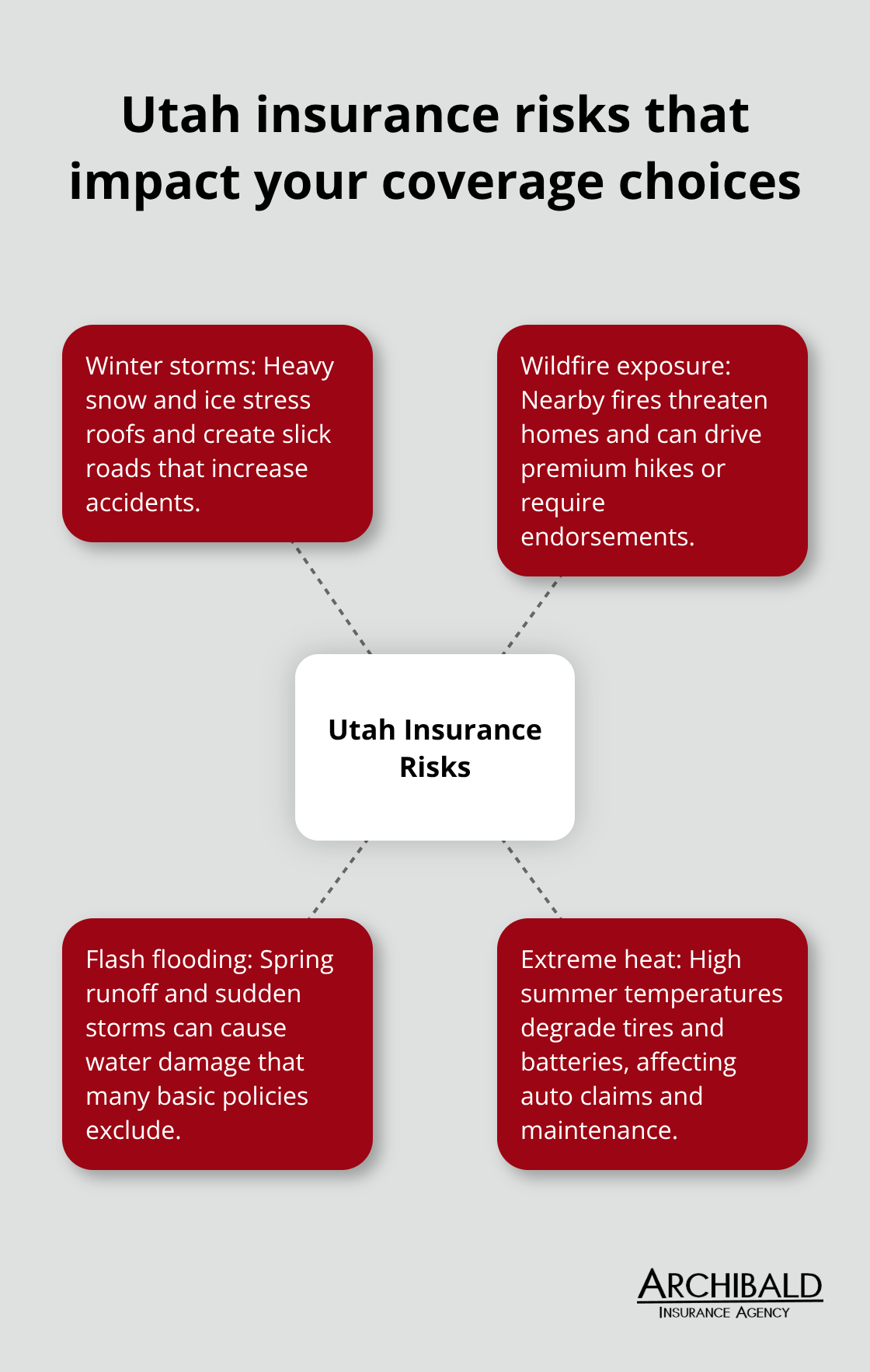
Your liability policy also excludes damage to your own property, theft, cyber attacks, and contractual liabilities that exceed standard obligations. If a fire destroys your inventory or equipment, commercial property insurance covers that loss-not your liability policy. Cyber attacks and data breaches require separate cyber liability coverage, especially if you handle customer payment information or sensitive data.

Hub-and-spoke chart showing exclusions from general liability and the appropriate coverages to fill each gap.

Contractual liabilities (such as indemnification clauses in client agreements) may fall outside standard coverage unless you add contractual liability endorsements. These gaps multiply your exposure if you operate without the right combination of policies. A business owner’s policy can consolidate multiple coverages into one streamlined solution for small to medium-sized businesses.

Common Misconceptions About Business Liability Insurance

Treating General Liability as Complete Coverage

Most Utah business owners operate under a dangerous false assumption: general liability insurance covers every business risk. This misconception leads owners to skip professional liability, cyber insurance, workers’ compensation, or commercial property coverage because they believe their general liability policy already protects them. In reality, general liability covers only third-party bodily injury, property damage, and advertising injury-nothing more. When a client sues over a missed deadline, a data breach exposes customer information, or an employee gets injured, business owners discover their general liability policy provides zero protection. Utah business owners in professional services like accounting, consulting, or real estate face especially high vulnerability because they often operate with only general liability coverage, leaving themselves completely exposed to professional negligence claims. A single professional liability claim can cost $50,000 to $500,000 depending on severity and industry.

Assuming One Policy Handles All Business Needs

The second misconception proves equally damaging: one insurance policy type adequately covers all business needs. A contractor might carry general liability but skip commercial auto insurance, assuming their personal auto policy covers work-related driving. Personal auto policies explicitly exclude business use, meaning any accident during a work call leaves the contractor personally liable. Many small business owners purchase basic general liability without considering whether they need a business owner’s policy that bundles property and liability coverage, or whether their industry requires additional endorsements. Utah recorded 31,700 non-fatal workplace injuries in 2022, yet many employers still operate without proper workers’ compensation coverage or with insufficient limits.

Believing Liability Insurance is Optional for Small Businesses

The third misconception-that liability insurance is optional for small businesses-poses perhaps the greatest danger. While Utah state law does not require general liability insurance, most commercial leases, vendor contracts, and client agreements mandate it as a condition of doing business. Without this coverage, you cannot bid on jobs, sign leases, or work with major clients who request certificates of insurance.

Ordered list explaining three common liability insurance misconceptions and their real-world consequences for Utah small businesses. - what does business liability insurance cover

A single liability claim without coverage can force a small business into bankruptcy. The financial exposure is real and immediate, making liability insurance a non-negotiable business expense rather than an optional luxury.

Final Thoughts

Business liability insurance covers third-party bodily injury, property damage, and advertising injury, but it does not cover employee injuries, professional mistakes, intentional acts, or damage to your own property. Understanding what business liability insurance covers matters far less than recognizing what it excludes. Too many Utah business owners discover these gaps only after a claim gets denied, leaving them personally responsible for thousands or tens of thousands of dollars.

A single liability claim can cost $50,000 to $500,000 depending on severity and industry, and without adequate coverage, that expense comes directly from your business bank account or personal assets. Workers’ compensation, professional liability, cyber insurance, and commercial property coverage exist because general liability alone cannot protect your business from every risk you face. A contractor without commercial auto coverage, a consultant without professional liability, or a retailer without property insurance operates with dangerous gaps that one accident can expose.

Getting the right coverage for your Utah business requires honest assessment of your actual risks (your industry, number of employees, work locations, and service types all determine which policies you need). We at Archibald Insurance Agency help Utah business owners identify these gaps and build comprehensive coverage that protects their operations and personal assets. Contact us for a free review of your current coverage to identify what you might be missing.

Disclaimer: The information provided in this blog is for general informational purposes only and does not constitute legal, financial, or insurance advice. Coverage options, terms, and availability may vary. Please consult with a licensed professional for advice specific to your situation
The Importance of Having an Umbrella Insurance Policy

Protecting oneself from major claims or lawsuits and protecting assets and earnings is a priority for anyone. This is where an umbrella insurance policy comes into play, providing an additional layer of coverage that goes beyond traditional policies. By insuring your future, you can protect your home, cash savings, and future earnings from unforeseen circumstances.

But when would you actually need to utilize your umbrella insurance policy? The answer lies in situations where your existing auto, home, or personal insurance policy reaches its limit in covering a claim. Let’s consider an example: You are involved in a car accident where you are deemed at fault. Your insurance policy provides coverage of up to $250,000 for third-party damages. However, the total cost of medical attention and car repairs for the other individuals involved amounts to $350,000.

In this scenario, you would be responsible for the remaining $100,000. If you have an umbrella insurance policy, it would step in to cover this excess liability. However, without such a policy, the burden of paying the remaining balance would fall on your shoulders. In some cases, if you are unable to afford the amount owed, a court may even order the garnishment of your future wages.

Similarly, homeowners also need protection against liability claims. Whether it’s a situation where you host a party and serve alcohol, someone has a slip and fall accident on your property, or your dog bites a neighbor, you can be held liable for medical bills, rehabilitation programs, and lost wages.

By purchasing an umbrella policy, you can ensure coverage in various areas, including bodily injury, property damage, other damages (such as libel and slander), and legal fees. One of the advantages of having an umbrella policy is that it helps cover the cost of hiring an attorney, which can be quite expensive.

There are countless situations that can occur and surpass the liability limits of your existing home or auto insurance policy. The good news is that umbrella insurance policies are relatively affordable, with prices typically starting around $155 per year. To determine the appropriate coverage for your needs, it’s recommended to contact an agent at our office. We can provide you with a personalized umbrella insurance quote tailored to your specific circumstances.

In conclusion, having an umbrella insurance policy is an essential component of a comprehensive insurance strategy. It provides peace of mind, protects your assets, and ensures that you are prepared for any unforeseen events that may arise. Don’t wait until it’s too late. Invest in an umbrella insurance policy today and secure your financial well-being for the future.

Finding the Best Small Business Insurance in Utah

Running a small business in Utah means protecting what you’ve built. The right small business insurance Utah coverage shields your company from lawsuits, property damage, and employee-related claims that could otherwise drain your finances.

We at Archibald Insurance Agency help Utah business owners navigate their insurance options without the confusion. This guide walks you through the coverage types you need, how to pick the right provider, and the costly mistakes to avoid.

What Coverage Do Utah Small Businesses Actually Need

General liability insurance sits at the foundation of any Utah small business insurance program. This coverage protects you when a customer or third party claims you caused bodily injury or property damage. A contractor damages a client’s fence. A restaurant customer slips and sues. These situations happen regularly, and general liability absorbs the legal costs and settlement expenses. General liability serves as the baseline coverage for nearly all Utah businesses. Most lenders and landlords require it before you can operate. The typical monthly cost for general liability in Utah runs around $86, though this varies significantly based on your industry and location.

Property Insurance Shields Your Physical Assets

Property insurance covers your building, equipment, inventory, and fixtures if fire, theft, weather, or other covered events damage them. Utah experiences flooding in portions of the state annually, making flood assessment critical for your location. If you lease commercial space, your landlord’s insurance won’t cover your equipment or inventory. If you own the building, you absolutely need this coverage. A manufacturing business loses $50,000 in equipment to a fire. A retail shop’s inventory gets destroyed by water damage. Property insurance handles these losses. For Utah small businesses, bundling property with general liability into a Business Owner’s Policy reduces your total cost by approximately 20 to 30 percent compared to buying separately.

Workers Compensation Is Legally Non-Negotiable

Utah law requires workers compensation insurance from your first employee-there’s no getting around this requirement. In 2022, Utah reported 31,700 non-fatal workplace injuries according to the Bureau of Labor Statistics, with about 87 percent occurring in private sector businesses. Workers compensation covers medical expenses and lost wages if an employee gets injured on the job. It also protects you from lawsuits because employees typically can’t sue their employer when they have workers comp coverage. The average monthly cost in Utah runs approximately $66 for workers compensation. Skipping this coverage exposes your business to massive liability and legal penalties. If you’re a sole proprietor with no employees, you may not need this coverage, but verify your specific situation with a licensed agent since rules vary by business structure.

Location and Industry Shape Your Coverage Needs

Your Utah location and industry type determine which additional coverages matter most. Earthquake coverage becomes important if your business sits near the Wasatch Front fault lines (virtually certain to experience an earthquake in the next 50 years according to the Utah Insurance Department). Flood insurance may be required by lenders for federally backed mortgages. Contractors need general liability of $100,000/$300,000 to maintain Department of Professional Licensing licenses. Service-based businesses benefit from professional liability coverage to protect against negligence claims. Cyber liability protects your company if you hold customer data and face a breach or attack. These additions stack on top of your core coverage, so understanding your specific risks prevents costly gaps later.

Picking the Right Insurance Partner in Utah

Choosing between insurance providers matters far more than most Utah business owners realize. The cheapest quote rarely delivers the best protection, and the flashiest website doesn’t guarantee claims will get paid quickly when disaster strikes. Compare quotes from at least three carriers before deciding, but the comparison must go deeper than price alone.

Compare Coverage Details Across Carriers

Look at what each carrier actually covers. The Hartford offers general liability around $86 monthly with equipment breakdown coverage included, while Simply Business provides broader options like pollution liability and product liability for contractors at about $93 monthly, according to MoneyGeek’s Utah small business insurance study. ERGO NEXT charges roughly $86 monthly and delivers same-day certificates of insurance plus tools and equipment protection up to $50,000 for contractors. These differences matter when you operate in Utah’s diverse business landscape.

Request quotes that show your specific coverage limits, deductibles, and any exclusions that might leave gaps in protection. Ask each carrier whether they cover earthquake damage (critical given the Wasatch Front fault line risk) and flood exposure based on your location. Demand specifics about what’s included and what isn’t rather than accepting vague answers.

Evaluate Claims Support and Speed

Claims support separates reliable insurers from mediocre ones, yet most business owners never test this until they need it. ERGO NEXT processes claims with a 3.9 out of 5 rating while Simply Business scores around 8th nationally for claims speed despite strong digital capabilities. The Hartford maintains faster claims processing, making it the stronger choice if speed matters to your operation.

Ask each carrier their average claims resolution time in writing, and verify they offer 24/7 support for emergencies. Local independent agencies often translate relationships into faster problem-solving than national carriers handling thousands of claims remotely.

Maximize Savings Through Bundling and Payment Options

Bundling coverages cuts your total cost significantly. Combining general liability with property through a Business Owner’s Policy saves roughly 20 to 30 percent compared to purchasing separately. Adding workers compensation and commercial auto to that bundle yields additional multi-policy discounts that can approach 20 to 30 percent total savings.

Bundling and payment strategies that reduce small business insurance costs in Utah - small business insurance utah

Paying annually instead of monthly saves approximately $200 to $400 in installment fees. Look for claim-free discounts and safety program credits that reward businesses maintaining good loss history. Independent agencies represent multiple carriers and can access these bundled options across different insurers, whereas captive agents lock you into one company’s pricing and options.

Why Independent Agencies Outperform Captive Agents

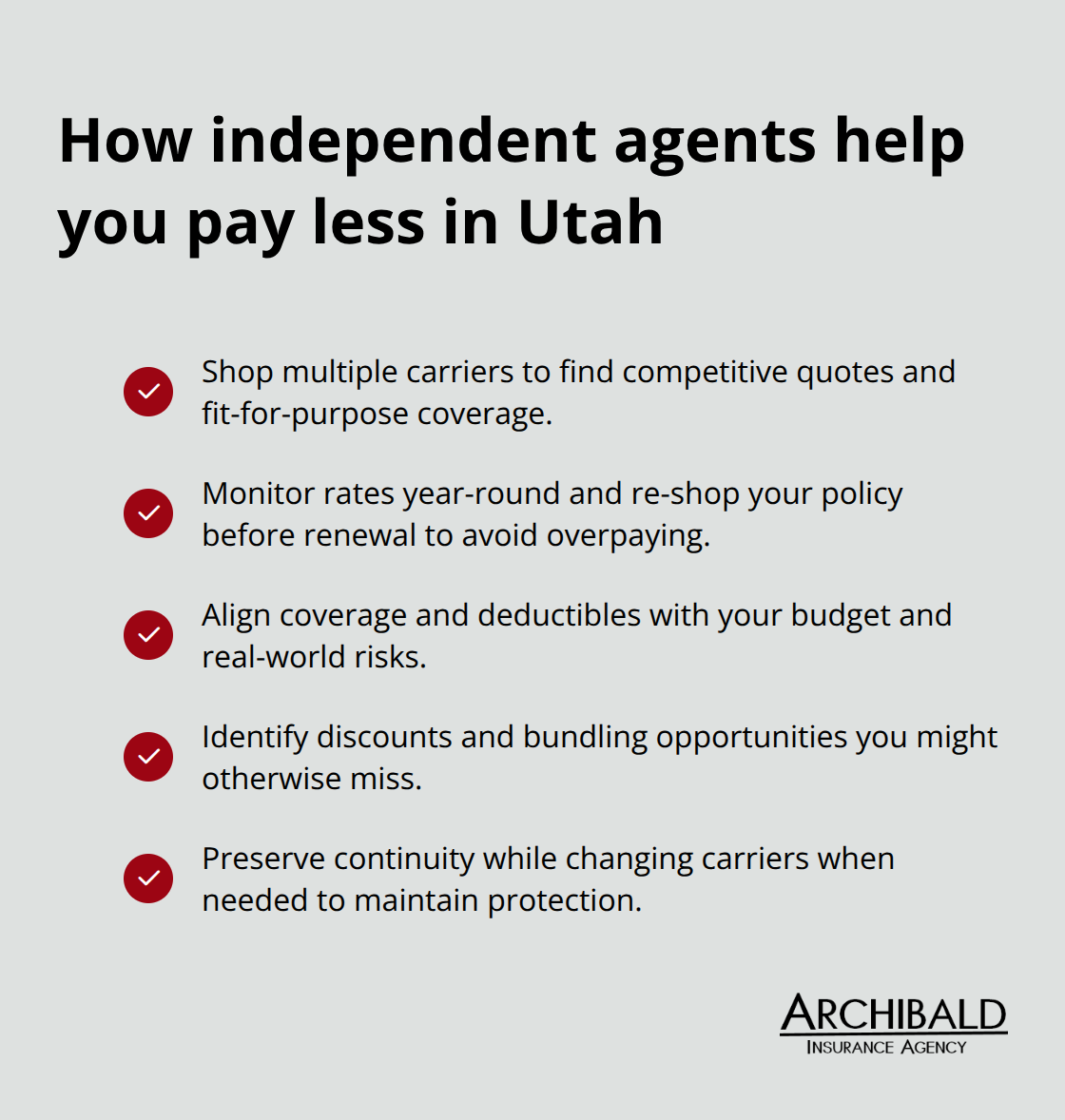
An independent agency represents numerous insurance carriers, which means you gain access to competitive quotes and personalized solutions tailored to your specific needs and budget. Captive agents work for a single insurer and cannot shop your coverage across multiple companies. This fundamental difference shapes what you pay and how well your policy actually fits your business. The next section covers the mistakes that cost Utah business owners thousands of dollars annually-and how to avoid them.

What Costs Utah Business Owners the Most When Buying Insurance

Underestimating Coverage Limits Based on Guesses

Most Utah business owners make their first major insurance mistake before they even purchase a policy-they guess at coverage limits instead of calculating actual needs. You look at a general liability quote for $86 monthly with $1 million in coverage and assume that sounds reasonable without analyzing whether your specific operations justify higher or lower limits. A contractor working on residential homes faces different exposure than a consultant working from a home office, yet many business owners purchase identical coverage. This passive approach creates dangerous gaps. A manufacturing business might carry $1 million in property coverage when their equipment and inventory total $2.5 million-leaving them responsible for $1.5 million in losses. A service business might over-insure by purchasing $2 million in coverage when their actual assets total $300,000, wasting thousands annually on unnecessary premiums. Calculate your actual asset values, your potential liability exposure based on your specific operations, and your revenue at risk if business operations stop. Then match coverage limits to those real numbers, not industry guesses.

Skipping Annual Policy Reviews and Updates

The second expensive mistake happens when Utah business owners treat insurance as a set-it-and-forget-it expense rather than a strategic business tool that changes annually. Your business grows, you add employees, you relocate, you purchase new equipment-yet your insurance stays frozen in time. Simply Business offers broader coverage options including pollution liability and product liability for Utah contractors, but you’ll never access these if you never ask about them during annual reviews. ERGO NEXT provides tools and equipment protection for contractors, yet most business owners never discover this option exists. The Hartford includes equipment breakdown coverage with general liability policies, again something most owners miss without deliberate annual conversations with their agent. Your policy purchased three years ago does not account for your current operation, your current revenue, or your current risks. Review your coverage with a licensed agent annually, specifically discussing how your business has changed and what new exposures you’ve created.

Prioritizing Price Over Quality and Claims Performance

Choosing the lowest price without evaluating quality and reliability creates the costliest mistake of all. A $40 monthly general liability policy from an insurer with claims processing rated 8th nationally means you’ll wait months for claims resolution when disaster strikes. The Hartford’s faster claims processing and ERGO NEXT’s same-day certificates of insurance cost slightly more monthly but deliver real value when you need your insurance to actually work. Businesses that choose price-only quotes often face claims denials or glacial processing speeds when they needed protection most. AM Best ratings of A- or higher indicate financial strength and reliable claims support-verify this rating before committing to any carrier. Bundling coverages across multiple carriers saves 20 to 30 percent compared to purchasing separately, making quality coverage more affordable than many business owners assume. An independent agency represents numerous insurance carriers, which means you gain access to competitive quotes and personalized solutions tailored to your specific needs and budget (whereas captive agents work for a single insurer and cannot shop your coverage across multiple companies). This fundamental difference shapes what you pay and how well your policy actually fits your business.

Final Thoughts

Finding the right small business insurance in Utah requires moving beyond price comparisons and understanding what actually protects your operation. General liability, property coverage, and workers compensation form your foundation, but your specific location and industry determine what additional protections matter most. The earthquake risk near the Wasatch Front, annual flooding in portions of Utah, and industry-specific exposures like contractor licensing requirements all shape what you genuinely need. Bundling coverages saves 20 to 30 percent compared to purchasing separately, and paying annually instead of monthly cuts another $200 to $400 from your costs.

Working with a local independent agency transforms how you approach small business insurance Utah coverage. Independent agents represent numerous insurance carriers, which means you access competitive quotes and personalized solutions tailored to your specific needs and budget rather than cookie-cutter policies from a single insurer. Local agents understand Utah’s unique risks, know which carriers perform best in your region, and build relationships that translate into faster problem-solving when you need claims support.

We at Archibald Insurance Agency help Utah business owners navigate their insurance options without confusion. Request quotes from multiple carriers, then schedule a consultation with a licensed agent who understands your operation. Protect what you’ve built by getting coverage that actually matches your business, not generic policies that leave gaps when you need protection most.

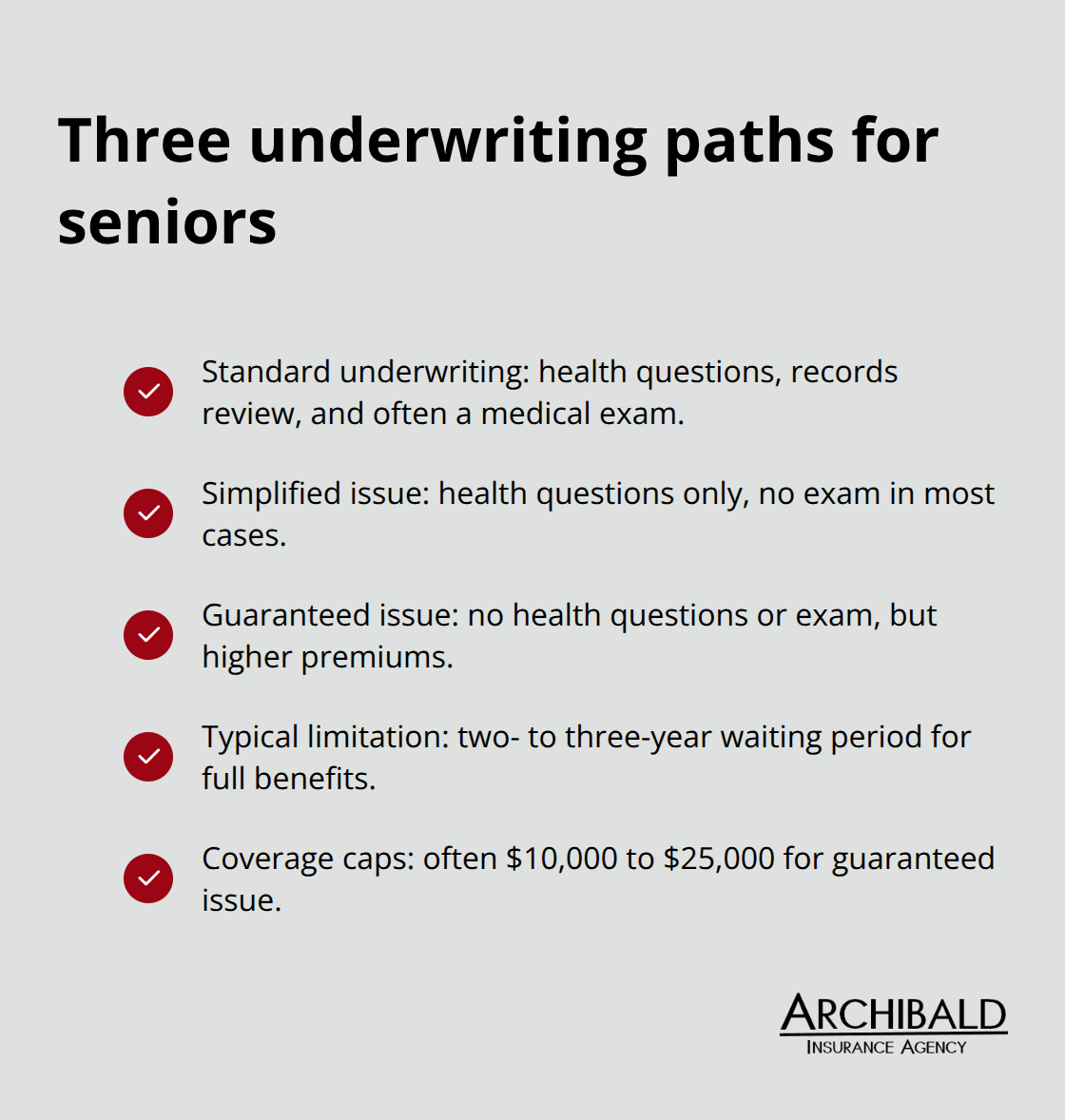
Disclaimer: The information provided in this blog is for general informational purposes only and does not constitute legal, financial, or insurance advice. Coverage options, terms, and availability may vary. Please consult with a licensed professional for advice specific to your situation